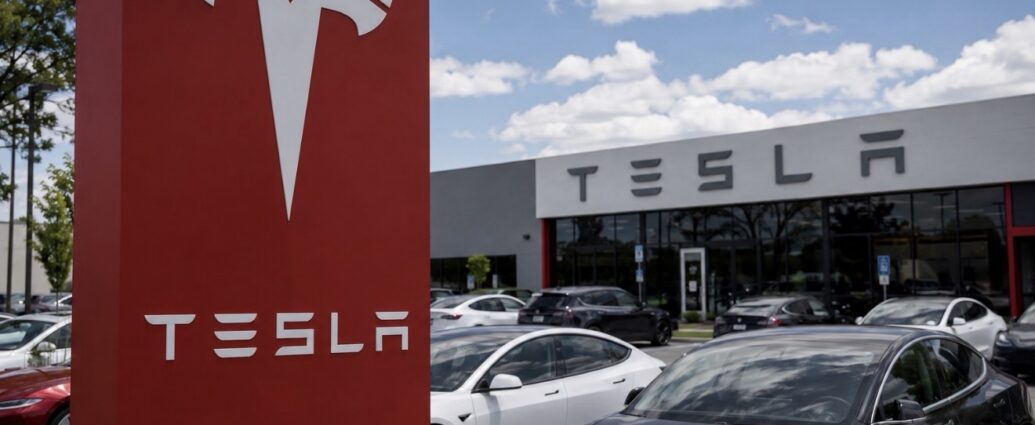
AUSTIN, Texas — Tesla’s second-quarter delivery report released on July 2, together with Thursday’s market close and the public filings surrounding SpaceX’s June 12 Nasdaq debut, show investors have largely maintained confidence in the electric-vehicle maker despite the arrival of Elon Musk’s newest publicly traded company. Tesla shares closed Thursday at $406.55, up 3.2% on the session and trading near the level they held before SpaceX made its record-setting public debut.
The performance has answered one of Wall Street’s biggest questions heading into the summer. With SpaceX becoming a publicly traded company, investors debated whether the new stock would siphon capital away from Tesla, long viewed as the primary publicly traded vehicle for investors seeking exposure to Elon Musk’s businesses. One month later, the market has shown little evidence of a meaningful rotation.
SpaceX, formally Space Exploration Technologies Corp., completed its initial public offering on June 12, pricing shares at $135 before beginning trading on the Nasdaq. The company raised approximately $75 billion, making it the largest initial public offering on record. Shares opened strongly, briefly pushing Musk’s net worth above the trillion-dollar mark before retreating from their early highs. By Thursday’s close, SpaceX shares finished at $152.16, reflecting a more measured valuation after the initial excitement surrounding the offering.
Ahead of the IPO, many market participants expected a different outcome. Because Tesla has long served as the primary publicly traded investment tied to Musk’s broader vision, analysts questioned whether retail investors would shift capital toward the rocket maker once it became available on public markets. Several firms cautioned that a second publicly traded Musk company could divide investor interest that had historically flowed almost exclusively into Tesla.
Instead, Tesla has remained remarkably resilient.
The company’s operating performance has also helped reinforce investor confidence. On July 2, Tesla reported delivering 480,126 vehicles during the second quarter while producing 451,758 vehicles, marking its strongest second quarter on record and its first year-over-year quarterly delivery growth since 2023. The results significantly exceeded Wall Street expectations and represented one of the company’s strongest operational performances in recent years.
Yet despite the strong delivery report, Tesla shares fell sharply on the day of the announcement. The decline reflected broader market dynamics rather than disappointment with the delivery numbers themselves. Investors who had accumulated shares ahead of the report took profits following the release, while continued competition in the global electric-vehicle market and Tesla’s premium valuation kept pressure on the stock despite the operational beat.
That disconnect continues to define Tesla’s investment story.
The company’s valuation is driven by far more than automobile sales alone. Investors increasingly view Tesla as a technology company whose long-term value depends on autonomous driving, artificial intelligence, robotics and future mobility platforms. Those expectations remain largely unchanged following SpaceX’s public debut, helping explain why both companies have attracted investor interest without materially weakening demand for either stock.
Analysts remain divided on how the relationship between the two companies could evolve. Some believe the growing public visibility of both businesses could eventually create strategic opportunities between them, while others argue each company is better positioned to pursue its own long-term objectives independently. Regardless of those differing views, the market has thus far demonstrated confidence that both companies can coexist as separate investments without one significantly undermining the other.
Investors are also monitoring several additional developments surrounding Tesla, including regulatory discussions involving autonomous vehicle operations, continued expansion of its artificial intelligence initiatives and increasing competition from global electric-vehicle manufacturers. While those issues remain important, they have not displaced the company’s ability to generate strong investor interest following the SpaceX listing.
The next major catalyst arrives on July 22, when Tesla is scheduled to report second-quarter financial results. While delivery figures provide insight into vehicle demand, the earnings report will reveal whether record deliveries translated into stronger profitability, healthier margins and updated guidance for the remainder of the year.
For now, one conclusion is becoming increasingly clear. The historic public debut of SpaceX has not diminished investor appetite for Tesla. Instead, Wall Street appears willing to view both companies as separate investments tied to different parts of Elon Musk’s long-term business strategy, allowing Tesla to maintain its footing even as one of the largest IPOs in history captured global attention.
JBizNews Desk | New York
© JBizNews.com All Rights Reserved. Reproduction or distribution without written permission is prohibited.