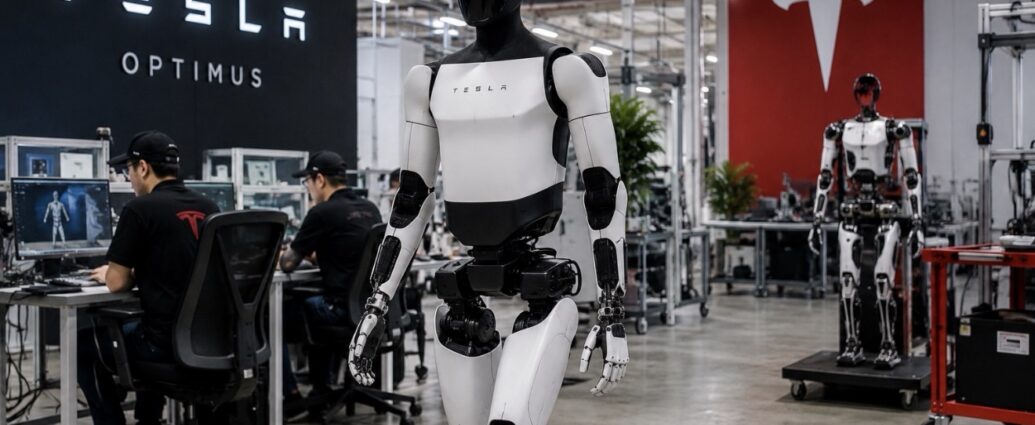
Tesla’s push into humanoid robots could eventually reshape not only manufacturing but the way companies generate recurring revenue, according to industry executives who believe the real opportunity lies beyond selling robots outright.
Speaking in an interview published Monday, Jerry Wang, Global Executive Chairman of Faraday Future and CEO of AIxCrypto Holdings, said the biggest profits in robotics may come from leasing and operating robots rather than simply manufacturing them.
The comments come as Tesla CEO Elon Musk continues to position the company’s Optimus humanoid robot as one of Tesla’s most important long-term growth opportunities.
Musk has repeatedly said Optimus could eventually become more valuable than Tesla’s electric vehicle business, with plans to begin larger-scale production by the end of 2026.
Rather than focusing solely on robot sales, Wang argues companies should think of humanoid robots as long-term revenue-producing assets.
Instead of selling a robot once, manufacturers could lease robots to factories, warehouses, hospitals and businesses, generating recurring monthly income while continuously improving the machines through software updates and real-world operating data.
The model resembles the evolution of cloud software, where recurring subscriptions have largely replaced one-time software purchases.
Industry interest continues accelerating.
Companies including Figure AI, Agility Robotics, Boston Dynamics, and several Chinese manufacturers are investing billions of dollars into humanoid robotics as advances in artificial intelligence make machines increasingly capable of performing repetitive physical tasks.
The rapid expansion is also creating opportunities throughout the supply chain.
Chipmakers, memory manufacturers, sensor companies and battery producers all stand to benefit as humanoid robots require enormous computing power to process vision, movement and decision-making in real time.
Despite the excitement, significant hurdles remain.
Tesla has not yet begun commercial sales of Optimus, and the robots currently operate primarily inside Tesla facilities. Industry experts also note that manufacturing costs remain well above Musk’s long-term target price, making widespread commercial adoption dependent on further technological advances and higher production volumes.
Regulatory standards, workplace safety requirements and customer acceptance will also influence how quickly humanoid robots move from pilot programs into everyday business operations.
For investors, the debate highlights a broader question facing the robotics industry: whether future profits will come primarily from hardware sales or from long-term service and leasing models.
If companies ultimately treat robots more like subscription platforms than traditional equipment, recurring revenue could become one of the sector’s most valuable assets.
With Tesla, Figure AI and other competitors racing to commercialize humanoid robots, the coming years may determine not only who builds the best machines, but who develops the most profitable business model around them.
JBizNews Desk | Austin, Texas
© JBizNews.com All Rights Reserved. Reproduction or distribution without written permission is prohibited.