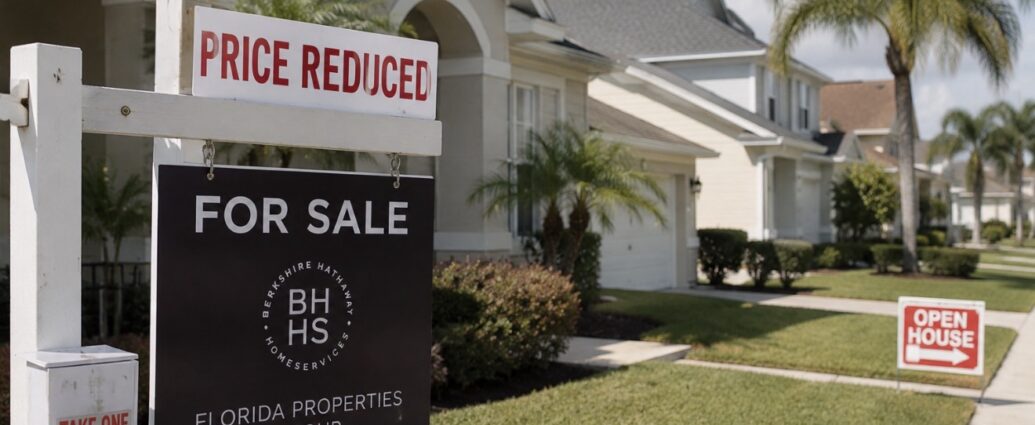
AUSTIN, Texas — For years, Texas and Florida were among the hottest housing markets in the country, where homes sold in days and buyers fought bidding wars. That era is over. According to brokerage firm Redfin, the balance of power has shifted decisively toward buyers, with sellers increasingly cutting prices and offering incentives to attract interest.
In its latest report, Redfin found there were approximately 46.9% more home sellers than buyers nationwide in May, with some of the largest imbalances appearing in Texas and Florida. “A modest improvement in housing affordability could bring some homebuyers off the sidelines in 2026,” said Asad Khan, senior economist at Redfin. “But the housing market is likely to remain in buyer’s market territory for the foreseeable future, with sellers cutting prices or offering concessions to lure buyers.”
The strongest buyer’s markets are concentrated across the Sun Belt. Redfin identified Nashville, Miami, Austin, Houston and San Antonio among the markets where buyers currently hold the greatest leverage. Earlier this year, sellers in those same markets led the nation in price reductions. In San Antonio, nearly 58% of sellers lowered their asking prices, followed by Austin, Dallas, Tampa, and Fort Lauderdale.
The primary driver is supply. Both Texas and Florida experienced aggressive homebuilding during the pandemic-era migration boom as developers rushed to accommodate population growth. Today, many of those homes remain unsold as buyers pull back amid elevated mortgage rates and affordability concerns.
When inventory rises faster than demand, buyers gain leverage. They have more homes to choose from, more negotiating power, and more time to make decisions.
The numbers reflect that shift. In Texas, homes are now taking approximately 68 days to sell, while the median home price of $343,779 rose just 0.9% year-over-year. In Florida, average selling times have stretched to roughly 69 days, while housing inventory has climbed to record levels.
Florida faces additional challenges beyond housing supply. The state continues to grapple with rising insurance premiums, escalating condominium association costs, hurricane-related risks and other climate concerns. Those factors have prompted some longtime homeowners to sell, increasing inventory even further.
The cooling market in Texas and Florida contrasts sharply with conditions elsewhere. Nationally, home prices remain near record highs. The National Association of Realtors reported that the median existing-home price reached $429,300 in May, a new record. Several Midwestern and Northeastern markets continue to favor sellers due to limited inventory.
According to Redfin, only seven of the nation’s 50 largest metropolitan areas remain seller’s markets, while 36 markets now favor buyers.
For the housing industry, the shift represents a meaningful change. Builders who expanded aggressively during the boom are now offering incentives, discounts and mortgage-rate buydowns to move inventory. Real estate agents increasingly advise sellers to price homes realistically rather than aiming for pandemic-era peak valuations.
The impact extends beyond housing. Mortgage lenders, moving companies, contractors and local economies all feel the effects when housing activity slows.
For prospective buyers, however, the changing market creates opportunities that have been scarce for years. Buyers who can manage today’s mortgage rates — still hovering near 6.5% — may now negotiate on price, request repairs, and secure concessions that would have been nearly impossible during the height of the housing frenzy.
For sellers, the environment requires adjustment. The days of listing a home and receiving multiple offers within hours have largely disappeared in many parts of Texas and Florida.
None of this suggests a housing crash. Prices are softening rather than collapsing, and demand remains present. Instead, the market appears to be moving toward a more balanced environment where buyers have greater choice and negotiating power.
After years as symbols of America’s housing boom, Texas and Florida are increasingly becoming examples of what happens when supply finally catches up with demand.
JBizNews Desk
© JBizNews.com All Rights Reserved. Reproduction or distribution without written permission is prohibited.