For years, the Religious Zionist Party refused to participate in petitions seeking to disqualify candidates and parties from elections.
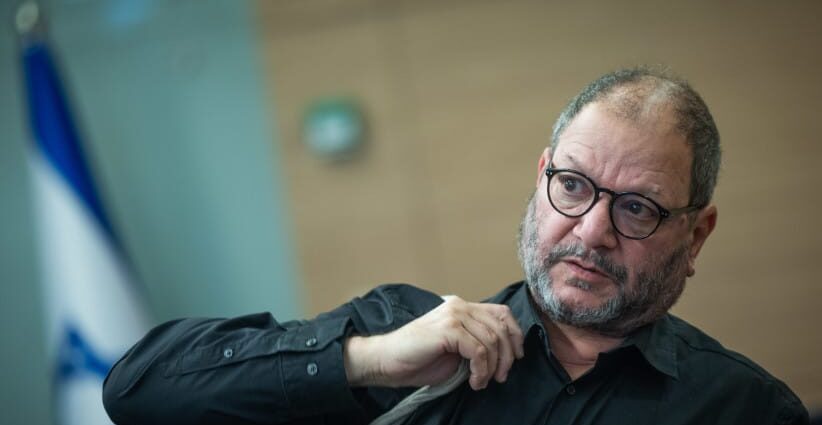
But recently, when we were asked to sign the disqualification requests for the Joint List’s Sami Abu Shehadeh and Ofer Cassif, we agreed.
So, “Ma nishtana?” What has changed?
Our past refusal was not because we believed Israel should have no democratic red lines, nor did we believe that political positions should be entirely beyond scrutiny. We simply believed the process had become a charade.
The Central Elections Committee would hear petitions, debate them, and vote. But whenever an individual candidate was involved, the Supreme Court had the final say. The pattern had become entirely predictable: a political body would vote to disqualify a candidate, the decision would be challenged, and the court would ultimately overturn it. We saw little reason to participate in a process whose practical outcome appeared predetermined.
This time, however, we are participating. What changed? Three things.
First, October 7 changed Israel.
October 7 shattered a basic assumption that had shaped Israeli strategic thinking for years: that terrorism could be contained, deterred, or managed without confronting the underlying ideology and political strategy driving it.
The Israeli public changed profoundly because of October 7. We understood that what we had previously regarded as a distant or manageable nuisance could become an existential danger. The question before us now is whether the Supreme Court of the State of Israel and its judges are capable of changing their perspective as well.
This does not mean abandoning the rule of law or suppressing political dissent. Democracy requires ample room for criticism – including fierce criticism – of the government, the military, and its policies.
But Israeli law itself recognizes that democracy has boundaries. Section 7A of Basic Law: The Knesset establishes clear grounds for disqualification, including rejecting Israel’s existence as a Jewish and democratic state, inciting racism, or supporting the armed struggle of an enemy state or terrorist organization against Israel.
The question after October 7 is therefore not whether disagreement is legitimate. It is where the legal line lies when political activity crosses into active support for an enemy’s struggle against the state. Today is the test: Has the Supreme Court internalized the lessons of October 7?
Second, four years of constitutional debate changed the question.
Over the past four years, the court actively took a side in the intense debate over Israel’s core values. The court now declares that it holds the power to review Basic Laws and determine questions concerning the fundamental principles of the state.
If, according to the Supreme Court, fundamental principles can determine the validity of laws enacted by the Knesset, then those principles cannot be abstract words invoked only when convenient. They must have real meaning.
The previous proceedings concerning Cassif already exposed this tension. In 2019, the Supreme Court overturned the Central Elections Committee’s decision to disqualify him. Justice David Mintz dissented, finding that the evidence supported disqualification, while the majority concluded that the demanding legal threshold had not been met.
Today, the public is entitled to ask: Do the core principles of Israel allow for the support of Hamas, but forbid changing the way we select our judges to make it more democratic? We will soon learn if abolishing the Law of Return – as Cassif proposes – is acceptable, while abolishing the reasonableness standard is deemed intolerable.
The ICC or Israel’s Supreme Court?
Third, we now understand that war is fought on more than one battlefield.
October 7 taught us that a military campaign does not end when the shooting stops. Every military operation has strategic, political, and diplomatic objectives. Every serious enemy thinks about the “day after.” Hamas certainly did.
The broader conflict includes coordinated efforts to generate international pressure on Israel, isolate it diplomatically, pressure its allies, and weaponize international legal and political mechanisms to constrain Israel’s ability to defend itself. Whether one agrees with every element of that analysis or not, October 7 made one thing unmistakable: the military, diplomatic, and political dimensions of a war cannot be separated.
That reality is central to the argument being made in the current case involving MK Cassif. The argument for his disqualification is not that he is on the Left, that he criticizes the government, or that he opposes the war.
The petitioners argue that the statements and actions attributed to Cassif crossed the statutory line from political opposition into direct participation in the armed struggle being waged against Israel by its enemies.
And the petitioners are right. When Hamas leader Yahya Sinwar planned his attack on Israel, he counted on Cassif and his allies to help secure a diplomatic victory over Israel. This is precisely why the Supreme Court must disqualify Cassif and his associates.
Four years ago, we looked at this process and saw a charade. Today, we look at it again with the hope that something has shifted.
Ma nishtana? What changed? Israel did.
And this Thursday, we will learn if the Supreme Court has changed as well. It is time for the judges to answer: Do they share more common ground with the judges of the International Criminal Court, or are they truly a part of Israel?
The writer is an Israeli lawyer, author, and politician serving as a member of Knesset for the Religious Zionist Party since 2021. He is chair of the Knesset Constitution, Law, and Justice Committee.