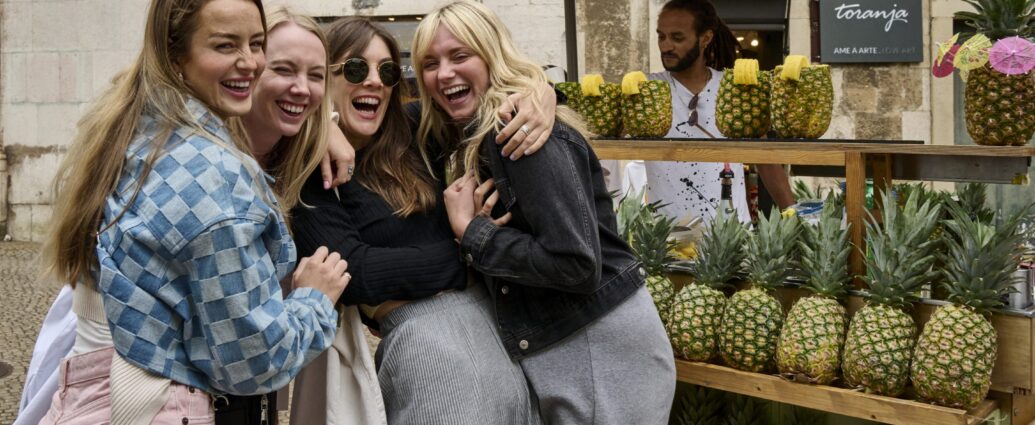
It’s practically a Gen Z canon event: scrolling through a bank app, counting down the days until payday, and wondering whether that emergency ramen stash can stretch a little longer when a notification drops down — “You’ve been added to ‘Europe Summer 2027!’”
The bank balance says absolutely not, but hey, YOLO, right?
The group-chat joke lands because many young people know exactly what’s in their checking account, and still want to make room for what makes life feel good. For some, it’s finding room for a piece of jewelry or a small treat that feels personal. Even on a tight budget, they’re holding space for the things that feel worth it right now, as everyday life gets more expensive.
Nearly 44% of Gen Z travelers frequently or very frequently take spontaneous trips, almost twice the 25.2% average across generations, according to Future Partners, and 62.7% say travel is worth investing in.
But half of Gen Z travelers in the U.S. also said they had made financial sacrifices for their last vacation, according to Skyscanner. To afford the next trip, 52% said eating out less would be worth it, while 40% were willing to cut back on haircuts.
For many young adults, the calculation between enjoying money now and saving it for later has shifted. Matt Lundquist, founder and clinical director of Tribeca Therapy, a New York City psychotherapy practice, said younger clients are imagining their economic futures differently as homeownership, stable employment, and raising children feel increasingly out of reach.
He helps clients approach those decisions as a psychotherapist, focusing on the emotions, family histories, and anxieties that shape how people use money—not simply the numbers in their budgets.
When traditional life milestones feel less attainable, he said, spending on something enjoyable now can seem more valuable than saving over the long term for an uncertain goal.
“There really is a strong felt difference in how young people are imagining the future will look like for them economically,” Lundquist told Fortune.
What feels worth the money
When buying a home feels impossibly far, the math behind a small treat can start to look different.
Lindsay Bryan-Podvin, a financial therapist and host of the Mind Money Balance podcast, explained that such indulgences can offer a predictable moment of control when so much else feels uncertain.
“A $100 necklace or boba tea doesn’t compete with a down payment,” she told Fortune.
Which doesn’t necessarily mean young consumers are dishing out money as if it grows on trees. Bryan-Podvin keeps a separate “fun money” account for what she calls an adult allowance, leaving room for a seasonal latte or a new necklace without affecting necessary expenses.
But Gen Z’s treats don’t always have to be particularly little or cheap. The global market research company, Circana, has seen consumers gravitate toward accessories that offer self-expression or an emotional connection. Beth Goldstein, the firm’s footwear and accessories industry adviser, said demand has improved for handbags, especially in the $500-$750 price range, while bag charms have also remained strong.
“This is not inexpensive by any means, but consumers are finding the brands and items at this price point to be worth the money,” Goldstein told Fortune.
That willingness to pay for something that feels worth the splurge extends beyond a fashionable handbag. Ralph Lauren’s latest quarterly report showed revenue rose 14%, led by demand from younger shoppers as well as affluent ones.
Jewelry offers another example. Signet Jewelers said diamond tennis bracelets, tennis necklaces, studs, and yellow gold are resonating with Gen Z shoppers entering the category, including men. Younger consumers are also gravitating toward personalization and distinctive engagement-ring designs, including oval and marquise shapes.
Jewelry can be more resilient than other purchases because it’s often tied to engagements, milestones, and other meaningful moments, a Signet spokesperson told Fortune.
But again, what feels worth the money can’t always fit inside a jewelry box. Sometimes it requires a passport—and the freedom to leave on short notice is not equally available. Future Partners found that 36.8% of travelers earning at least $200,000 frequently take spontaneous trips, compared with 16.7% of those earning less than $49,000.
To be sure, preserving room for joy can become harmful when treats interfere with other goals, produce debt, or leave behind regret and greater anxiety, Bryan-Podvin said.
But Lundquist cautioned against automatically treating Gen Z’s choices as irresponsible when the generation is making them under different economic conditions than its parents faced.
For some young adults, a memory can stay with them long after a piece of furniture ends up on the curb or in a donation store.
“If I go to this awesome concert, that will be with me forever,” Lundquist said. “If I invest in a new couch, I might not be able to take it to my next apartment.”
This story was originally featured on Fortune.com