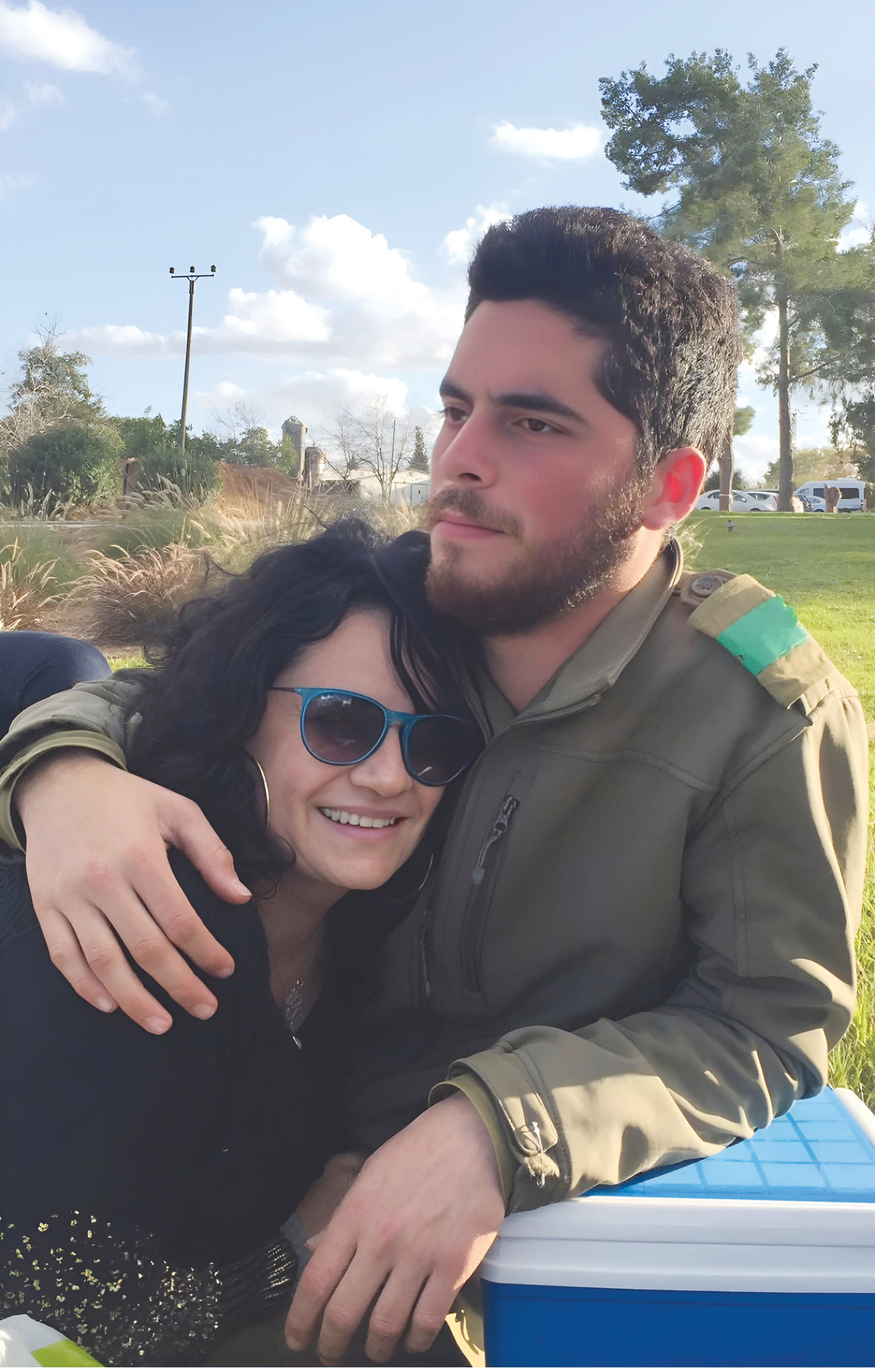
‘My son Ilai was born on March 4, 1996, on Purim eve,” Adital Zu Aretz says. “On the day he was born, 13 people were killed in a suicide bombing at Dizengoff Center. That was how Ilai’s life began, and how it ended – with evil. The kindest child in the world was born into that evil.”
On Oct. 7, 2023, Ilai Baram and two of his friends were killed by Hamas terrorists near Kibbutz Gevim, as they were driving back from the Supernova music festival.
“Ilai had ADHD,” his mother notes. “He was very, very intelligent, sensitive, full of love and warmth, and very deep. He wanted to get to the bottom of everything, to understand things from the inside out. He loved friends and people. He was very intelligent and thoughtful.”
Despite having asthma, Baram joined a combat unit and became a squad commander in the Nahal Brigade.
“Once, during an exercise near Rosh Pina,” Adital recalls, “he called me and said, ‘Mom, I can’t breathe. Get me an inhaler.’ I drove two and a half hours to bring him one. That was how much he wanted to be a combat soldier.”
After completing his military service, Ilai learned about Wim Hof, a Dutch motivational speaker and extreme athlete known for his ability to withstand extreme cold. Hof developed the Wim Hof Method, a practice that combines breathing exercises, ice baths, and mental focus. The cold triggers the body’s stress response, increasing alertness, heart rate, and breathing.
Ilai took courses in the Wim Hof Method and began leading workshops in Israel. “Once he began taking it seriously and doing it exclusively, he became extremely successful,” Zu Aretz says. “He worked with many hi-tech companies, such as Microsoft, Google, and others, running sessions for CEOs and everyone else.”
Zu Aretz learned of his death on Oct. 7 before receiving official notification, when a photo of his damaged car with the bodies of Ilai and his friends appeared on Telegram.
“Thousands of people came to his funeral,” she says. “He was like the Pied Piper. I think that all of Tel Aviv knew him. He helped so many people. After he was murdered, so many came to tell me how he had helped them, whether by carrying shopping bags, persuading someone not to smoke, or encouraging someone to do meaningful army service. He touched everyone.”
Comfort in color
After her son’s death, Zu Aretz found comfort in painting and colors. Her Tel Aviv apartment walls are adorned with her colorful artwork.
“I’m a strong person by nature, so at first I didn’t really know how to express the pain. I cried, but I have a very strong inner resilience, and I didn’t want to fall apart. I suffered such a devastating blow that I didn’t know how to express my feelings. So I immediately turned to colors and painting, and I felt how much it helped. It still helps me today. On a day when I paint, I feel okay. When I don’t paint, I cry. Three years have passed, and I can still cry every day. It isn’t something that goes away. But at least when I paint, I have a good day.”
‘Green and Pink’
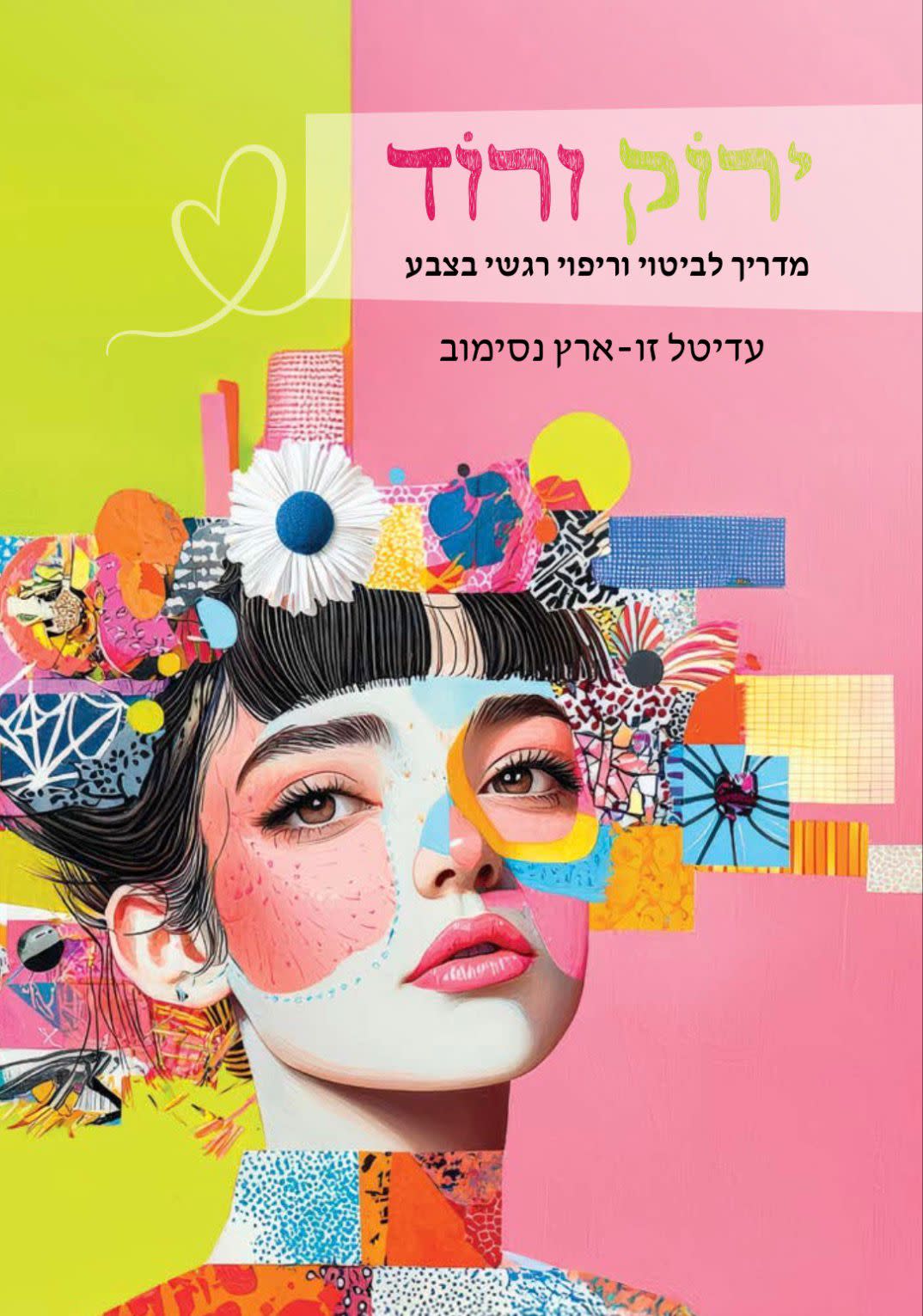
Zu Aretz says that colors can heal and open one’s heart. In this spirit, she wrote Green and Pink, a book that uses a self-healing, emotional expression method using colors and shapes to tap into the subconscious. She explains that green brings confidence and a sense of grounding, while pink brings a sense of embrace. “Green and pink are the colors of the heart,” she says. “There are many studies about colors and how they affect us physiologically, mentally, and emotionally.”
Green and Pink was first published in Hebrew in December 2025 and outlines over 100 exercises. It has also been published in English and Italian. Zu Aretz explains that the activities can help people move forward. They explore themes including self-confidence, self-love, emotional expression, creativity, and coping with fear and pain.
To spread her teachings, she has established color “embassies” in Rome, Amsterdam, and Barcelona, where she teaches her method in workshops for women. “I want people all over the world to know how to help themselves heal and express themselves through color,” she says.
Zu Aretz also conducts large seminars at major companies, as well as for small groups in her home. Trained as a marriage and couples therapist, she says that her use of color has changed her therapeutic approach. “I always could help, but today I incorporate color, which I didn’t do before Ilai was murdered. For example, when I work with a young woman and explain how to love and respect herself so she can be in a relationship, I combine that with color.”
If someone in a relationship has trouble communicating, she will show them light blue and other blues, along with oranges and reds. “Something that gets him moving, talking, and expressing himself instead of staying silent, eating himself up inside, and damaging his relationship.”
Since Oct. 7 and Ilai’s death, Zu Aretz has not returned to her work fully. “I only do workshops, and I don’t count that as work,” she says. I hold a workshop at home once a week and occasionally see people for treatment. I can’t really say I’ve returned to myself. I don’t think I’ve returned to myself at all.”
A children’s book
Her second book, Ilai and Henry in the Kingdom of Pacifiers, is intended for children. The book was published in October 2025, marking two years since Ilai’s murder.
“The story is exactly about Ilai. He had a hard time giving up his pacifier. The story follows what happened to him. Henry was Ilai’s dog. Gradually, I talked to him about needing to feel his own strength. That’s the story itself.”
What does she expect will happen when parents read the story to their children? “I want the child to gain strength and understand that they have power within them and can stop using the pacifier. They don’t have to have it. The pacifier gives them security, so they don’t want to let go of it. It gives them strength. They need to understand: ‘I have that strength without the pacifier. The pacifier is temporary, for a particular age, and then I let it go.’
“It’s for the parent, too. The parent also understands that we’re all the same in this respect. Giving up a pacifier, giving up cigarettes, giving up drinking, or giving up other things – it’s all the same idea as in the book about Ilai. It’s about believing that you can do it at all.”
The two-world future
Zu Aretz is honest and open and aware that she will feel the grief of the loss of her son for the rest of her life. But she adds, she has two other children and an eight-month-old granddaughter. “I need to be there for them. I need to be happy for them. I live in two worlds: the world of pain and the world of joy.
“You have to understand that you can’t exist only in grief. You also have family and people around you. You can’t fall entirely into it. There’s nothing more down there. In that pit, the darkness is only more darkness and more darkness. The deeper you go, you won’t find anything new – only more darkness. My work, and the work of people who have lost loved ones, is to enjoy the blooming of the flowers, the sun shining, good music, a joke, and delicious food. All of that still exists.”
By reading her books, Zu Aretz hopes people will remember her son Ilai: “that he was a great light and that he still shines today. He is gone, but he is present. At family meals, he was always the one making us laugh the most, singing songs, bringing joy, and dancing. His light is here all the time. We must also find joy for his sake because he couldn’t bear to see people down. He wouldn’t allow it. Although he sometimes had low moods himself, he always tried to lift people, be happy, and keep being happy. In Green and Pink, they can find the colors, and in Ilai and Henry in the Kingdom of Pacifiers, they can find strength.
“I won’t go back to feeling the way I did before Oct. 7,” Zu Aretz concludes. “But I try to live with as much joy and love as possible; to look for laughter and happiness rather than sink into mourning and sorrow because those are with me all the time. I want us all to be friends, this whole country. I want us to be well, with no blackness, only color, and for people to see the good even in the bad. We’re living through difficult times, with everyone against everyone else.
“I want us to find the good in each person, rather than look for the bad – only the good.”■