The First Temple did not fall merely because Babylon was strong. It fell because Judah had already hollowed itself out from within. The prophets warned that destruction began before Babylon entered the city. A nation cannot shed innocent blood, exploit the vulnerable, worship power, and imagine that the Temple will protect it. God’s house does not shield a people that abandons God’s law. Jeremiah stood at the gate and said what they could not bear: The building would not save them. Their ceremonies would not save them. Their slogans would not save them. They cried, “The Temple of the Lord,” as though sacred stones could substitute for sacred conduct.
He condemned them for violating the law of release. They freed their Hebrew slaves, then seized them back when obedience became inconvenient. They wanted covenant without burden, holiness without discipline, and chosenness without responsibility.
Babylon did not create their corruption. Babylon revealed it.
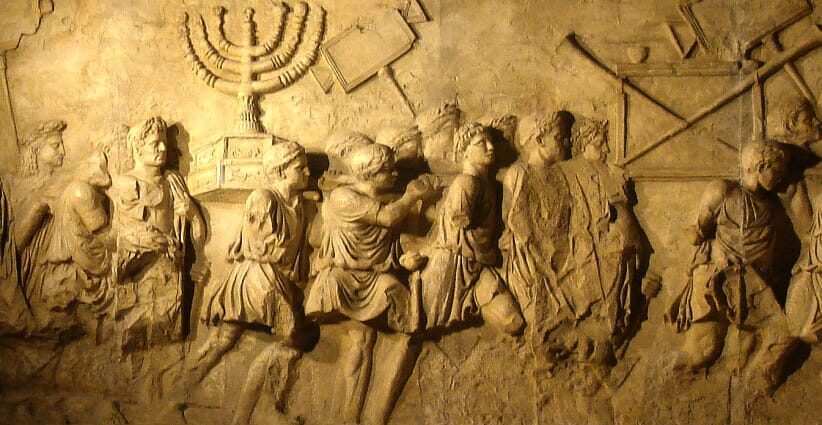
The Second Temple did not fall merely because Rome was mighty. Our sages taught that it fell because of sinat chinam—baseless hatred. A people divided by contempt and self-righteousness accomplished internally what the legions completed externally. Jewish factions became so consumed with proving one another illegitimate that they could no longer preserve the nation they claimed to defend.
Rome supplied the fire. We gathered the wood.
We repeat this teaching so casually that we have stripped it of its power to terrify us. We mourn Jerusalem while humiliating one another, building factions around personalities, and rewarding anger with attention. We have learned how to commemorate destruction without learning how to prevent it. Israel faces its test. Its enemies seek its destruction and must be met with strength. But Jeremiah’s message was that their strength does not absolve us of responsibility for the rot within.
The Third Commonwealth will not be lost only because our enemies are powerful. The Third Temple will not be delayed because heaven has forgotten us. It may be delayed because we turned Jewish life into a theater of ego and mistook performance for redemption. Every fool with a camera, microphone, following, or talent for manufacturing outrage has begun to imagine themselves anointed. Influence becomes prophecy. Virality becomes revelation. Narcissism becomes leadership. Content creation becomes divine election.
The false messiah
The false messianic figure does not always arrive on a white horse. Sometimes they arrive with a ring light, a podcast, an audience, and certainty that God appointed them to speak for everyone. They announce themselves as the voice of the Jewish people before serving them. They declare themselves a leader before building anything that can survive without them. They treat attention as righteousness and criticism as persecution. They ask whether their words strengthen their position, not the Jewish people.
They speak of unity while making themselves the price of admission. They speak of truth while bending facts around their mythology. They speak of sacrifice while ensuring everyone else is sacrificed first. This is not merely an influencer problem. It appears among rabbis who confuse authority with infallibility, activists who excuse dishonesty, politicians who turn history into scenery, donors who mistake money for ownership, and leaders who would rather preside over decline than surrender control.
The Jewish world is crowded with people who insist they alone understand the moment and were selected to save us. Many were barely visible before October 7, 2023—not because they had warned of danger or built institutions. October 7 did not reveal foresight. It supplied the platform from which they began claiming it.
Catastrophe became their credential.
Now their missions require visibility, funding, authority, and obedience—but no blueprint, measurable objective, or destination beyond their platforms. They can tell us who failed and why the crisis proves their importance. They cannot tell us what to build, who will build it, what it will cost, or what success looks like.
They do not have a plan.
They have a persona.
That is not prophecy. That is appetite wearing the garments of destiny.
Nor can we blame only the performers. False prophets require audiences eager to believe them. We reward fury because it entertains us, certainty because complexity exhausts us, and branding because building is difficult. We reward people for describing the fire as though describing it were the same as putting it out. We call popularity wisdom and talking points a plan.
We built this marketplace of messiahs. We feed it with clicks, donations, applause, and surrendered judgment. Leadership builds institutions that survive their founders, accepts criticism without declaring critics traitors, shows up after the cameras leave, and surrenders credit so the mission can succeed. It answers what performance avoids: What must be built? Who is responsible? What will exist five years from now?
A leader asks: What do the Jewish people require?
A narcissist asks: How can the Jewish people be used to prove that I matter?
That distinction is civilizational.
This generation needs Jeremiah at the gate—not polished into a statue, but alive, mud on his body, fire in his lungs, shouting from the pit that sacred names do not sanctify corruption. Jewish institutions will not save us merely because they are Jewish. Hebrew slogans will not save us merely because they are Hebrew. The Jewish state will not save us merely because it is Jewish. The Temple will not be rebuilt merely because we speak longingly of its stones.
A Jewish cause does not purify narcissism.
A large audience does not transform vanity into prophecy.
God does not become obligated to bless every ambition wrapped in the language of Jewish destiny.
We need to stop flattering ourselves. We need to stop treating every loud person as a leader, every viral clip as courage, and every furious performance as moral seriousness. We need to stop confusing those who speak about Jewish destiny with those willing to submit themselves to its demands—or the invocation of destiny with a plan to reach it.
We need to get our heads out of our own importance.
Babylon destroyed the First Temple after we desecrated the covenant. Rome destroyed the Second after we desecrated one another.
We will destroy the possibility of the Third if we desecrate truth itself—if every ego declares itself sacred, every ambition calls itself destiny, and every self-appointed redeemer demands that the nation become an altar to personality. The Jewish people do not need a generation of performers announcing that they are prophets.
We need builders. We need servants. We need leaders capable of standing before the mirror without mistaking their own reflection for God. The enemy is not only outside the walls.
The idol is already inside.