
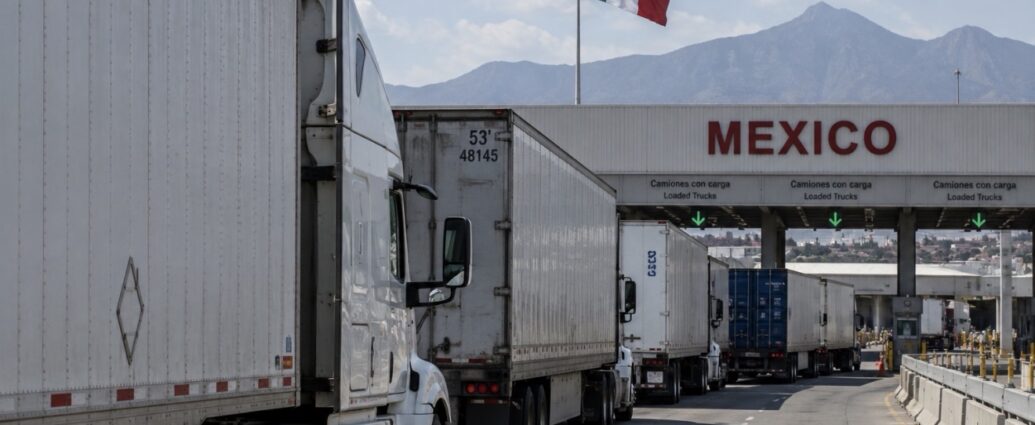
Corporate America is quietly rewriting its manufacturing map again. After years of moving production out of China, many companies are no longer asking whether to diversify their supply chains—they are deciding how much production should move closer to the U.S. market. The biggest beneficiary is increasingly Mexico.
The trend is reshaping investment decisions across manufacturing, logistics, warehousing and transportation. Rather than pursuing the lowest labor costs anywhere in the world, companies are placing greater value on shorter delivery times, lower geopolitical risk and supply chains that can better withstand tariffs, shipping disruptions and changing trade policy.
What began as a response to the U.S.-China trade conflict has evolved into a broader reassessment of global manufacturing strategy.
Executives are increasingly calculating the full cost of production rather than simply comparing wage rates. Ocean freight, inventory carrying costs, political uncertainty, customs delays and supply-chain resilience now weigh more heavily in capital allocation decisions than they did only a few years ago.
Mexico offers a combination that few countries can match.
Manufacturers gain access to the U.S. market under the USMCA, significantly shorter transportation times than Asia, an established industrial base and growing clusters in automotive manufacturing, electronics, aerospace, medical devices and industrial equipment. The proximity also allows companies to respond more quickly to changes in customer demand while reducing the inventory levels required to keep products in stock.
The shift is creating ripple effects across North America.
Industrial developers continue expanding warehouse and manufacturing capacity near the U.S.-Mexico border, railroads are investing in cross-border freight infrastructure, and logistics companies are increasing capacity to handle growing trade volumes. Demand for customs brokers, freight forwarders and cross-border transportation services has also increased as more companies redesign supply chains around regional production instead of global sourcing.
China is not disappearing from global manufacturing.
Instead, many corporations are adopting a “China plus one” strategy, maintaining production in China while adding capacity elsewhere to reduce concentration risk. That approach allows businesses to preserve existing supplier relationships without depending on a single country for critical components or finished goods.
The movement also reflects changing boardroom priorities.
Supply-chain resilience has become a strategic asset rather than simply an operational objective. Investors increasingly question management teams about geographic concentration, supplier diversification and exposure to geopolitical disruptions. A resilient supply chain is now viewed as part of enterprise risk management rather than solely a procurement function.
For businesses, the consequences extend far beyond manufacturing.
Commercial real estate developers, railroads, trucking companies, ports, automation providers and industrial equipment manufacturers all stand to benefit from continued investment in regional production. At the same time, companies that remain heavily dependent on long, complex global supply chains may face greater operational and regulatory risk if trade tensions intensify again.
The broader business story is not that manufacturing is leaving China overnight. It is that corporate America is changing the way it measures risk. Cost still matters, but reliability, speed and resilience increasingly determine where the next factory is built. The companies that adapt first may find their greatest competitive advantage is no longer cheaper production—it is a supply chain designed for a less predictable world.
JBizNews Desk | Washington
© JBizNews.com All Rights Reserved.
Reproduction or distribution without written permission is prohibited.




