JBizNews Desk
Wall Street may begin June focused on manufacturing data, oil prices, and geopolitical developments, but the economic report with the greatest impact on American households arrives Friday morning.
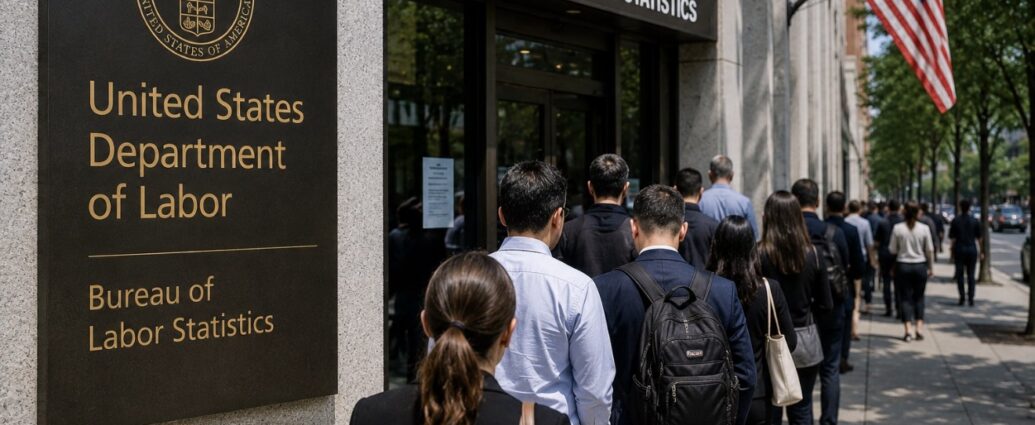
On June 5 at 8:30 a.m. ET, the Bureau of Labor Statistics (BLS) will release its monthly Employment Situation Report, providing the latest snapshot of hiring, unemployment, wages, and labor-market strength across the United States.
For investors, businesses, policymakers, and consumers, it is often the single most important economic report of the month.
The reason is simple: jobs drive spending, confidence, and economic growth.
A strong labor market supports household income, consumer spending, and business investment. A weakening labor market can quickly raise concerns about economic growth, corporate earnings, and the broader outlook for the economy.
The report also plays a critical role in shaping Federal Reserve policy. Hiring trends and wage growth influence inflation expectations, which in turn affect interest rates, mortgage costs, credit card rates, auto loans, and other borrowing expenses faced by consumers.
The labor market has remained remarkably resilient.
The most recent employment report showed the U.S. economy adding approximately 115,000 jobs in April, exceeding many economist forecasts. Earlier revisions also showed stronger hiring than initially reported, reinforcing the view that employers continue to add workers despite economic uncertainty.
The unemployment rate remained at 4.3%, continuing a stretch of historically low joblessness.
Several sectors led job creation.
Healthcare added roughly 37,000 jobs, while transportation and warehousing contributed approximately 30,000 positions. Retail trade also recorded notable gains. Manufacturing employment was relatively flat, while federal government employment continued to decline.
Looking ahead to Friday’s report, many economists expect another month of moderate job growth.
Forecasts generally call for payroll gains near 150,000 jobs, with unemployment remaining near current levels and wage growth continuing at a steady pace.
While the headline payroll number attracts the most attention, economists say three measures deserve particularly close scrutiny.
The first is the unemployment rate.
A stable unemployment rate would reinforce the view that the labor market remains healthy. A meaningful increase could raise concerns that economic growth is slowing more rapidly than expected.
The second is labor-force participation.
This measure tracks the share of Americans who are either working or actively seeking employment. Participation has softened in recent years, and further declines could complicate interpretations of the unemployment rate. A low unemployment rate becomes less encouraging if fewer people are participating in the labor market.
The third key figure is wage growth.
Average hourly earnings provide insight into how quickly worker paychecks are growing. Rising wages generally benefit households, but excessively rapid wage growth can also contribute to inflation pressures and potentially delay future interest-rate reductions.
For many families, these numbers matter more than stock-market records.
The jobs report serves as a real-time measure of the economy’s ability to generate income, create opportunities, and support household financial stability.
Strong hiring often translates into greater job security and confidence. Weak hiring can signal rising risks ahead.
The report arrives at a time when many Americans continue to face elevated housing costs, higher borrowing expenses, and persistent concerns about affordability. Whether the labor market remains strong enough to offset those pressures will be a central question heading into the summer months.
The broader economic outlook may depend on two developments in the days ahead: energy prices and employment.
Oil markets remain sensitive to geopolitical developments, while Friday’s jobs report will provide the clearest picture yet of whether the labor market remains a source of strength for the U.S. economy.
For households, businesses, and investors alike, that makes Friday’s report the number to watch.
JBizNews Desk
© JBizNews.com All Rights Reserved. Reproduction or distribution without written permission is prohibited.