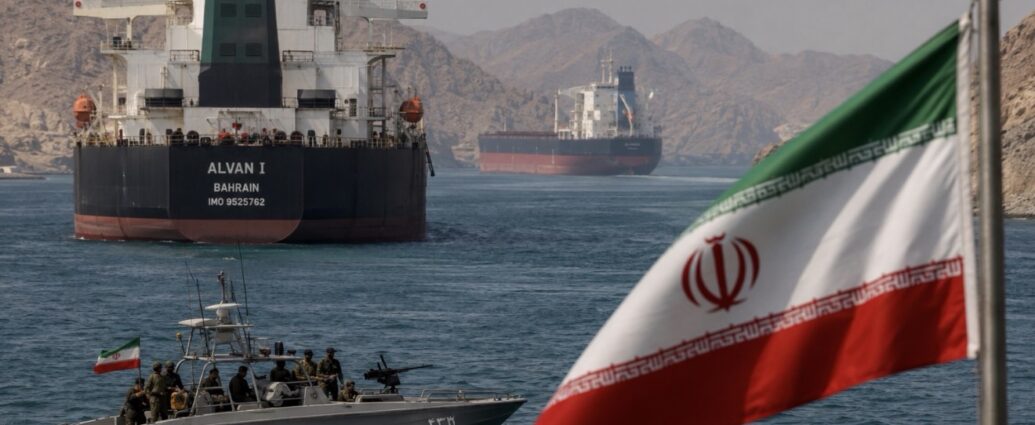
The most powerful nations on Earth are learning a hard lesson: having the strongest military no longer means getting your way. The clearest proof came Tuesday, June 9, when U.S. Energy Secretary Chris Wright said more ships are again moving through the Strait of Hormuz — the narrow sea passage that carries about a fifth of the world’s oil — even as the United States and Iran remain locked in a standoff neither side can fully win. Oil prices fell on his comments. U.S. crude dropped 3.4% to $88.20 a barrel, while Brent crude fell 2.97% to $91.45. President Donald Trump said a deal with Iran to fully reopen the passage was “two or three days away.”
The United States, China, and Russia still possess the largest militaries and some of the most advanced weapons on Earth. But being the strongest is no longer enough to force an outcome — and the consequences are showing up where ordinary people feel them most: in oil prices, taxes, and the cost of everyday life.
Look at the U.S. and Iran. The United States and Israel began strikes against Iran on February 28. When direct talks between the two countries collapsed in April, Trump ordered the U.S. Navy to blockade Iran’s ports. Iran responded by threatening to close the Strait of Hormuz and choke off the world’s oil supply.
Months later, neither side has achieved a decisive victory. The U.S. could not force Iran to surrender. Iran could not keep the oil route closed. The strongest military on Earth still could not simply make the problem disappear.
That fight has come with a steep price. In testimony before the House Appropriations Defense Subcommittee, Pentagon acting comptroller Jay Hurst said the Iran conflict has already cost American taxpayers about $29 billion, up from roughly $25 billion just one month earlier. The bill continues to grow even as major combat operations have slowed.
There is a bigger issue behind the dollars. A report by the Center for Strategic and International Studies (CSIS) titled “Last Rounds? Status of Key Munitions at the Iran War Ceasefire” found that the United States drew down roughly half of its stockpile of its most expensive precision munitions and could require years to fully rebuild those inventories.
To help accelerate production, the Pentagon approved a $500 million investment in Honeywell Aerospace to expand critical missile-component manufacturing. Defense Secretary Pete Hegseth has said the military remains adequately supplied but has also pushed defense manufacturers to increase production capacity.
The strain is now showing up in the federal budget. Trump has proposed a $1.5 trillion defense budget for next year, roughly a 42% increase and the largest one-year military spending jump since World War II. In practical terms, the United States is attempting to project power simultaneously in the Middle East, Europe, and Asia, while spending unprecedented sums to sustain that posture.
Other major powers face their own limitations.
China’s leader, Xi Jinping, warned in May that the United States and China could slide toward open conflict over Taiwan if relations are mishandled. Yet the same CSIS analysis highlighted a critical weakness: China has not fought a major war since 1979 and lacks recent battlefield experience. That is one reason many military analysts believe Beijing is not prepared to launch an invasion of Taiwan in the near term.
Russia offers another example. Its prolonged war in Ukraine exposed weaknesses in logistics, equipment, manpower, and military planning despite Moscow possessing one of the world’s largest armed forces.
The pattern is becoming increasingly clear. The world’s biggest and best-armed nations can still inflict enormous damage. What they can no longer reliably do is force a quick, clean, and decisive outcome.
Why does that matter to ordinary people?
Because the costs ultimately reach consumers and businesses. When oil prices surge, the impact spreads quickly through gasoline, diesel, shipping, air travel, manufacturing, and retail prices. Every additional dollar devoted to military spending is a dollar unavailable for other priorities. And companies that depend on global supply chains must now plan for disruptions that can emerge with little warning.
The takeaway is simple. Ceasefires will come and go. Oil prices will rise and fall. But beneath the headlines, a deeper shift is underway. Military power can still start conflicts and shake global markets. What it increasingly cannot do is control how those conflicts end.
That uncertainty has become a permanent feature of the global economy — and of everyday business.
JBizNews Desk — Global Affairs
© JBizNews.com All Rights Reserved. Reproduction or distribution without written permission is prohibited.