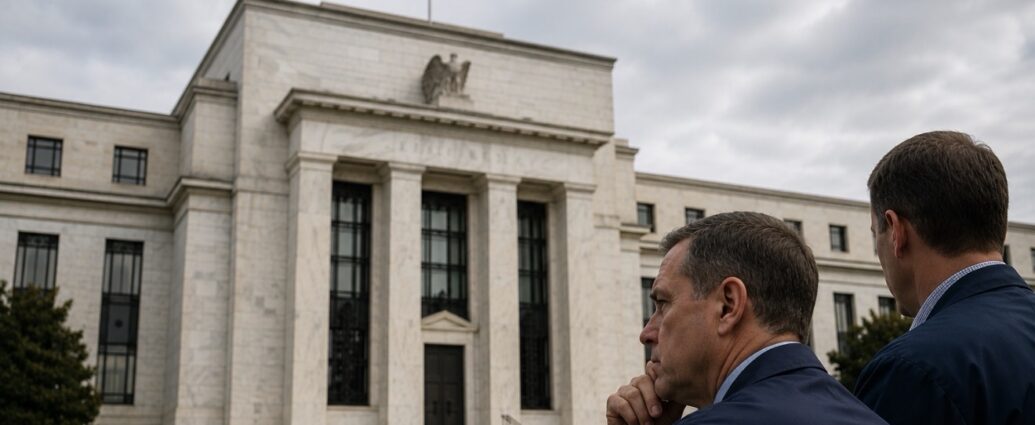
When Federal Reserve Chair Kevin Warsh and the Federal Open Market Committee (FOMC) left interest rates unchanged on June 17, the decision itself was widely expected. What surprised investors was the message behind it.
For the first time this year, the median Fed policymaker now expects interest rates to finish 2026 higher than they are today, reversing the outlook presented in March, when officials still projected lower rates ahead. That shift has turned one upcoming economic release into the most important data point on Wall Street’s calendar.
On June 25, the Bureau of Economic Analysis (BEA) will release the latest reading of the Personal Consumption Expenditures Price Index (PCE), the inflation measure the Fed considers its primary gauge for monetary policy decisions.
Following Warsh’s first meeting as Fed chair, the report now carries unusually high stakes.
The Fed’s updated projections show officials becoming increasingly concerned about inflation. Policymakers raised their forecast for headline PCE inflation in 2026 to 3.6%, up from 2.7% in March. They also increased their projection for core PCE, which excludes food and energy prices, to 3.3%, also up from 2.7%.
Both figures remain well above the Fed’s long-term 2% inflation target.
Even more concerning, 17 of the 18 Fed officials participating in the forecast process said the risks remain tilted toward inflation running higher than expected. Nine officials now project at least one rate increase before year-end, while six expect two hikes.
That leaves the May PCE report as a potential deciding factor.
A stronger-than-expected reading would reinforce the case for higher rates and could push borrowing costs higher for consumers. A softer report could provide the Fed with room to remain patient and avoid tightening policy further.
The outcome matters well beyond Wall Street. Mortgage rates, auto loans, business borrowing costs, and credit card interest rates could all be affected by the path the Fed chooses.
Early forecasts suggest inflation may remain elevated.
Economists at Wells Fargo expect headline PCE prices to rise 0.5% in May from April, pushing annual inflation to roughly 4.1%. They project core PCE to increase 0.3% for the month, resulting in an annual pace of approximately 3.4%.
The latest Consumer Price Index (CPI) report pointed in a similar direction. Government data released on June 10 showed consumer prices rising 4.2% over the previous 12 months.
Much of the renewed inflation pressure has been linked to higher energy costs stemming from the ongoing conflict involving Iran, which began in late February. Oil and gasoline prices have risen significantly since the conflict started, reversing much of the progress made in reducing inflation during the previous year.
Energy remains the key factor driving the Fed’s more cautious stance.
Markets are also closely monitoring developments in the Strait of Hormuz, one of the world’s most important oil shipping routes. Any disruption there could quickly translate into higher energy prices and additional inflation pressure.
For now, investors remain optimistic.
Stocks moved higher on June 18 as technology shares rallied and hopes for progress in U.S.-Iran negotiations outweighed concerns about the Fed’s more hawkish outlook.
The Dow Jones Industrial Average gained 157 points, or 0.31%, to close at 51,650. The S&P 500 advanced 1%, while the Nasdaq 100 climbed 1.9%, led by gains in major technology companies including Nvidia.
U.S. financial markets were closed on June 19 in observance of the Juneteenth holiday.
Still, investor confidence remains fragile.
A single geopolitical headline could quickly reverse market sentiment, and an inflation report that exceeds expectations would arrive just days after the Fed signaled its willingness to tighten policy if necessary.
The timing also increases the report’s importance.
With relatively few major economic releases scheduled during the week, the PCE report is expected to dominate market attention. There are few competing events likely to distract investors from the inflation data.
What has changed is not the report itself, but the weight markets now place on it.
Under former Fed Chair Jerome Powell, policymakers often relied heavily on forward guidance to prepare markets for future moves. Warsh has indicated he intends to place greater emphasis on incoming economic data rather than signaling policy decisions far in advance.
At the June meeting, Warsh declined to submit his own interest-rate projection, arguing that such forecasts can be counterproductive in the conduct of monetary policy.
The result is a Fed that is offering fewer clues about its next move, making each major economic release increasingly important.
That places the upcoming PCE report at the center of the market’s attention.
A reading close to current forecasts would reinforce concerns that inflation remains stubbornly above target and keep the possibility of rate hikes firmly on the table. A significant surprise, either higher or lower, could trigger a sharp market reaction.
For households tracking borrowing costs and consumers watching prices at the gas pump and grocery store, Thursday’s inflation report may provide the clearest indication yet of where both inflation and interest rates are headed next.
JBizNews Desk
© JBizNews.com All Rights Reserved. Reproduction or distribution without written permission is prohibited.