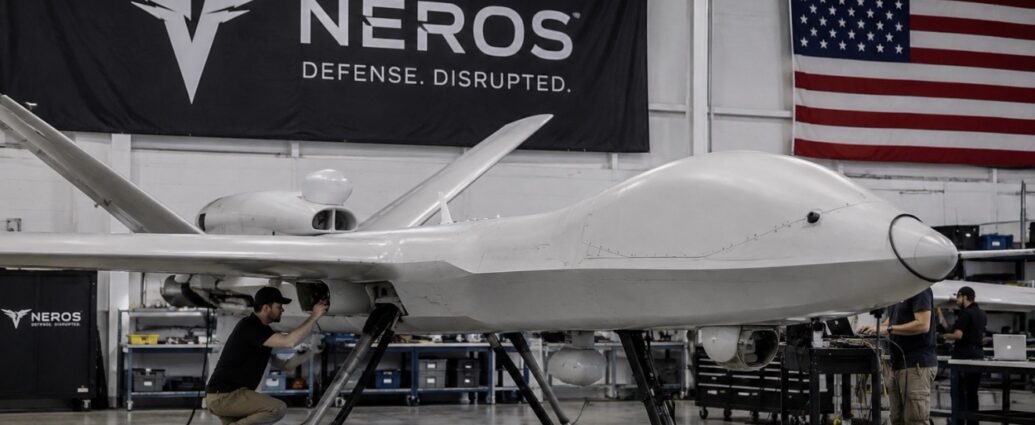
A three-year-old California company that builds $2,000 attack drones is now worth $2.5 billion, roughly triple its value from nine months ago, according to reports Tuesday on its latest fundraising. The jump makes Neros one of the fastest-rising names in American defense manufacturing and puts a hard number on how much investors will pay for a domestic alternative to Chinese-made drones.
The arithmetic behind the leap is straightforward. Neros was valued at roughly $839.5 million as of November 10, 2025, when it closed its last round. That was a $75 million Series B led by Sequoia Capital with participation from Vy Capital US and Interlagos, bringing total capital raised to more than $120 million. Since then the company landed the kind of order that changes a valuation model.
The contract that moved the number
In July, the Army awarded Neros an indefinite-delivery contract worth up to $500 million for its Archer first-person-view attack drones, with Defense Daily reporting the ceiling could cover hundreds of thousands of aircraft — one of the largest small-drone commitments in Army history. A contract ceiling four times the company’s entire lifetime funding, from a customer that historically buys in decades-long cycles, is what a private valuation reprices against.
Neros currently turns out about 1,200 drones a week and plans to reach one million units a year by 2028. Each Archer costs roughly $2,000, and a fully equipped system with a warhead runs about $5,000. That price point is the entire pitch. Traditional prime contractors — General Atomics, Northrop Grumman, Raytheon, Lockheed Martin — build unmanned systems that typically run $500,000 to $20 million per unit at volumes of a few hundred a year, under cost-plus contracts that reward covered costs rather than manufacturing efficiency.
Built by drone racers
Neros was founded in 2023 by Soren Monroe-Anderson and Olaf Hichwa, competitive FPV drone pilots who concluded that Western militaries had fallen behind on domestically manufactured combat drones. The flagship Archer is a compact eight-inch aircraft weighing two to three pounds empty, able to carry a 4.5-pound payload as far as 12 miles, paired with a Crossbow ground control station.
The supply chain is the differentiator Washington cares about. The company has built what it calls a China-free supply chain, designing most components in-house and focusing on resistance to electronic warfare. As Monroe-Anderson has put it, much of the underlying FPV technology worldwide rests on chips, modules and core intellectual property from China, which means the components have to be rebuilt from an allied supply base rather than simply copied.
The battlefield record came first, and the contracts followed. Neros has shipped thousands of systems to Ukraine and to the U.S. Department of War, has been delivering drones to the U.K. Ministry of Defence, and runs an office in Kyiv alongside its Los Angeles headquarters. It has also set up a British subsidiary with up to £10 million of investment over five years to support U.K. sovereign drone manufacturing.
A sector repricing itself
Neros is not moving alone. Defense technology venture funding hit a record $49.1 billion in 2025, nearly double the prior year, and Anduril closed a $5 billion round at a $61 billion valuation in May. In June, Berlin-based Stark Defence raised €500 million from Sequoia and Founders Fund at a €3.2 billion valuation, up from €140 million raised in total previously. British air defense startup Cambridge Aerospace raised $300 million at a $3.4 billion post-money valuation this week.
What it means for business
Cheap, mass-produced drones are becoming a manufacturing category rather than a weapons program, and that pulls demand down into a supplier base of machine shops, battery makers, radio and optics firms, and injection molders — most of which do not think of themselves as defense companies. A one-million-unit annual target requires a domestic parts pipeline that does not currently exist at that scale, and the firms that build it will be doing so on orders that did not exist two years ago.
The risk sits in the same place as the opportunity. A $2.5 billion valuation on a company whose revenue is concentrated in government programs assumes those programs keep funding at the pace they set this year. Contract ceilings are not the same as delivered orders, and the gap between the two is where defense startups have historically stumbled.
JBizNews Desk | New York
© JBizNews.com All Rights Reserved. Reproduction or distribution without written permission is prohibited.