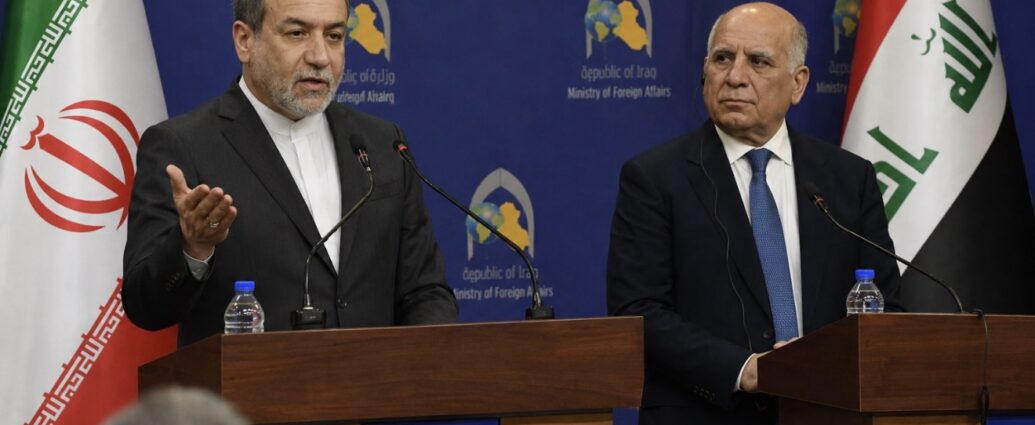
Iran’s foreign minister, Abbas Araghchi, declared on Sunday, June 28, that his country alone holds authority over the Strait of Hormuz and will place the waterway “entirely under Iranian administration within the next 30 days,” speaking at a press conference in Baghdad alongside Iraqi Foreign Minister Fuad Hussein. According to Iran’s state news agency IRNA, Araghchi said no other government or international body has any role in reopening the strait under the memorandum of understanding signed earlier this month, and he warned that any attempt to set up “parallel structures” would only raise tensions and delay the return of normal shipping.
The warning carried weight because it followed two nights of renewed fighting. A ceasefire built around the June 17 memorandum has frayed badly in recent days. U.S. forces struck Iranian targets on Saturday after Washington accused Tehran of hitting an oil tanker in the strait with a drone. Early Sunday, Iran answered with missiles and drones aimed at Kuwait and Bahrain, where a residential building in Muharraq was struck and Bahraini air defenses reported intercepting several incoming weapons. President Donald Trump responded by threatening to “militarily complete the job” if the attacks continue, saying Iran had again violated the truce.
For ordinary households far from the Persian Gulf, the dispute over who runs Hormuz matters because of what moves through it. Roughly one-fifth of the world’s seaborne oil passes through the narrow channel between Iran and Oman, along with large volumes of liquefied natural gas. Every time the waterway opens, prices at the pump and in the grocery aisle ease; every time it closes, they climb. The strait sits at the center of the global fertilizer trade as well, which feeds directly into the cost of growing corn, wheat and other staples, so the back-and-forth in Baghdad reaches American kitchen tables more directly than it might appear.
Oil markets had been moving lower before the weekend flare-up. Brent crude futures for August delivery settled down 4.34% at $71.99 a barrel on Friday, June 26, while U.S. West Texas Intermediate for August fell 3.74% to $69.23. That marked the first time WTI closed below $70 since February 27, the day before the war began, as more tankers slipped out of the strait and eased fears of a prolonged supply squeeze. Traffic had recovered sharply in mid-June, with the U.S. military reporting a single-day record of about 16 million barrels transiting on June 21. Sunday’s strikes threaten to reverse that progress when trading resumes.
Adding to the friction, the U.S. Navy-led Joint Maritime Information Center announced on June 27 that it had widened a shipping route through Hormuz near Oman to allow more naval traffic in both directions, a step widely read as a direct challenge to Iran’s claim of sole control. Oman has separately proposed a new corridor for tankers along its own coastal waters to reduce risk for commercial crews, an idea Araghchi pointedly rejected on Sunday as exactly the kind of “separate arrangement” Tehran will not accept.
Analysts remain skeptical that the on-again, off-again diplomacy has settled anything. Scott Nations, president of Nations Indexes, said on CNBC that markets were “being too optimistic, because nothing really has been resolved,” adding that Iran “knows that they have the world economy where they want it if they want to shut down the strait.” Rory Johnston, founder of Commodity Context, has estimated that a durable reopening would likely knock $10 to $20 off crude prices on speculative positioning alone, but argued the relief would be temporary, with damaged infrastructure and lingering outages anchoring Brent in the $80-to-$90 range rather than returning it to pre-war levels.
The standoff also complicates an already shaky oil cartel. The United Arab Emirates left OPEC in May, and Iraq has reportedly pressed the group for a higher production quota while signaling it could exit if its demands are not met. Treasury Secretary Scott Bessent has warned that Washington would “aggressively” sanction Oman if it helped Iran collect transit fees in the strait, a threat that hangs over any alternative-corridor plan.
What comes next now hinges on whether the latest exchange of fire pulls both sides back to the negotiating table or hardens positions further. Iran has framed its 30-day timeline as a path to restoring pre-war shipping levels, but only on its terms. With the memorandum’s toll-free window ticking and U.S. and Iranian negotiators still apart on key commitments, the coming week is likely to set the tone for fuel prices, food costs and inflation heading into the summer.
JBizNews Desk | New York
© JBizNews.com All Rights Reserved. Reproduction or distribution without written permission is prohibited.