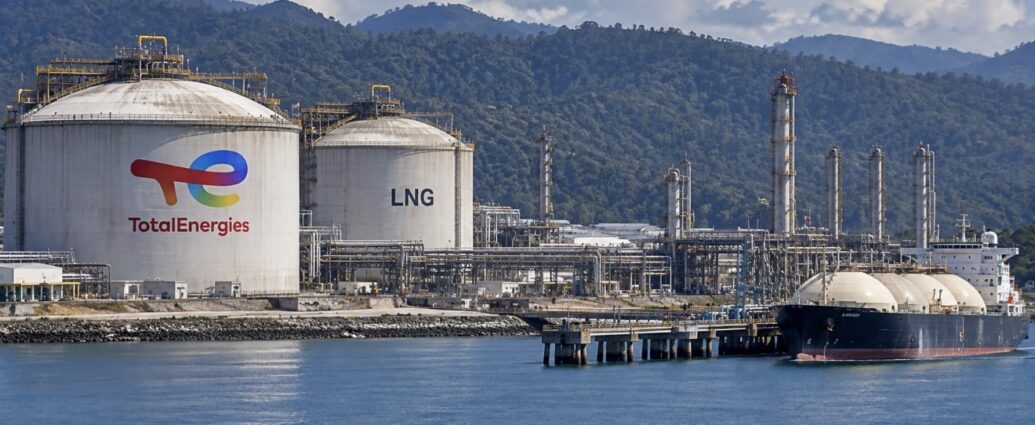
PARIS — TotalEnergies is handing operational control of the massive Papua LNG project to ExxonMobil while cutting its own stake, as the partners try to push the long-delayed development toward a final investment decision with a significantly lower price tag.
The project is now expected to cost about $14 billion, down by nearly $4 billion from earlier estimates after redesign work, contracting changes and tighter cost controls.
TotalEnergies said it will reduce its interest in the project to 20%, while ExxonMobil will assume operatorship.
The move is a major example of how global energy companies are changing the way they approach multibillion-dollar projects.
For years, large oil and gas developments were often approved with the expectation that scale itself would eventually justify the cost.
That thinking has changed.
Investors now demand that major energy companies prove they can control spending, generate strong returns and avoid projects that take years to build but produce weak economics.
Papua LNG has become a test of that new discipline.
The project is designed to develop natural-gas resources in Papua New Guinea and supply liquefied natural gas to global markets, particularly in Asia.
LNG remains one of the most important parts of the global energy system because it allows natural gas to be cooled into liquid form, shipped across oceans and delivered to countries that cannot rely entirely on domestic pipelines.
Demand for LNG has remained especially important in Asia and Europe, where governments and utilities are trying to diversify energy supplies and reduce dependence on politically risky sources.
But LNG plants are enormously expensive.
They require gas production, pipelines, processing plants, liquefaction equipment, export terminals and specialized ships.
That means a few billion dollars in cost overruns can materially damage returns.
The roughly $4 billion reduction in Papua LNG’s expected cost is therefore not a minor adjustment.
It is central to whether the project can compete for capital against other energy investments around the world.
ExxonMobil taking operatorship also changes the structure of the project.
Exxon already has extensive experience in Papua New Guinea through the existing PNG LNG development and has long-standing infrastructure and operating expertise in the country.
That could help reduce duplication and improve execution.
TotalEnergies, meanwhile, keeps exposure to the potential upside while reducing the amount of capital it must commit directly.
The companies are aiming to reach a final investment decision by the end of 2026.
If approved, construction would represent one of the largest private investments in Papua New Guinea and could create significant demand for engineering, construction, shipping and energy-service companies.
The project would also add more LNG supply to global markets at a time when countries are competing to secure long-term gas contracts.
For TotalEnergies, the message is clear.
The company is still willing to participate in giant energy projects.
But it wants those projects to be cheaper, more efficient and more disciplined than many of the megaprojects that defined the previous generation of oil-and-gas expansion.
Papua LNG may still move forward.
It is just being rebuilt around a very different assumption:
big projects now have to prove they deserve the money before the money is committed.
JBizNews Desk | Paris
© JBizNews.com All Rights Reserved. Reproduction or distribution without written permission is prohibited.