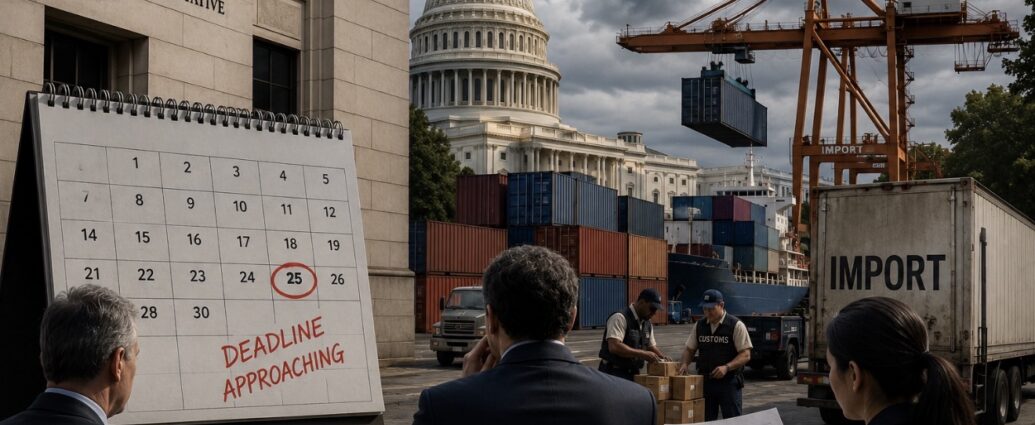
Fresh tariffs on dozens of U.S. trading partners could arrive within days, U.S. Trade Representative Jamieson Greer signaled Tuesday, as the temporary 10% global import duty that has anchored the administration’s trade policy since winter prepares to lapse. Speaking on CNBC, Greer said the government expects to act soon but declined to attach a timeline, citing an obligation to brief Congress and other stakeholders before any formal announcement.
The urgency is built into the calendar. The across-the-board 10% tariff, imposed in February under Section 122 of the Trade Act of 1974, is set to expire at 12:01 a.m. Friday. That measure was itself a stopgap, put in place within hours of a Supreme Court ruling that struck down the earlier “liberation day” tariff structure. With little sign that Congress intends to extend the current authority, the administration has been assembling a replacement.
The likely vehicle is a round of duties the trade office proposed in early June, grounded in Section 301 and justified by claims that trading partners tolerate forced labor in their supply chains. Those proposed tariffs would run between 10% and 12.5% and, by Greer’s account, would touch economies accounting for roughly 99% of American trade — a list that includes Mexico, Taiwan, the United Kingdom, China, Australia, Japan and Brazil. According to reporting Greer was responding to, any near-term levies would probably match the existing 10% rate, while separate investigations proceed in the background to build the legal foundation for steeper duties later.
The warning came a day after President Trump escalated a separate fight with Canada, invoking Section 338 of the Tariff Act of 1930 to impose 50% tariffs on a wide range of Canadian goods, effective in mid-August. Greer defended the move in a written statement, arguing that Canada — unlike other partners — has continued to retaliate against U.S. efforts to rebalance trade. He cited Canada pulling American alcohol from store shelves, granting European dairy producers better market access than U.S. suppliers, and capping vehicle exports from automakers reshoring production to the United States.
Ottawa pushed back hard. Canadian Prime Minister Mark Carney said the 50% tariffs directly violate the USMCA trade pact and characterized the underlying complaints as a response to Trump’s own earlier duties on Canadian autos. Carney said Tuesday that he and Trump had spoken and agreed to intensify negotiations, while making clear that all options remain available should Washington follow through.
For importers, manufacturers and cross-border operators, the practical takeaway is a narrow planning window and wide uncertainty. A tariff regime covering nearly all U.S. trade could reset landed costs across consumer goods, industrial inputs and food supply chains within a single quarter, and the shift from one legal authority to another leaves little clarity on which rates will stick. Companies with exposure to Canadian inputs face a firmer deadline: the 50% duties are scheduled to take hold next month unless negotiations produce a reprieve.
JBizNews Desk | Washington
© JBizNews.com All Rights Reserved. Reproduction or distribution without written permission is prohibited.