Julia Parker – JBizNews Desk
Airfare has climbed 15% and gasoline has moved past $4 a gallon, creating a sharper cost squeeze for corporate travel programs and pushing some employees out of rental cars and onto trains, according to data from SAP Concur. The expense-management provider’s travel data indicate that business travel, after recovering from pandemic-era restrictions, now faces a new constraint: not lack of demand, but a rising bill for each trip.
The shift points to a quiet reset in corporate travel, with companies still sending staff to clients, conferences and internal meetings while forcing more scrutiny on each itinerary, according to SAP Concur. Airfares up 15% and fuel above $4 alter the economics of short-haul trips in particular, since the total cost of flying, renting a car and reimbursing mileage can exceed budgets approved when travel volumes first rebounded.
For finance chiefs, the pressure lands in a category that many companies had only recently reopened, according to SAP Concur. Travel and entertainment budgets tend to serve as flexible spending valves, and the latest data suggest that procurement teams have moved from blanket trip approvals to route-by-route decisions. That means employees may still travel, but the approved trip increasingly comes with tighter booking windows, preferred carriers, rail alternatives and fewer add-ons.
The airfare increase also complicates airline expectations for higher-yield corporate demand, according to SAP Concur data. Business travelers often book closer to departure and pay more flexible fares than leisure passengers, making them valuable to carriers. Yet if companies respond to higher ticket prices by trimming frequency, shifting meetings online or moving short city-pair trips to rail, the revenue mix for airlines could become less predictable even if planes stay full.
Car-rental providers face a different version of the same problem, according to SAP Concur, which found business travelers skipping the rental car entirely in favor of train travel. That behavior cuts more than the base rental charge from an expense report. It can also reduce fuel reimbursement, parking, tolls and insurance-related fees, turning rail into a broader cost-control tool rather than a simple substitute for one leg of a trip.
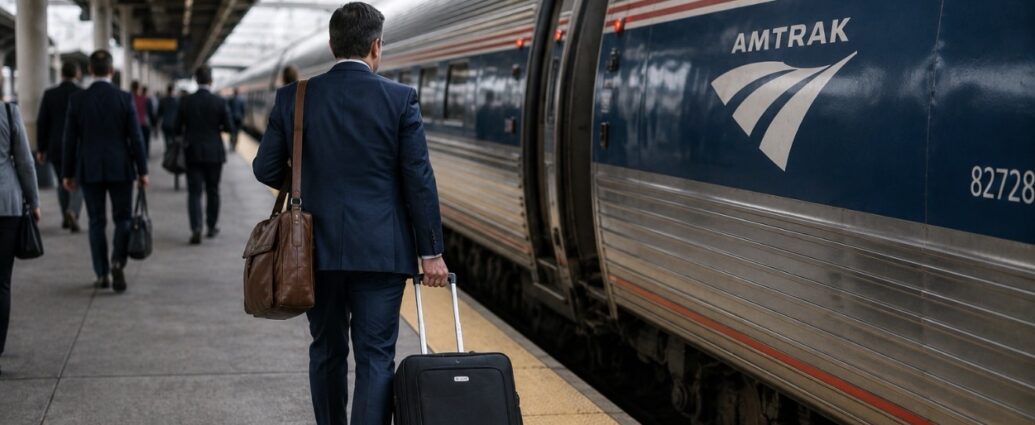
Rail operators occupy the favorable side of the shift, particularly in dense corridors where stations sit closer to business districts than airports, according to SAP Concur data. Amtrak identifies the Northeast Corridor as one of its core business markets, and the current cost backdrop gives rail a stronger pitch to corporate travel managers: fewer transfers, lower ancillary costs and more predictable ground time when gasoline and airfare both rise.
The change also highlights the strategic role of travel-management software, according to SAP Concur, a unit of SAP. When prices move quickly, companies rely more heavily on booking controls, expense-policy flags and real-time reporting to steer employee choices. In that setting, a rail booking no longer reflects personal preference alone; it reflects policy design embedded in corporate systems that rank cost, time and compliance.
The broader industry has already shifted toward measured spending discipline, according to GBTA, which tracks corporate travel trends and has emphasized cost management as a recurring concern for travel buyers. The latest SAP Concur data reinforce that theme by showing travel demand colliding with inflation in the most visible categories: airfare, fuel and ground transportation. For investors, that mix matters because it separates nominal travel growth from profitable volume growth.
Airlines still benefit from resilient travel demand, and Airlines for America has consistently identified business travel as a key component of carrier economics. But SAP Concur data suggest that corporate customers may increasingly resist simply absorbing higher fares. Revenue managers can raise prices only to the point that employers accept the trip as necessary, and the rail shift shows that companies now have practical alternatives on some routes.
The pressure on ground transport may prove more immediate, according to SAP Concur. A traveler who swaps a rental car for a train removes an entire revenue opportunity for rental operators and potentially lowers related spending at airport counters. For corporate travel departments, the savings can appear across several expense lines, making the substitution easier to defend to senior finance teams than a simple downgrade from one airline fare class to another.
For companies, the latest data describe a travel market that has not collapsed but has become more conditional, according to SAP Concur. Trips need clearer commercial purpose, bookings need closer control and employees may find that the fastest option no longer qualifies as the approved one. The result: business travel continues, but with a tighter financial filter and a growing role for rail where it can replace flights, rental cars or both, according to SAP Concur. JBizNews Desk