
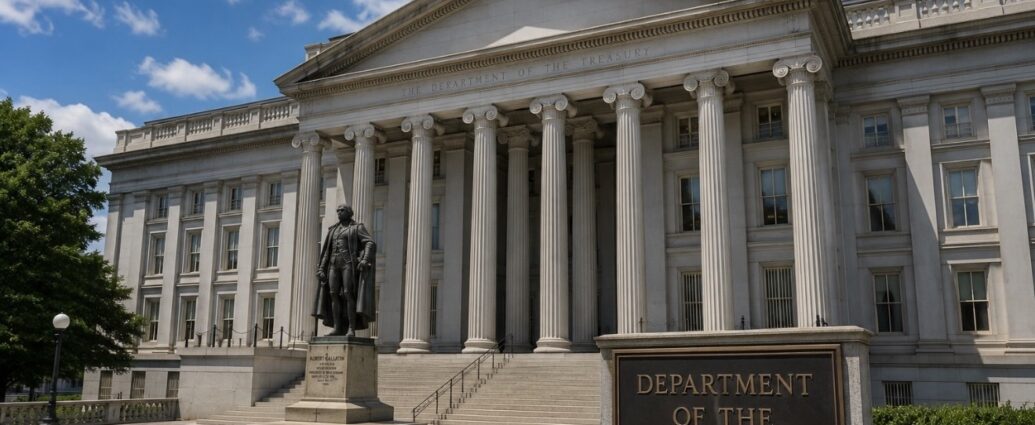
WASHINGTON, July 24, 2026 — The Treasury Department found that no major U.S. trading partner manipulated its currency for an unfair competitive advantage during the four quarters through December 2025, but it kept China and nine other economies under heightened monitoring.
China, Japan, South Korea, Taiwan, Thailand, Singapore, Vietnam, Germany, Ireland and Switzerland remain on Treasury’s Monitoring List, according to the department’s semiannual foreign-exchange report delivered to Congress on July 23.
The review covered economies responsible for nearly 80% of U.S. trade in goods and services.
Treasury examines countries using measures that include their trade balance with the United States, overall current-account surplus and the scale and persistence of intervention in foreign-exchange markets.
A country’s placement on the list does not mean Treasury has formally determined that it manipulated its currency. It signals that the government believes the economy’s policies or external balances require continued scrutiny.
Currency policy can alter the price of imported goods just as directly as a tariff.
When a foreign currency weakens against the dollar, products from that country become cheaper for American buyers, while U.S.-made goods become more expensive for customers abroad. That can benefit American importers and consumers but create additional pressure on domestic manufacturers and exporters.
Treasury again highlighted China’s limited transparency around its foreign-exchange activity. Beijing does not disclose currency intervention with the same frequency and detail as many other large economies, making it harder for markets and governments to determine whether state institutions are influencing the renminbi.
The department warned that it could consider a future manipulation finding if evidence showed China was intervening to prevent its currency from strengthening.
The review arrives as U.S. trade policy is becoming more aggressive. New tariffs took effect Friday on imports from 60 trading partners, including China, the European Union, Japan, South Korea and India.
Tariffs and exchange rates can partially offset one another. A tariff raises the dollar cost of imports, while depreciation in the exporting country’s currency can make those same goods cheaper.
That interaction will be watched closely by manufacturers, retailers and agricultural exporters. A business may face a new tariff on imported components while simultaneously receiving some relief because the supplier’s currency has weakened.
Treasury’s findings can also influence diplomatic negotiations. Monitoring-list placement gives Washington a formal basis to press foreign governments for greater transparency, reduced intervention or changes in economic policy.
The next report will assess whether the new tariff system, changing capital flows and energy-market disruptions produce more significant currency intervention during 2026.
JBizNews Desk | Washington
© JBizNews.com All Rights Reserved. Reproduction or distribution without written permission is prohibited.





