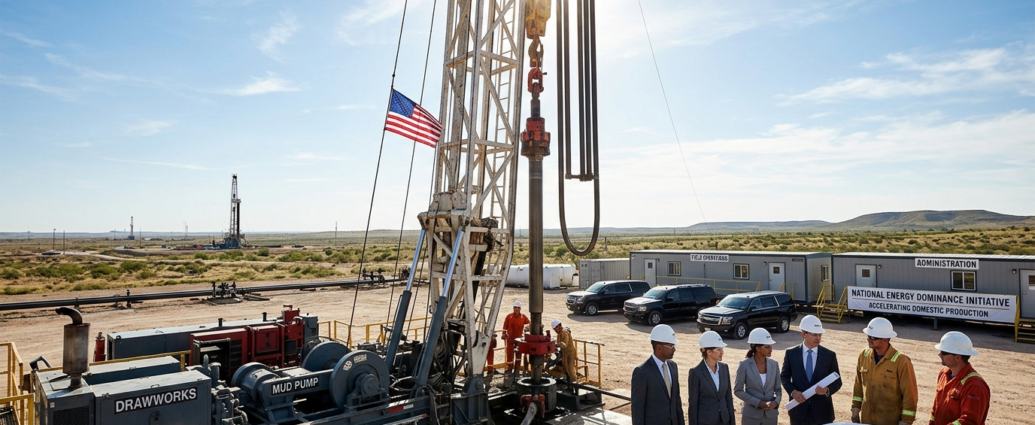
WASHINGTON — In a move signaling a sharp departure from previous climate-centric policies, the Trump administration has issued an urgent directive to the nation’s top energy executives, calling for a dramatic and immediate increase in domestic oil and gas production. The pivot, framed as a return to “Energy Dominance,” aims to slash domestic energy costs and leverage American fuel exports as a primary tool of foreign policy.
The administration’s “drill, baby, drill” mandate was delivered during a series of high-level briefings between Department of Energy officials and CEOs from major firms including ExxonMobil, Chevron, and ConocoPhillips.
The Mandate: Production Over Permitting
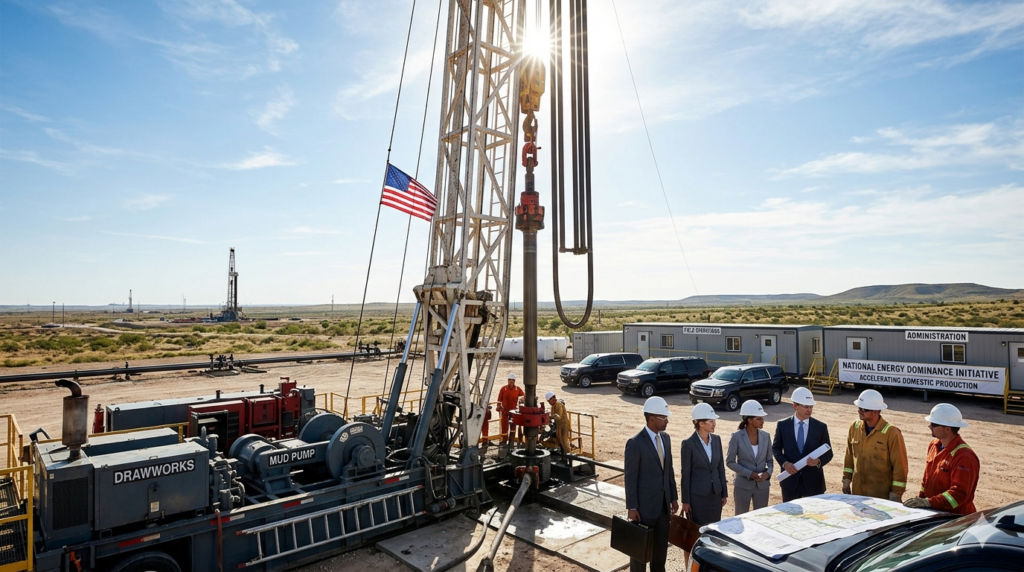
The administration’s strategy focuses on dismantling regulatory hurdles that have historically slowed the expansion of extraction projects on federal lands. White House officials have indicated that they are preparing executive orders to streamline the environmental review process and reopen vast swaths of the Arctic and offshore Atlantic for exploration.
“The era of energy begging is over,” said a senior administration official during a press briefing. “We are telling our producers that the federal government is no longer an obstacle but a partner. The goal is simple: increase supply, lower the price at the pump, and ensure that American energy powers the world.”
The directive comes as WTI (West Texas Intermediate) crude continues to hover around $93 – $96 a barrel, with the administration arguing that a surge in U.S. output is necessary to stabilize global markets currently rattled by volatility in the Middle East and Eastern Europe.
Industry Skepticism: Capital Discipline vs. National Duty
Despite the administration’s enthusiastic push, the response from Houston and Oklahoma City has been one of “cautious cooperation.” Following years of investor pressure to prioritize “capital discipline” and stock buybacks over expensive new drilling projects, many oil majors are hesitant to flood the market and risk a price collapse.
“We share the administration’s goal of energy security,” said Mike Wirth, CEO of Chevron, in a recent industry forum. “However, the industry requires long-term regulatory certainty and a stable investment climate. You can’t just flip a switch on production; it requires infrastructure, labor, and a clear understanding of the global demand trajectory.”
Market analysts note that while the administration can ease permits, the ultimate decision to drill remains with Wall Street, which has become increasingly focused on quarterly dividends rather than volume growth.
Geopolitical Leverage
The push for increased drilling is as much about diplomacy as it is about economics. By increasing Liquefied Natural Gas (LNG) exports, the Trump administration intends to reduce European dependence on adversarial energy sources.
“Energy is the backbone of our national security,” stated Secretary of State Marco Rubio in a recent address. “By becoming the world’s undisputed leading energy producer, we provide our allies with a reliable alternative and diminish the leverage of those who use energy as a weapon against us.”
Environmental and Legal Hurdles
The administration’s aggressive stance has already drawn sharp criticism from environmental advocacy groups, who argue that the rollback of methane regulations and the expansion of federal leasing will derail international climate commitments. A wave of litigation is expected from several coastal states and non-profit organizations, potentially tying up new leases in the court system for years.
“This is a reckless retreat into the past,” said a spokesperson for the Sierra Club. “While the rest of the world is transitioning to the green economy, this administration is doubling down on the fuels of the last century at the expense of our climate future.”
Market Outlook
For the business community, the administration’s focus on deregulation and infrastructure build-out—including the expedited approval of pipelines—is seen as a net positive for the industrial sector. However, the true impact on global oil prices will depend on how quickly the “permitting reform” can translate into actual rigs in the ground.
As the administration moves to hold its first major lease sales in the coming months, the energy sector will be watching for more than just rhetoric. They will be looking for the structural changes necessary to justify a multi-billion dollar pivot back to aggressive expansion.
JbizNews Desk