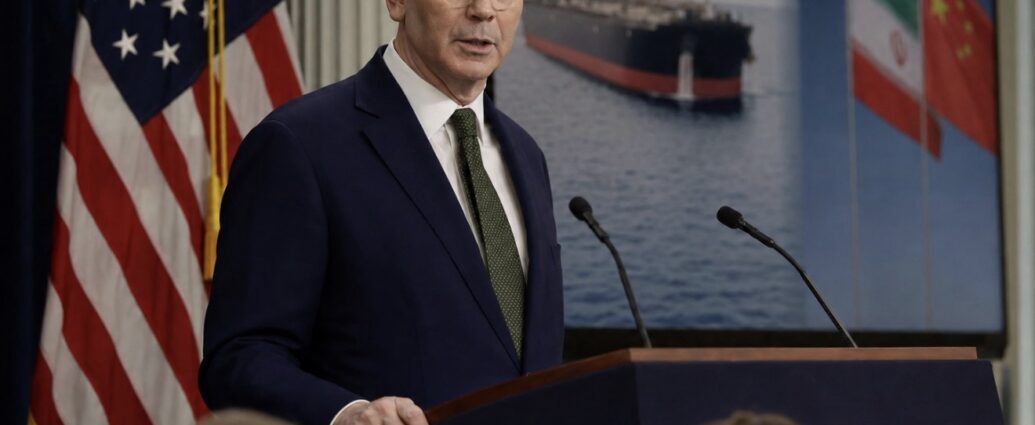
Do business with Iran and you lose the dollar.
That was the ultimatum Treasury Secretary Scott Bessent delivered Monday afternoon, and it was aimed at everyone — not at Tehran. Countries that keep trading with Iran will be pushed out of the dollar-based financial system, he said, giving them a short window to cut those ties. “If people do not want to meet our expectations than we expect, and they should expect that they will leave the dollar system,” Bessent said at the news conference.
The United States cannot arrest a bank in Shanghai or seize a tanker under a Turkish flag. It can cut them off from dollars, and since most of world trade is settled in dollars, that amounts to the same thing.
Bessent announced a wave of new sanctions targeting international companies that help move Iranian shipping, oil, cryptocurrency, gold and aviation business, and said President Donald Trump is personally calling world leaders with specific requests to stop trading with Tehran. He declined to name which countries would be hit, though China, Turkey and the United Arab Emirates are Iran’s biggest trading partners. “Let there be no ambiguity as to the position of the United States,” he said. “An economic engagement of any kind with this murderous regime will expose those responsible to the full reach of American power.” Operating in what he called the gray spaces is no longer acceptable.
China is the test. It has bought as much as 90% of Iran’s oil exports, making it Tehran’s largest trading partner, and analysts say any serious campaign has to reach Chinese banks to work. The administration has been reluctant to go there, wary of damaging relations with President Xi Jinping ahead of an expected state visit next month. Washington has sanctioned a large independent Chinese refinery, four Hong Kong firms and six shipping lines, while leaving Chinese financial institutions untouched. Beijing has told blacklisted refiners to ignore the penalties.
The pressure is landing in Iran. The rial opened Monday at a record 2.02 million to the dollar. Rice is up roughly 60% since the war began and beef has more than doubled, with the International Monetary Fund projecting the economy will shrink more than 5%.
Americans are paying too. Gasoline is running close to a dollar a gallon higher than a year ago as the Strait of Hormuz stays largely closed. For U.S. importers, banks and shipping firms, the practical effect is a fresh round of compliance work: verifying that no counterparty, vessel or correspondent bank anywhere in the chain touches Iranian cargo.
Notably, Treasury threatened the penalties Monday without actually imposing major new ones. The clock Bessent started is the real news — a short grace period, then a choice between Iranian business and the dollar.
JBizNews Desk | Washington, D.C.
© JBizNews.com All Rights Reserved. Reproduction or distribution without written permission is prohibited.