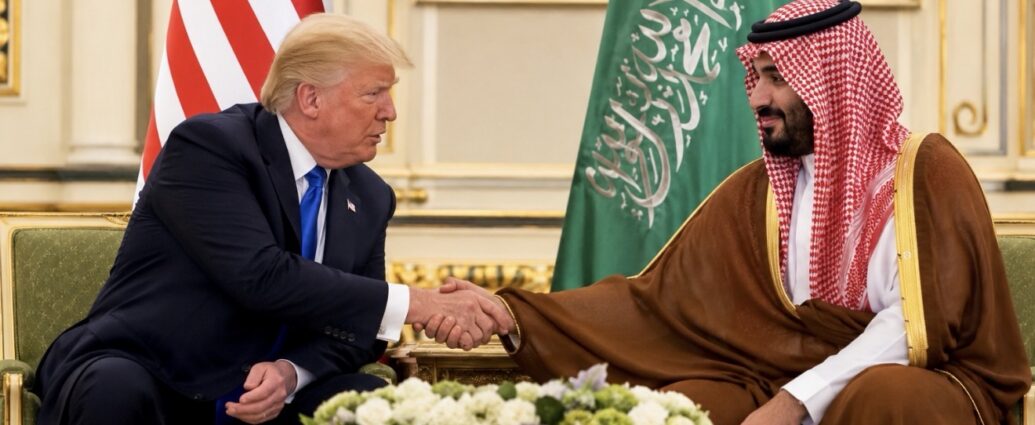
WASHINGTON — Tuesday, July 21, 2026 — President Donald Trump has approved a landmark civilian nuclear cooperation agreement with Saudi Arabia, clearing the way for a 30-year partnership expected to generate tens of billions of dollars in investment while giving American companies a leading role in building the kingdom’s nuclear-energy infrastructure. The agreement is scheduled to be formally signed Wednesday by U.S. Energy Secretary Chris Wright and Saudi Energy Minister Prince Abdulaziz bin Salman.
The accord represents one of the most significant U.S.-Saudi commercial agreements in years and marks a major step in Riyadh’s effort to diversify its economy beyond oil under its Vision 2030 strategy. American engineering, energy, construction, and advanced technology companies are expected to compete for contracts tied to reactor construction, fuel-cycle services, engineering support, safety systems, and long-term operations.
A key provision of the agreement allows for the possibility of a U.S.-built uranium enrichment facility inside Saudi Arabia if a future joint American-Saudi technical review concludes such a project is justified. Administration officials argue that allowing U.S. companies to participate directly would provide Washington with greater oversight and influence over the kingdom’s civilian nuclear program while keeping competitors from securing those projects.
The agreement now heads to Congress for formal review, where lawmakers from both parties are expected to closely examine its nonproliferation provisions. Critics have raised concerns that permitting uranium enrichment within Saudi Arabia could increase nuclear proliferation risks in the Middle East, while supporters argue that U.S. involvement provides stronger safeguards than allowing Riyadh to seek technology from other nations. Because the agreement falls under existing federal review procedures, blocking it would require congressional action capable of overcoming a potential presidential veto.
For American businesses, the economic implications could extend well beyond reactor construction. Large-scale nuclear projects typically generate decades of work involving manufacturing, engineering, cybersecurity, maintenance, environmental services, workforce training, and fuel management. The agreement also positions U.S. firms to compete for future expansion as Saudi Arabia works to increase domestic electricity production while reducing reliance on oil-fired power generation.
Energy analysts say expanding civilian nuclear capacity would allow Saudi Arabia to free more crude oil for export rather than domestic electricity production, potentially strengthening long-term government revenues while supporting broader industrial development. Nuclear power is expected to become one component of the kingdom’s wider strategy that also includes renewable energy, hydrogen production, and advanced manufacturing.
Financial markets are also watching the agreement because it could stimulate investment across America’s nuclear supply chain. Companies involved in reactor technology, specialized construction, uranium services, electrical equipment, industrial manufacturing, and engineering consulting could benefit if major projects move forward over the coming years.
The agreement also reinforces Washington’s broader economic relationship with Saudi Arabia at a time when both governments continue expanding cooperation across energy, infrastructure, technology, defense, and critical minerals. Administration officials describe the accord as both an economic opportunity for American industry and a strategic partnership designed to strengthen U.S. influence in one of the world’s most important energy-producing regions.
JBizNews Desk | Wall Street
© JBizNews.com. All Rights Reserved. Reproduction or distribution without written permission is prohibited.