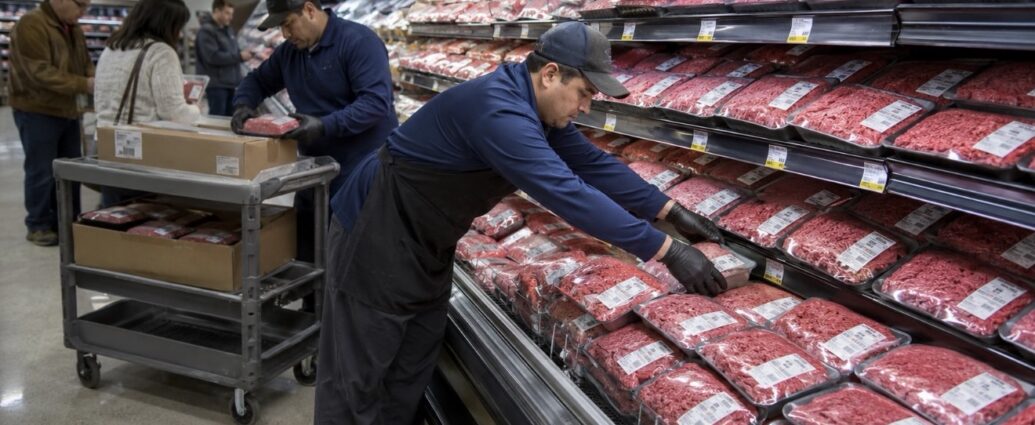
The Trump administration will temporarily allow as much as 300,000 metric tons of ground beef into the United States without triggering higher tariffs, an emergency move intended to bring relief to shoppers facing record beef prices.
President Donald Trump said the imported beef would enter over the next 90 days and be sold at prices 25% below prevailing market levels. The White House has not yet identified the supplying countries, participating retailers or how the promised discount will be enforced.
The additional supply would equal roughly 660 million pounds of beef. That sounds substantial, but it represents only about 2% of the approximately 29 billion pounds Americans are expected to consume this year. The plan may therefore place some downward pressure on ground-beef prices without producing an immediate, across-the-board reduction at supermarket meat counters.
Ground beef is the administration’s focus because the United States relies on imported lean trimmings, which processors blend with fattier domestic beef to produce hamburger. Expanding that supply can reach grocery stores and restaurant chains faster than rebuilding the nation’s cattle population.
America’s cattle herd is now the smallest since the 1950s after years of drought, high feed costs and ranchers reducing their herds. Reversing that decline will take years because ranchers must retain breeding cows instead of sending them to market, temporarily tightening the supply even further.
The import plan consequently creates a difficult balance. Consumers and restaurants want immediate price relief, while American ranchers fear that a sudden influx of lower-cost foreign beef could weaken cattle prices just as they begin investing in rebuilding their herds.
Trump previously expanded the low-tariff quota for Argentine lean-beef trimmings by 80,000 metric tons in February. The new announcement is considerably broader, although critical details remain unresolved.
For shoppers, any savings are most likely to appear first in hamburger, frozen patties and other ground-beef products. Steaks and premium cuts are less likely to fall sharply because the policy is aimed primarily at the lean trimmings used in ground beef.
The administration is also pursuing longer-term measures, including support for smaller meatpacking operations and antitrust scrutiny of the country’s largest processors. Those efforts address the structure of the beef market, but the temporary import window is designed to do something far more immediate: place additional meat into the supply chain before high prices push more families and restaurants toward cheaper proteins.
JBizNews Desk | Washington
© JBizNews.com All Rights Reserved. Reproduction or distribution without written permission is prohibited.