JBizNews Desk | Friday, May 8, 2026
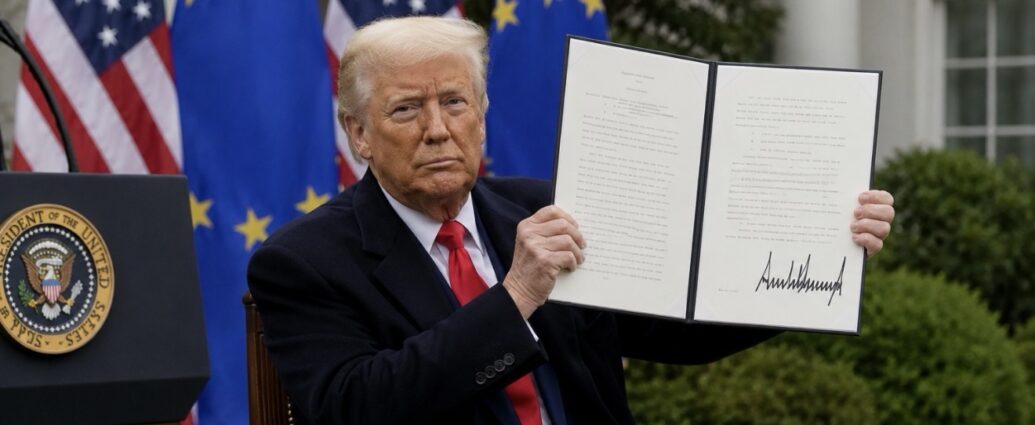
President Donald Trump issued a hard deadline to Europe Thursday evening, warning the European Union it has until July 4 — America’s 250th Independence Day — to fully implement its side of a landmark trade agreement reached last summer or face sharply higher tariffs that could ripple across global markets and raise costs for businesses and consumers on both sides of the Atlantic.
The announcement delays a tariff escalation Trump threatened just last week, when he said duties on European-made cars and trucks could rise from 15% to 25% as early as this week.
Trump made the announcement after what he described as a “great call” with European Commission President Ursula von der Leyen.
“I’ve been waiting patiently for the EU to fulfill their side of the Historic Trade Deal we agreed in Turnberry, Scotland — the largest trade deal, ever!” Trump wrote on social media Thursday evening. “A promise was made that the EU would deliver their side of the deal and, as per agreement, cut their tariffs to zero. I agreed to give her until our country’s 250th Birthday or, unfortunately, their tariffs would immediately jump to much higher levels.”
What the Trade Deal Includes
The agreement reached last summer was designed to prevent a full-scale transatlantic trade war after months of escalating tariff threats between Washington and Brussels.
Under the framework:
- The European Union agreed to reduce or eliminate remaining tariffs on many American goods
- The United States agreed to maintain a broad 15% tariff structure on most EU imports instead of the previously threatened 30%
- Europe committed to purchasing approximately $750 billion in U.S. energy products
That energy commitment has become even more strategically important as Europe attempts to reduce dependence on Middle Eastern energy supplies amid continued instability tied to the Iran conflict.
The problem now is implementation.
From Washington’s perspective, the European Union’s political approval process is moving too slowly.
The European Parliament and EU member states must still formally ratify portions of the agreement, and internal disputes inside Brussels have delayed final approval.
Greenland Dispute Still Haunting Negotiations
One of the largest sticking points involves demands from some European lawmakers to include legal safeguards protecting the EU if Trump later reverses course or threatens European territorial interests.
That concern intensified earlier this year after Trump publicly threatened potential U.S. action involving Greenland, a Danish territory.
Some EU lawmakers want protections inserted into the agreement in case Washington later changes policy or imposes additional trade pressure after ratification.
Several member states, however, reportedly favor implementing the original agreement quickly to avoid further economic instability.
Why Businesses Are Watching Closely
The economic stakes are enormous.
Europe remains one of America’s largest trading partners, with hundreds of billions of dollars in goods moving across the Atlantic annually.
A tariff increase would directly impact:
- European automobiles
- Pharmaceuticals
- machinery
- wine and luxury goods
- industrial equipment
- consumer imports
American businesses relying on European supply chains could see costs rise immediately.
Retailers, importers, manufacturers, and logistics companies would likely face higher expenses that could eventually be passed on to consumers.
On the other side, American exporters — particularly agriculture, defense, technology, and energy companies — are counting on the deal to secure broader access to European markets.
A collapse in the agreement could trigger retaliatory tariffs from Brussels and threaten those export opportunities.
Markets See Another Trump Deadline Strategy
Many analysts and European diplomats privately believe Trump’s latest ultimatum follows a familiar negotiating pattern: issue an aggressive deadline, apply pressure publicly, and then use the leverage to force faster concessions.
Thursday’s call between Trump and von der Leyen appears to have temporarily eased immediate fears of a sudden tariff escalation.
Von der Leyen expressed confidence afterward that Europe would complete the process before the deadline.
“We remain fully committed, on both sides, to its implementation,” she said. “Good progress is being made towards tariff reduction by early July.”
Still, uncertainty remains high.
For businesses with transatlantic supply chains and investors already navigating elevated oil prices, tariff disputes, and global geopolitical tensions, the next eight weeks may determine whether the largest U.S.-EU trade agreement in history stabilizes relations — or unravels into another global trade confrontation.
And this time, the deadline comes with symbolic weight.
America’s 250th birthday.
© JBizNews.com. All rights reserved. This article is original reporting by JBizNews Desk. Unauthorized reproduction or redistribution is strictly prohibited.