For weeks, global oil markets, grocery suppliers, and American consumers had been operating on the assumption that President Donald Trump would eventually feel political pressure from a prolonged conflict with Iran and move quickly toward a deal before the November midterm elections. On Wednesday, during a Cabinet meeting at the White House, Trump publicly pushed back against that idea.
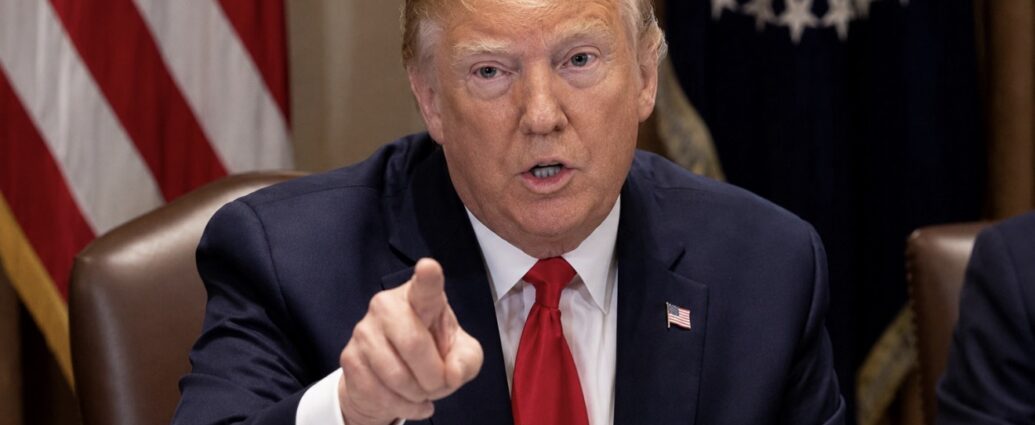
“They want very much to make a deal. So far, they haven’t gotten there,” Trump said. “We’re not satisfied with it, but we will be. We will be either that, or we’ll have to just finish the job.”
When asked directly whether the upcoming election was influencing his decision-making, the president rejected the premise and suggested Iran believed political pressure in the United States would force him into concessions. That statement immediately carried implications for energy markets, inflation expectations, and Wall Street positioning.
The market reaction had already begun earlier in the day. U.S. crude oil fell 5.55% Wednesday to settle at $88.68 per barrel after Iranian state media claimed Tehran intended to restore commercial traffic through the Strait of Hormuz to pre-war levels within one month. The White House quickly disputed the report, calling it inaccurate, but traders still moved aggressively into a lower-oil scenario.
The Strait of Hormuz remains one of the world’s most important shipping chokepoints, carrying roughly 20% of globally traded seaborne crude oil. Any sign of stabilization immediately affects fuel prices, transportation costs, airline expenses, manufacturing forecasts, and food distribution costs across the United States.
Trump’s comments complicated that market assumption. By signaling publicly that he is prepared to continue negotiations without rushing toward a fast resolution, the administration effectively told markets that lower energy prices may not arrive as quickly as many traders had expected.
For consumers, the most immediate impact is gasoline. National fuel prices remain elevated compared with the same period last year, and the summer driving season traditionally increases demand further between Memorial Day and Labor Day. If tensions remain unresolved longer than anticipated, pressure on fuel prices could persist through the summer.
The second impact is groceries and consumer goods. Transportation costs influence pricing across nearly every part of the economy because food, retail inventory, refrigerated products, and imported goods depend heavily on diesel trucking, cargo shipping, and fuel-intensive logistics networks. Sustained oil prices near current levels can continue filtering into supermarket prices and household expenses.
Markets, however, continued to show resilience Wednesday despite the geopolitical uncertainty. The Dow Jones Industrial Average closed at a record 50,644.28, while the S&P 500 finished at 7,520.36 and the Nasdaq Composite closed at 26,674.73, also record highs.
The market’s willingness to continue buying equities despite prolonged Middle East uncertainty reflects broader investor confidence that the U.S. economy, corporate earnings, and the ongoing artificial intelligence investment cycle remain strong enough to offset geopolitical risks.
There is also a significant political layer underneath the administration’s posture. Trump entered Wednesday’s Cabinet meeting following a major Republican primary victory in Texas, where Attorney General Ken Paxton defeated four-term Senator John Cornyn after receiving Trump’s endorsement. The result reinforced Trump’s standing inside the Republican Party and may have reduced concerns within the White House that a prolonged conflict automatically weakens his political position heading into November.
At the same time, Republican strategists remain aware of the risks associated with prolonged inflation, elevated gasoline prices, and broader voter frustration tied to economic pressure. Competitive House districts across states such as Pennsylvania, Wisconsin, and Colorado remain highly sensitive to shifts in fuel costs and consumer sentiment.
For Tehran, Wednesday’s message was direct: the White House is signaling publicly that it does not view Election Day as a negotiating deadline.
For American households, the consequences are more practical. The timeline for lower gasoline prices, reduced grocery inflation, and broader economic relief may depend heavily on how long tensions in the Middle East continue — and whether negotiations ultimately produce a meaningful agreement.
The administration made clear Wednesday that it is prepared to continue the standoff longer than markets may have anticipated. Investors, consumers, and global energy markets are now adjusting to that possibility in real time.
Washington — JBizNews Desk
© JBizNews.com All Rights Reserved. Reproduction or distribution without written permission is prohibited.