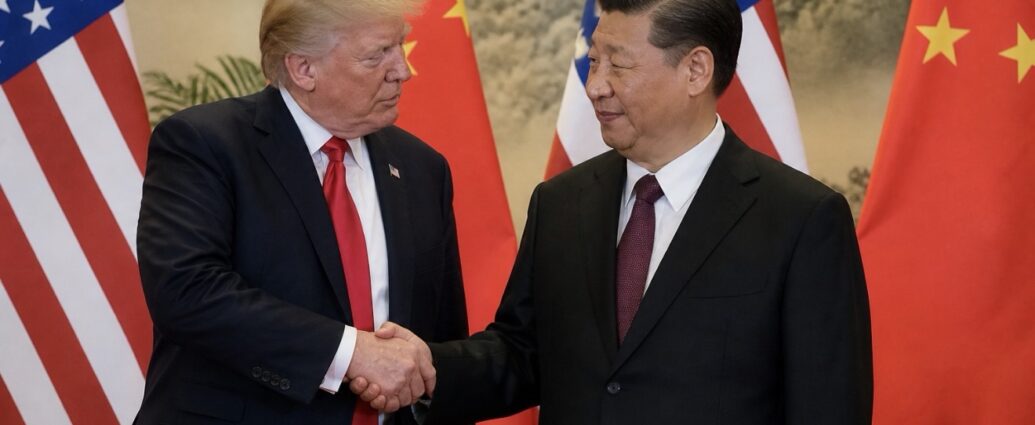
The President’s May 14 Beijing Trip Will Be the First U.S. Presidential Visit to China in Nearly a Decade — Arriving Against a Backdrop of Trade Fights, Taiwan Arms Sales, AI Theft Accusations, and a Middle East War That Cuts Across Both Nations’ Interests.
By JBizNews Desk | Washington — May 5, 2026
President Donald Trump said Monday he is looking forward to his upcoming meeting with Chinese President Xi Jinping, signaling that a high-stakes summit between the world’s two largest economies remains on track despite a relationship that has grown more strained by the week.
When Trump arrives in Beijing on May 14, he will become the first sitting U.S. president to visit China in nearly a decade — and the first since his own trip in 2017. The tone of his remarks stands in contrast to the reality of a bilateral relationship now defined by deep mistrust and overlapping conflicts.
A Year of Escalation
The lead-up to the summit has been marked by a steady accumulation of tensions.
In early 2025, Trump imposed sweeping tariffs on imports, prompting aggressive retaliation from Beijing. Both countries escalated with tariffs exceeding 100% on key goods, while China tightened controls on rare earth exports — a sector critical to global manufacturing and one where it holds dominant leverage.
The friction has extended well beyond trade. A bipartisan group of U.S. lawmakers traveled to Taiwan in recent months to push for increased defense spending, while Washington approved a multibillion-dollar arms package for the island — moves Beijing has repeatedly condemned.
At the same time, the White House has accused China of large-scale intellectual property extraction tied to artificial intelligence, while China has launched its own trade investigations into U.S. practices.
The geopolitical backdrop has only added complexity. The ongoing conflict involving Iran has disrupted global trade flows important to China’s economy, while Beijing has publicly called for de-escalation alongside regional partners.
What’s at Stake in Beijing
Despite the tensions, both sides are entering the summit with clear priorities.
Xi has signaled that China is seeking a framework built on what he has described as mutual respect and stable coexistence. For Beijing, success will be measured by whether the U.S. moderates its approach and commits to a more predictable relationship.
Trade will be central to the discussions. A temporary truce reached in late 2025 included U.S. tariff adjustments and Chinese commitments on supply chains and enforcement issues. That agreement is set to expire later this year, making the Beijing meeting a critical opportunity to extend or replace it.
Taiwan is expected to remain one of the most sensitive issues. China is likely to press for limits on future U.S. arms sales and stronger public opposition to Taiwanese independence — positions Washington has historically resisted.
History Suggests Caution
Past summits between U.S. and Chinese leaders offer a reminder that diplomacy at this level often produces more symbolism than substance.
The 2017 Trump-Xi meeting launched broad dialogue initiatives across multiple areas, but those efforts collapsed within a year as trade tensions escalated. Analysts caution that high-profile visits do not necessarily translate into lasting agreements.
Recent surveys of policy experts reflect that skepticism, with a majority expecting continued instability in the relationship rather than meaningful improvement.
Instead, analysts say the real signals to watch will be more subtle: whether the two sides establish ongoing communication channels, agree to manage disputes through structured talks, or reduce the risk of sudden escalation.
What It Means for Americans
The outcome of the summit carries direct implications for the U.S. economy.
China remains a major source of consumer goods, industrial inputs, and critical supply chain components. Trade tensions over the past year have contributed to higher costs across multiple sectors, affecting everything from electronics to household goods.
A stable agreement could ease some of that pressure. A breakdown could lead to further disruptions and higher prices.
Trump’s visit is widely viewed as the opening phase of a broader diplomatic effort expected to continue later this year, when Xi is anticipated to visit the United States.
For now, the president is projecting optimism.
Whether that translates into tangible progress — or simply another chapter in an increasingly complex rivalry — will become clear only after both sides leave the negotiating table.
JBizNews Desk
© JBizNews.com. All rights reserved.