By JBizNews Desk — April 29, 2026
No Letup in Maximum Pressure Campaign
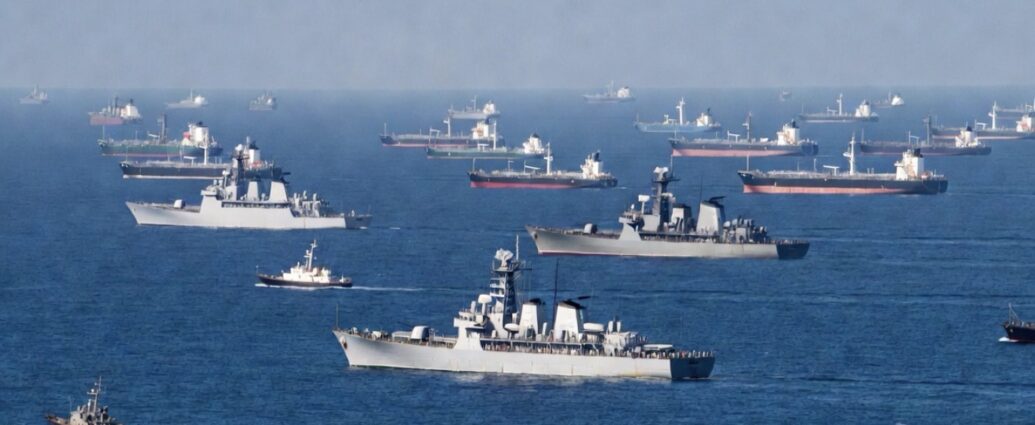
President Donald Trump has instructed aides to prepare for an extended U.S. naval blockade of Iranian ports and the Strait of Hormuz, according to multiple reports. Heather Long, chief economist at Navy Federal Credit Union, described the move as a calculated shift toward sustained economic pressure rather than renewed kinetic action.
Blockade Aimed at Choking Oil Exports
The strategy seeks to further restrict Iran’s ability to export oil, forcing Tehran back to the negotiating table. Oliver Allen, senior U.S. economist at Pantheon Macroeconomics, noted that the blockade has already significantly reduced Iranian oil revenues and is contributing to elevated global energy prices.
Oil Markets React Sharply
Brent crude extended gains and traded above $110–$114 per barrel amid the news. Diane Swonk, chief economist at KPMG, warned that prolonged disruption in the Strait of Hormuz — through which roughly 20% of global oil passes — could keep energy costs elevated and complicate the Federal Reserve’s inflation outlook.
Geopolitical and Economic Risks
Guy Berger, chief economist at Homebase, highlighted that while the blockade is seen as lower-risk than direct military escalation, it continues to drive up domestic gasoline prices (now averaging around $4.22 nationally) and adds uncertainty for global supply chains. Iran has reportedly sought relief from the measures, with stalled talks adding to tensions.
Market and Investor Implications
Energy stocks gained on the developments while broader risk sentiment remained cautious. Nicole Bachaud, economist at ZipRecruiter, observed that sustained high oil prices could support certain domestic sectors but risk weighing on consumer spending if prolonged. Gina Bolvin, president of Bolvin Wealth Management Group, advised clients to monitor energy exposure closely as the situation evolves.
Broader Context
The signal comes as the UAE prepares to exit OPEC effective May 1, further complicating global oil coordination. Analysts expect the blockade to remain a central feature of U.S. policy toward Iran in the near term.
What to Watch
• Any official White House or Pentagon statements on the duration of the blockade.
• Impact on upcoming Fed communications and Big Tech earnings reactions today.
• Developments in global oil supply and tanker traffic through the Strait of Hormuz.
JBizNews Desk
© JBizNews.com. All rights reserved. This article is original reporting by JBizNews Desk. Unauthorized reproduction or redistribution is strictly prohibited.