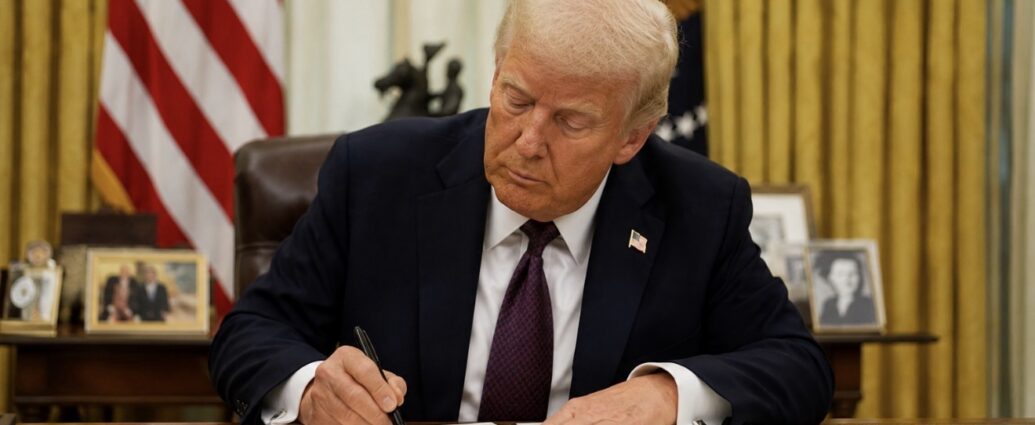
President Trump signed an executive order at the White House on Monday that tells the federal government to recommend fewer vaccines for American children and to stop giving several of the remaining ones on the same day. A draft of the order said the number of vaccines recommended for children should be more limited, and it gave the Department of Health and Human Services 90 days to reassess the sequencing and timing of the childhood schedule.
In plain terms: the shots a child gets, the order they get them in, and how many can be given in a single visit are all being rewritten, and the clock on that rewrite started Monday.
The order pushes single-dose vaccines over combination shots, stating that childhood immunizations should be given at separate medical visits to the maximum extent feasible. It calls for the MMR vaccine to be broken into three separate shots, and it moves RSV and hepatitis A and B into a category reserved for high-risk children. The draft text did not mention autism. The president did.
Speaking before signing, Trump said the administration was announcing what he called the country’s “Gold Standard” childhood vaccination recommendations, and said autism was among the subjects involved. He also said the cause of autism is not known. Decades of studies involving millions of children have found no link between vaccines and autism.
Why drugmakers are watching
The federal childhood schedule is not just guidance. It drives insurance coverage, state school requirements, and the government’s own Vaccines for Children program, which buys shots for roughly half the children in the country. A vaccine that comes off the recommended list loses much of its market in a single stroke.
Merck sits closest to the fire. The company makes the MMR shot used in the United States, along with the combination version that adds chickenpox. Standalone measles, mumps, and rubella vaccines are not currently licensed or sold in this country — Merck stopped making them more than fifteen years ago. An instruction to split MMR into three separate shots therefore points at products that do not exist on the American market today and would take years and new regulatory approval to bring back. Merck’s HPV franchise, Gardasil, is separately exposed if the review reaches recommendations for that shot. Pfizer, Moderna, Sanofi, GSK, BioNTech, and Novavax all carry exposure to routine and childhood immunization revenue.
Analysts had already flagged the risk that even a vague executive action erodes voluntary uptake and destabilizes payer networks and state mandates, while noting the counterargument that the order might direct new studies rather than restrict access outright. Monday’s text lands closer to the first case: it does not ban anything, but it tells the government to trim the list and space out the visits.
The legal wall already standing
This is the second run at the schedule this year. The CDC in January recommended cutting childhood vaccination down to 11 diseases. The American Academy of Pediatrics refused to follow and kept its recommendations at 18. In March, a federal judge blocked the CDC’s changes. The new order acknowledges that litigation has delayed the earlier push, which is the stated reason for pursuing additional measures now.
It cites efforts to align the American schedule with what it calls best practices from peer nations, along with religious liberty and parental authority. The American Academy of Pediatrics has countered that peer nations face different disease conditions and that best practices vary accordingly.
That leaves the same question hanging over Monday’s signature that hung over January’s guidance: whether it survives contact with the courts.
What comes next
The 90-day review is the number to watch. HHS, under Secretary Robert F. Kennedy Jr., now has until roughly early November to come back with a reassessed schedule. Trump’s own political advisers had urged Kennedy to stay off vaccine issues until after the November midterms, out of concern the fight would cost Republicans. The signing overrides that advice.
For manufacturers, the near-term financial hit is not the order itself but what the review produces in the fall — which shots stay on the list, which move to high-risk-only status, and whether pediatricians and insurers follow Washington or follow the pediatricians’ academy. For parents, the practical change, if the recommendations hold, is more trips to the doctor’s office for the same set of shots.
JBizNews Desk | Washington
© JBizNews.com All Rights Reserved. Reproduction or distribution without written permission is prohibited.