JBizNews Desk | Thursday, May 7, 2026
President Donald Trump is moving ahead with a high-stakes summit in Beijing next week despite growing concerns inside China over the escalating U.S.-Iran conflict — a geopolitical clash now deeply intertwined with global trade, energy security, supply chains, and financial markets.
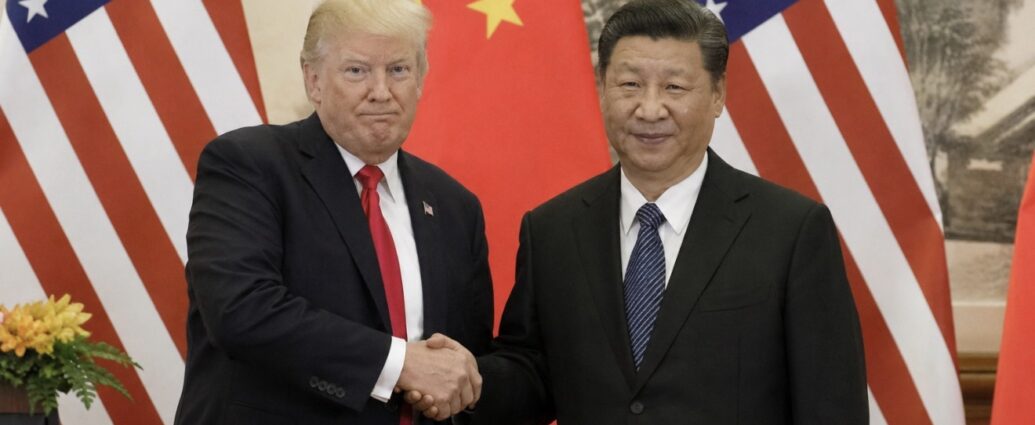
Trump and Chinese President Xi Jinping are scheduled to meet May 14–15 in Beijing for what will be the first visit by a sitting U.S. president to China in nearly a decade. The summit had already been delayed once following the outbreak of the U.S.-Iran war that triggered a global energy shock and intensified instability across international markets.
Despite reports of unease within Beijing over hosting the summit while the Middle East conflict remains unresolved, Trump dismissed suggestions that China had challenged the United States over the war. “We haven’t been challenged by China. They don’t challenge us,” Trump told reporters this week at the White House, adding that Xi “wouldn’t do that.”
China’s Energy Fears Are Growing
Behind the diplomacy lies a major economic concern for Beijing: energy security.
China remains heavily dependent on oil and liquefied natural gas shipments passing through the Strait of Hormuz, one of the world’s most critical energy chokepoints. Before the conflict, roughly 13% of China’s imported crude came directly from Iran, while nearly half of its oil imports and about one-third of LNG imports relied on Gulf shipping routes vulnerable to disruption.
So far, China has weathered the crisis relatively well thanks to massive strategic reserves, diversified energy sourcing, and extensive overland pipeline infrastructure connecting Russia and Central Asia. But prolonged instability threatens that cushion.
This week, Chinese Foreign Minister Wang Yi met with Iranian Foreign Minister Abbas Araghchi in Beijing, urging an immediate end to hostilities and a rapid reopening of shipping lanes through the Strait of Hormuz.
Trade and Supply Chains Back at Center Stage
Trade negotiations are expected to dominate much of the meeting, with officials from both countries discussing a proposed Board of Trade framework aimed at stabilizing commerce while protecting sensitive industries and supply chains.
Potential Chinese purchases reportedly under discussion include major commitments for American soybeans, beef, poultry, agricultural goods, and possibly aviation-related products.
For U.S. exporters, manufacturers, retailers, and logistics firms, the outcome could directly affect costs, commodity prices, and future demand from China.
Taiwan, Rare Earths and AI Tensions Simmer
Even as both governments seek limited economic agreements, major strategic tensions continue to intensify.
Chinese restrictions on rare earth exports have disrupted several American industries, raising alarms in Washington about U.S. dependence on Chinese-controlled supply chains critical for electronics, defense systems, semiconductors, and electric vehicles.
Artificial intelligence has also emerged as a growing flashpoint. The White House this week accused China of “industrial-scale” theft of American AI models, while Beijing blocked Meta’s acquisition of Chinese-founded AI startup Manus.
Although Taiwan is not expected to dominate public discussions at the summit, analysts say it remains one of the most sensitive underlying issues shaping the relationship.
Markets Watching for Stability
Analysts caution that expectations for a major breakthrough remain low. Instead, both sides are expected to pursue smaller agreements that allow each government to claim progress while avoiding further escalation at a fragile moment for the global economy.
Still, investors are watching closely because even modest stabilization between Washington and Beijing could calm markets already rattled by war-driven oil prices, supply-chain disruptions, tariff battles, and recession fears.
At a time when the global economy faces simultaneous geopolitical and economic shocks, simply maintaining open communication between the United States and China may itself provide reassurance to businesses and financial markets.
Whether next week’s summit produces durable progress — or merely temporary political optics — could shape global trade, energy prices, and investor sentiment for months to come.
JBizNews will have full coverage of the Trump-Xi summit beginning May 14.
© JBizNews.com. All rights reserved. This article is original reporting by JBizNews Desk. Unauthorized reproduction or redistribution is strictly prohibited.