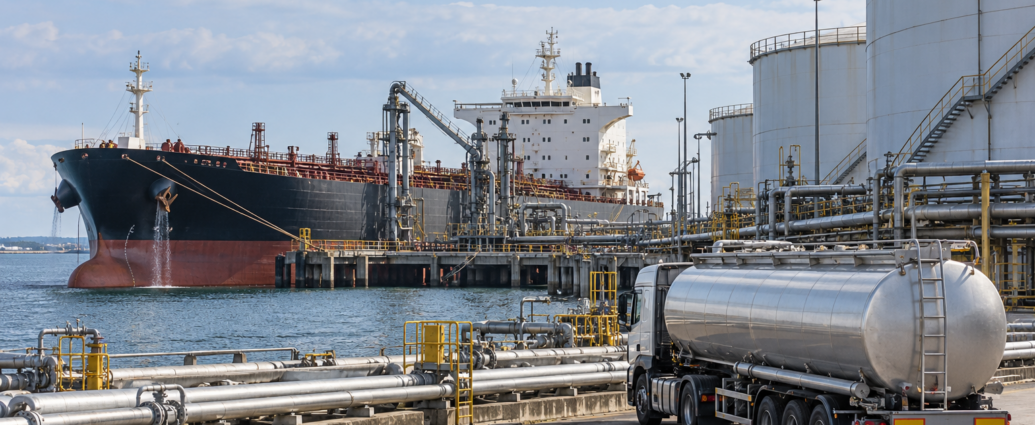
President Donald Trump’s decision to reopen trade in Russian diesel has drawn opposition from Republicans and Democrats, leaving trucking companies, farmers and fuel buyers facing a new policy dispute without a clear timetable for cheaper fuel. Treasury issued the authorization on October 9, while lawmakers moved to challenge the agreement and Trump escalated his criticism of Ukrainian President Volodymyr Zelenskyy.
Republican Rep. Brian Fitzpatrick announced plans for legislation to block Russian oil purchases, using a discharge petition to seek a House vote. That is a proposed congressional response, not an enacted restriction.
The administration’s action is already concrete. The Treasury Department’s Office of Foreign Assets Control issued General License 135, authorizing covered transactions involving the sale, delivery, offloading and importation of Russian-origin diesel, including imports into the United States, through 12:01 a.m. Eastern time on April 7, 2027.
The published license contains no requirement that diesel must have been loaded onto a tanker by October 9. It also preserves a restriction on debiting U.S. financial accounts belonging to Russia’s central bank, National Wealth Fund or Finance Ministry. The authorization concerns diesel transactions; it does not remove every U.S. sanction against Russia.
Trump said the agreement followed a telephone conversation with Russian President Vladimir Putin. He announced more than 300,000 tons of diesel immediately, another 500,000 tons in November and 1 million tons afterward. A further 3 million tons would depend on the condition of Russian refineries.
Those are announced supply commitments, rather than verified deliveries. The White House had not immediately explained who would pay for the fuel or when it would reach buyers, according to Associated Press reporting.
For businesses, that distinction matters. Permission to trade fuel does not establish that cargoes are available, ships are booked or supplies will reach the places experiencing shortages. A fall in wholesale prices also does not guarantee an immediate reduction at a truck stop or farm fuel depot.
Diesel powers freight trucks and agricultural equipment, making it a cost embedded in food production and distribution. As an illustration, a 25-cent reduction per gallon would save a business $250 on a 1,000-gallon purchase. That is arithmetic, not a forecast of savings from this agreement.
Trump argues that additional Russian supply will bring relief to farmers, ranchers and truckers. Energy specialists quoted by the Associated Press questioned whether the arrangement would meaningfully lower prices, including whether it would chiefly redirect fuel from existing customers rather than add new supply.
The policy dispute centers on the other side of that transaction: revenue for Russia. Critics argue that easing restrictions on its energy sales weakens the financial pressure intended to constrain Moscow’s war against Ukraine.
Democratic Sen. Richard Blumenthal urged Trump to rescind the agreement. Sen. Elizabeth Warren argued that ending the war with Iran would address the fuel-price squeeze more directly. Rep. Madeleine Dean said the deal would help finance Russia’s war while leaving American allies to bear the consequences.
The disagreement widened Saturday when Trump called for Ukraine to replace Zelenskyy, accusing him of failing to reach a settlement and blaming Ukrainian attacks on Russian refineries for aggravating diesel shortages. Those are Trump’s assertions, not established findings that Ukraine alone caused higher American fuel costs.
On Sunday, Zelenskyy said Ukraine was prepared to halt refinery attacks if Russia stopped striking Ukrainian energy infrastructure, with real guarantees for a reciprocal arrangement. Reuters also reported Republican Rep. Don Bacon’s opposition to easing sanctions.
That leaves two unresolved questions for fuel buyers: whether Russia can deliver the promised additional supply and whether the resulting trade will produce sustained savings. The next policy decisions include Congress’s response to the proposed legislation and European discussions of further sanctions pressure on Russia.
JBizNews Desk | Washington, D.C.
© JBizNews.com. All rights reserved. This article is original reporting by JBizNews Desk. Unauthorized reproduction or redistribution is strictly prohibited.