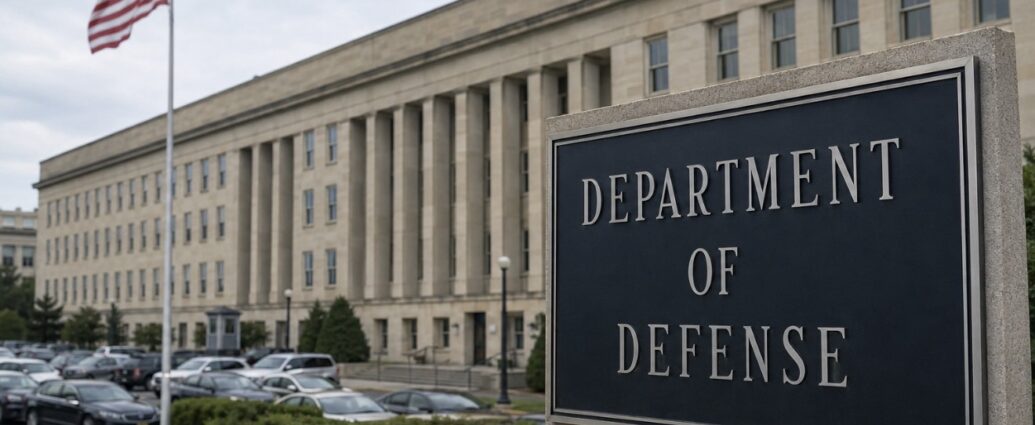
Two of the largest unions representing federal workers sued the Defense Department on Thursday, July 2, arguing the Pentagon acted illegally when it stripped collective bargaining rights from most of its civilian workforce earlier this year. The lawsuit, brought by the American Federation of Government Employees and the National Federation of Federal Employees, says the department violated the Administrative Procedure Act and asks a federal court to throw out the order that ended the contracts.
At the center of the case is an April 9 memo from Defense Secretary Pete Hegseth, who gave department leaders 24 hours to cancel nearly all collective bargaining agreements covering civilian employees. The unions argue the Pentagon reversed a long-standing policy “without any reasoned explanation” and misread the executive order it used to justify the move. Because the department acted arbitrarily, the complaint says, the memo “must be vacated and set aside.”
The dispute traces back to an order signed last year by President Donald Trump, which let agencies with national security missions suspend collective bargaining. Several agencies moved quickly to cancel union contracts. The Defense Department did not. For roughly a year it kept honoring its agreements, then abruptly changed course in April in what the lawsuit calls an “unexplained U-turn.” The unions note the legality of the underlying order is still being fought in multiple courts and say the Pentagon never explained why it could not simply wait for that litigation to finish.
The complaint describes a rollout that was, in its words, “chaotic.” In many cases there was almost no communication at all. Some union leaders learned by phone that their contracts were gone, others got emails or letters, and some received nothing, describing agency officials who “went radio silent.” The filing says managers at facilities across the country began telling employees the union no longer existed, a message the unions call false and damaging.
The practical fallout is landing on workers. The Defense Department has stopped accepting grievances filed under the canceled agreements, removing one of the main ways civilian employees resolve disputes over pay, discipline, and working conditions. The lawsuit points to one Army facility where an employee was placed on a performance improvement plan the unions describe as a likely prelude to firing. With her contract terminated, the complaint says, she has no way to challenge it.
For the unions, the fight is also about staffing a workforce the military depends on. “The Trump administration unilaterally and illegally stripping collective bargaining rights from DoD workers only serves to weaken morale, harm recruitment and retention,” NFFE National President Randy Erwin said in a statement. He argued that decades of unionized civilian work have never harmed national security and said the locals were proud to join AFGE in the challenge.
Hegseth has made his position plain. Pressed by lawmakers in April about canceling the contracts, he said he “fundamentally believes the ‘Department of War’ should not be subject to collective bargaining. Full stop.” He made the remark during testimony before the House Armed Services Committee on April 29, adding that the department already does a strong job providing competitive pay and benefits across the workforce.
The lawsuit lands as Congress keeps pushing back. The House Armed Services Committee recently adopted an amendment barring the Pentagon from using fiscal 2027 funds to carry out the president’s order. Whether it survives is unclear—a nearly identical provision was stripped from last year’s defense bill after Senate Republicans balked at clashing with the White House. The issue is expected to resurface as House and Senate negotiators hammer out the final 2027 defense authorization.
The stakes are large. Rep. Sarah Elfreth (D-Md.) said the president’s order wiped out bargaining rights for more than 1.5 million federal employees, including a wide swath of Defense Department civilians, calling it the most aggressive anti-union move by any president in U.S. history.
The Defense Department employs hundreds of thousands of civilians who repair aircraft, manage supply chains, run depots, and handle logistics that keep the armed forces running. Those jobs compete with private employers for skilled workers, and the unions argue that gutting workplace protections will make it harder to recruit and retain employees at a time when the department is already struggling to fill technical positions. The case now heads to federal court, where a judge will determine whether the Pentagon acted lawfully—and whether hundreds of thousands of civilian employees will regain their collective bargaining agreements.
JBizNews Desk | Washington, D.C.
© JBizNews.com All Rights Reserved. Reproduction or distribution without written permission is prohibited.