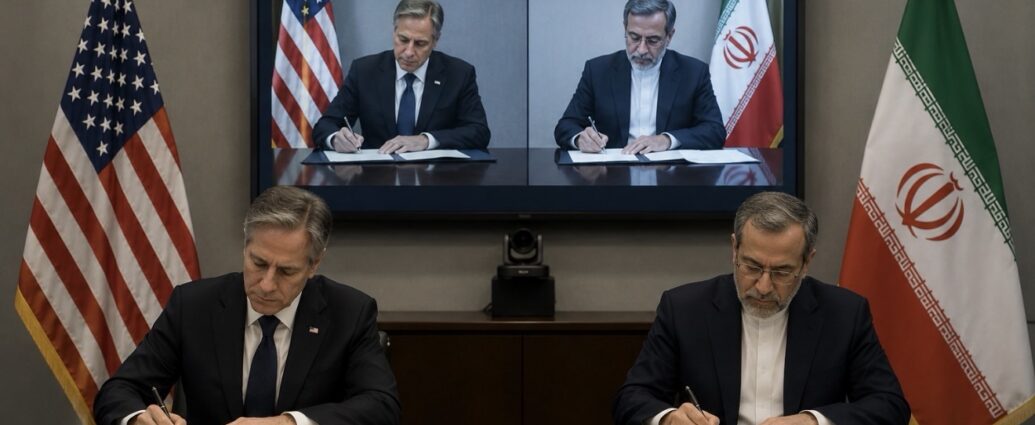
The war between the United States and Iran moved a step closer to an official end Wednesday after both sides put a ceasefire memorandum into effect, activating a 60-day framework designed to halt hostilities and open negotiations toward a broader settlement.
The agreement takes effect immediately, while diplomats continue preparations for a formal signing ceremony expected later this week in Switzerland.
The move marks the most significant diplomatic breakthrough since fighting erupted on February 28, a conflict that disrupted global energy markets, rattled investors, and raised fears of a broader regional war.
For businesses, investors, and consumers, the most important provisions involve oil, shipping, and trade.
The ceasefire framework outlines steps aimed at restoring commercial traffic through the Strait of Hormuz, one of the world’s most important energy corridors. Before the conflict, roughly one-fifth of global oil and liquefied natural gas shipments moved through the narrow waterway linking the Persian Gulf to international markets.
Disruptions to that route sent oil prices sharply higher and contributed to rising gasoline costs worldwide.
The agreement also creates a pathway for increased Iranian energy exports and the restoration of commercial activity tied to shipping, insurance, banking, and transportation services associated with international trade.
Markets have already responded positively.
Oil prices have retreated from recent highs as traders anticipate improved supply conditions, while gasoline prices have begun easing as concerns over a prolonged disruption diminish. The possibility of additional Iranian crude entering global markets has added to expectations that energy costs could continue falling if the ceasefire holds.
President Donald Trump welcomed the development and has repeatedly pointed to lower oil prices and stronger financial markets as evidence that diplomacy is producing economic benefits.
Beyond energy, the memorandum establishes a 60-day negotiating period during which both countries are expected to pursue discussions on regional security issues and Iran’s nuclear activities.
Iran has agreed to maintain the current status of its nuclear program during negotiations, while the United States has agreed not to impose additional measures during the framework period.
Officials on both sides have emphasized that the memorandum represents a temporary framework rather than a final peace agreement.
That distinction remains critical.
While markets have embraced the ceasefire, investors recognize that the agreement’s success ultimately depends on what happens during the next two months. Any breakdown in negotiations or renewed military activity could quickly reverse recent gains in stocks and send energy prices higher again.
The challenge is already apparent. Regional tensions remain elevated, and military activity involving Iranian-backed groups continues to present risks that could complicate efforts to reach a permanent settlement.
The diplomatic effort has drawn support from multiple international players, including regional mediators, European governments, and the United Nations, all of whom have urged both sides to use the ceasefire as an opportunity to pursue a longer-term resolution.
For the global economy, the stakes extend far beyond the Middle East.
Lower energy prices could ease inflationary pressures, reduce transportation costs, improve corporate profit margins, and provide relief for households that have faced months of elevated fuel prices.
Airlines, manufacturers, trucking companies, retailers, and consumers all stand to benefit if stability returns to energy markets.
The next 60 days will determine whether this memorandum becomes the foundation for a broader agreement or simply a pause in a conflict that has already reshaped global energy markets and geopolitical calculations.
For now, the ceasefire is in effect, commercial shipping is preparing to normalize, and markets are cautiously betting that diplomacy may finally succeed where months of conflict failed.
JBizNews Desk
Washington
© JBizNews.com All Rights Reserved. Reproduction or distribution without written permission is prohibited.