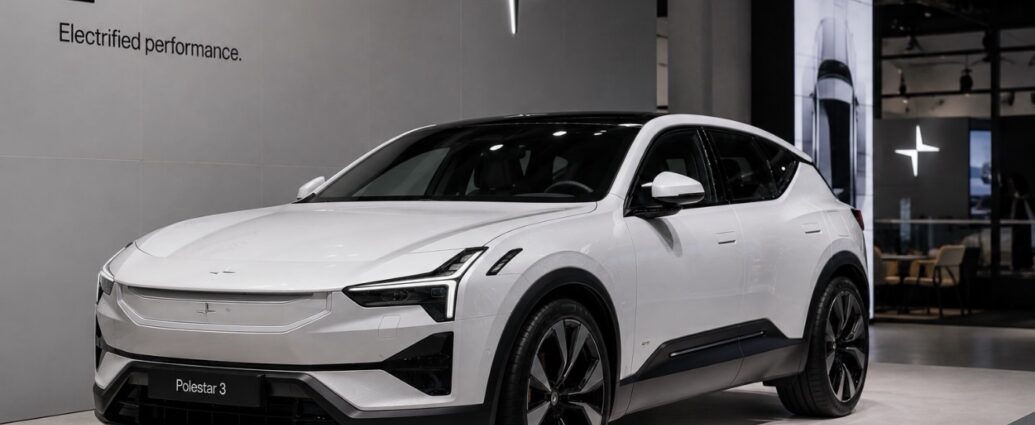
Polestar, the Swedish electric-vehicle maker, said Thursday that the U.S. Department of Commerce declined to grant it authorization to sell cars in the United States from the 2027 model year onward, a decision that effectively pushes the brand out of the American market. The Bureau of Industry and Security, part of the Commerce Department, made the determination under the current Connected Vehicle Rule.
The reason is ownership, not geography. Polestar is majority-owned by Geely, the Chinese automotive group that also controls Volvo Cars, and that connection is what triggered the rule, regardless of where the vehicles are built. The rule, finalized in January 2025, bans connected vehicles with a “sufficient nexus” to China or Russia from the U.S. market, with software prohibitions taking effect for the 2027 model year and hardware restrictions following in 2030.
The irony is hard to miss given where the cars are made. The Polestar 3 is built at Volvo’s plant in Charleston, South Carolina, while the Polestar 4 is assembled in Busan, South Korea—neither of them in China. A vehicle assembled by American workers in the Carolinas is being shut out of its home market because of who owns the company upstream.
Sharpening the contrast, a sister brand under the same parent was treated differently. Volvo, also owned by Geely, was granted authorization to keep selling connected vehicles in the U.S. Volvo operates as a separately listed, more established automaker with a larger U.S. footprint, while Polestar is more tightly entangled with Geely’s broader structure and shares vehicle platforms and software with Geely brands. Same parent, opposite outcome.
The official rationale is national security. The Bureau of Industry and Security has said certain connected vehicles and related hardware and software made in China or Russia pose national security risks because companies from those countries may be compelled to share data or allow remote access to vehicles in the United States. The rule reaches broadly across modern car technology, covering telematics, cameras, microphones, GPS, Bluetooth, cellular modules and automated-driving software across gas, hybrid and electric vehicles alike.
Polestar is not leaving its current owners stranded. A company spokesperson said Polestar will continue to sell current stock and that from the 2027 model year onward it will stop marketing and selling cars in the U.S., while existing owners keep the same access to service stations and customer support. The company emphasized that all existing warranties remain in effect and will be honored.
The market reaction was swift. Polestar shares fell more than 13% in midday trading. The business was already under strain before the ruling. Polestar posted a record 2025 with more than 60,000 cars sold and revenue above $3 billion, along with a record first quarter of 13,126 deliveries, but its gross margin swung to negative 3.2% in the first quarter from a positive 10.3% a year earlier because of pricing pressure, tariffs and product mix. U.S. sales had already shrunk to roughly 5,400 vehicles last year from 13,000 the year before.
The company is pivoting hard toward Europe. “The automotive industry is entering a new phase, based on regional dynamics,” CEO Michael Lohscheller said, calling Europe the company’s largest growth engine and pointing to plans to build the upcoming Polestar 7 SUV there, along with growth markets in Southeast Asia, Eastern Europe, Latin America and Canada.
The implications stretch well beyond one brand. The rule has now shown it can wall off a Swedish-branded, partly U.S.-built EV purely on the basis of Chinese ownership upstream, a clear signal to every automaker with Chinese capital or a Chinese technology stack in its supply chain. Both Buick and Lincoln are awaiting approval for popular China-made models, and the Polestar decision raises the prospect that they may not get it. For American consumers, the immediate effect is fewer EV choices and added uncertainty for current Polestar owners around resale values and future parts. The decision marks one of the most concrete steps yet in Washington’s push to wall off Chinese-linked vehicles while building up domestic carmaking.
JBizNews Desk
© JBizNews.com All Rights Reserved. Reproduction or distribution without written permission is prohibited.