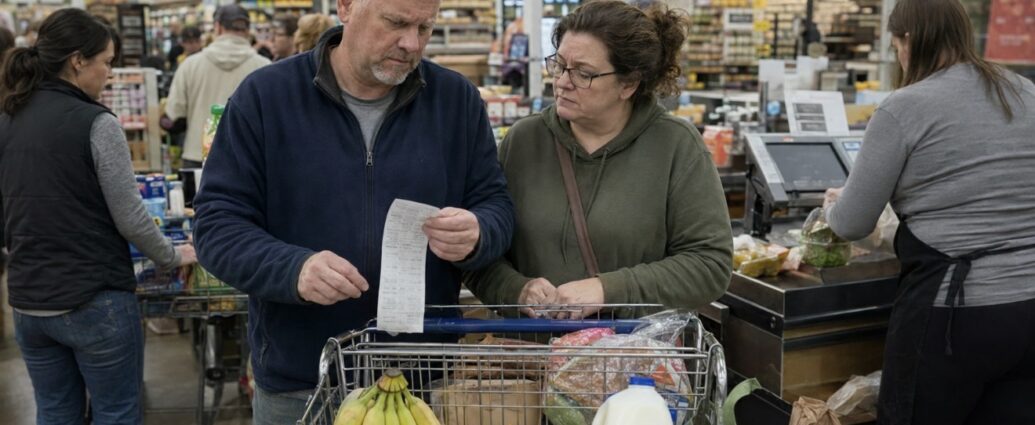
American consumers are increasingly uneasy about where the economy is headed—even though many believe their present circumstances have temporarily improved.
The Conference Board’s Consumer Confidence Index fell to 89.4 in August from a downwardly revised 90.2 in July, marking the lowest reading since January and the second consecutive monthly decline.
Economists had expected confidence to remain unchanged.
The headline decline was relatively small. The divide beneath it was far more significant.
The Present Situation Index, which measures how consumers view current business and labor-market conditions, climbed 6.8 points to 121.2 after falling for three consecutive months.
But the Expectations Index—which measures what Americans anticipate for employment, income and business conditions during the next six months—dropped 5.8 points to 68.2.
A reading below 80 has historically been associated with an increased risk of recession.
In other words, Americans are saying that conditions today may be manageable, but they are losing confidence that those conditions will last.
Consumers became more pessimistic about every major component of the six-month outlook.
Only 14.6% expected more jobs to become available, down from 16.4% in July. Meanwhile, 26.1% expected fewer jobs, up from 25.3%.
Expectations for household income also weakened, although more consumers still anticipated their income would rise rather than fall.
The disconnect was especially visible in the labor market.
Twenty-seven percent of respondents said jobs are currently plentiful, up from 24.4% in July. The share saying jobs are difficult to find fell to 19.5% from 21.7%.
That suggests many workers do not yet believe the labor market has collapsed. Their concern is about what comes next.
Those fears follow a surprisingly weak July employment report in which the United States lost 23,000 jobs. Government revisions also erased another 103,000 jobs that had previously been reported for May and June.
Although the unemployment rate declined to 4.1%, the improvement came largely because people left the workforce rather than because companies created more jobs.
Inflation is adding another layer of pressure.
Consumers now expect prices to increase 5.8% over the next 12 months, up from 5.6% in July. Those expectations are considerably higher than the inflation rates measured by the government, but they reflect what households are experiencing and fearing when they pay for gasoline, groceries, housing and other necessities.
Survey responses showed that complaints about prices remained widespread, while references to oil, gasoline, food costs, war, trade and employment increased.
The continued U.S.-Iran conflict has kept gasoline prices above $4 per gallon across much of the country, forcing households to spend more on transportation and leaving less money available for restaurants, retail purchases, travel and other discretionary expenses.
That is why consumer confidence matters far beyond public opinion.
Household spending represents roughly two-thirds of the U.S. economy. Consumers do not need to stop spending completely to create problems for businesses. If enough families postpone buying a car, replacing an appliance, taking a vacation or dining out, the slowdown moves rapidly through retail, manufacturing, hospitality and employment.
The August report does not show that Americans have stopped spending. It shows something more subtle: Consumers remain functional today but are becoming increasingly defensive about tomorrow.
That widening gap between present conditions and future expectations is now the most important warning inside the report.
JBizNews Desk | New York
© JBizNews.com All Rights Reserved. Reproduction or distribution without written permission is prohibited.