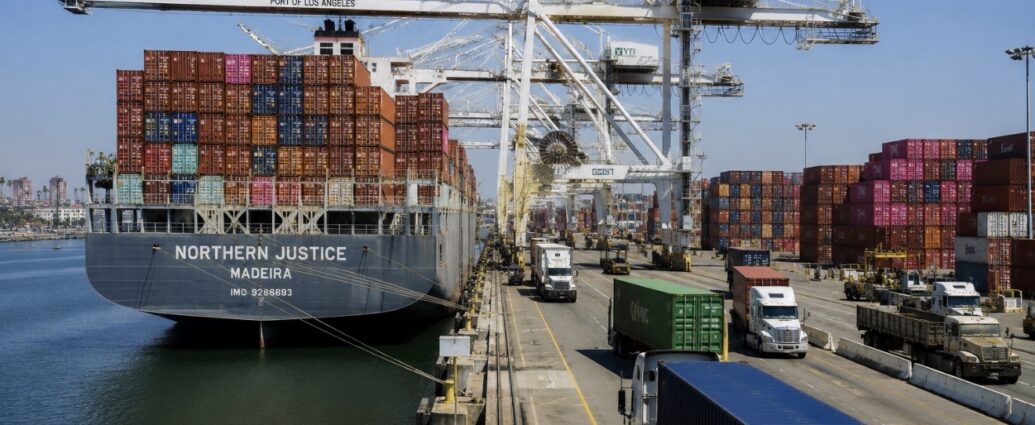
The rush by U.S. retailers and manufacturers to bring goods into the country ahead of higher tariffs and shipping costs is beginning to fade, setting up a slowdown in container imports through the rest of the year even as stores remain stocked for the holiday season.
A new Global Port Tracker forecast from the National Retail Federation and Hackett Associates says cargo volumes at major U.S. ports should remain elevated in August before declining steadily during most of the remainder of 2026.
The reason is timing.
Companies pulled shipments forward earlier this year to avoid a new round of U.S. tariffs and higher fuel surcharges tied to the war with Iran. Goods that ordinarily would have arrived in late summer or fall instead landed months earlier.
The slowdown therefore does not necessarily mean Americans suddenly stopped buying. It means businesses already imported some of the merchandise they would normally be bringing in now.
That distinction matters for interpreting port traffic.
Retailers account for roughly half of U.S. container imports, and years of pandemic disruptions, tariff changes and geopolitical shocks have made large companies increasingly sophisticated about moving inventory early when they see costs or supply risks rising.
The traditional “peak shipping season” once arrived in late summer and early fall as retailers prepared for the holidays. This year, Global Port Tracker believes the busiest month may already have occurred in May.
August imports at the major ports covered by the report are forecast at about 2.2 million twenty-foot-equivalent containers, down 4.2% from a year earlier. Volumes are then expected to decline through most of the rest of the year, although they are still forecast to remain above 2025 levels.
For consumers, the encouraging part is inventory.
The National Retail Federation says retailers should be well stocked for the holiday shopping season because so much merchandise arrived early. That reduces the immediate risk of empty shelves even as fewer containers arrive later this year.
But bringing goods in early does not make the added costs disappear.
Freight companies say ocean shipping prices are likely to remain elevated because fuel and canal surcharges do not automatically fall when cargo demand softens. Importers also must eventually absorb the tariffs that motivated much of the front-loading in the first place.
That creates a second-stage question for retailers: how much of those higher costs can they absorb themselves, and how much will eventually be passed to shoppers through higher prices?
The ports are beginning to slow, but the economic impact of the import rush is still moving through warehouses, stores and ultimately consumer prices.
JBizNews Desk | Los Angeles
© JBizNews.com All Rights Reserved. Reproduction or distribution without written permission is prohibited.