A tentative ceasefire between the United States and Iran entered a fragile new phase on Thursday, with regional diplomacy expanding to Lebanon even as military pressure and shipping concerns kept investors and policymakers on edge. Reuters and Associated Press have reported in recent days that any pause in direct confrontation has done little to settle wider questions around proxy activity, maritime security and the durability of back-channel talks, underscoring how quickly a narrow de-escalation can collide with broader regional fault lines.
The immediate business significance remains centered on energy flows and freight risk, and officials across the Gulf have made clear they are watching the Strait of Hormuz as closely as the battlefield. In public statements carried by Reuters, analysts at major shipping and energy consultancies said the market’s central concern is not only whether Tehran and Washington avoid direct escalation, but whether allied militias or naval incidents disrupt tanker traffic through one of the world’s most important oil chokepoints. International Energy Agency data frequently cited by market participants show roughly a fifth of global oil consumption moves through the strait, a figure that helps explain why even limited military flare-ups can ripple through crude prices, insurance costs and corporate supply chains.
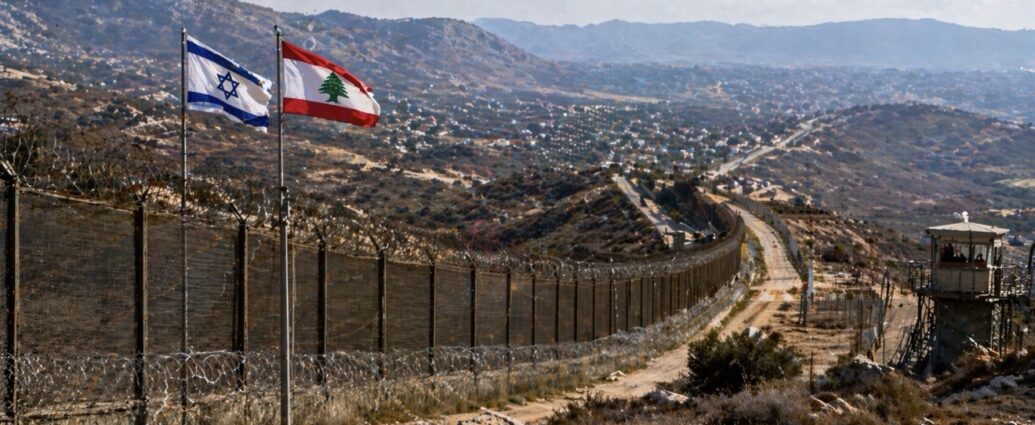
At the same time, Israel signaled a parallel diplomatic opening with Beirut, a move that could matter for border stability even if it does not resolve the more immediate conflict dynamics. Officials in Israel have said publicly that they are prepared to negotiate with the Lebanese government over security arrangements, while maintaining that operations against Hezbollah positions remain outside any narrower truce framework. That distinction mirrors repeated statements from the office of Prime Minister Benjamin Netanyahu, which has argued that Israel retains freedom of action against the Iranian-backed group, according to reporting from Reuters and statements released by the Israeli government.
For Beirut, the opening is diplomatically significant but operationally limited, because the Lebanese state still lacks full control over armed actors in the south and east. Lebanon’s leadership has repeatedly said, in statements reported by AP and regional outlets, that it wants to avoid becoming a wider war theater, while also pressing for international support to reinforce state authority. The challenge for executives and investors with exposure to the eastern Mediterranean is that political talks can begin even as security conditions remain unstable, especially when cross-border strikes and militia activity continue in parallel.
The broader U.S. posture points to an effort to keep diplomacy alive without signaling strategic retreat. Vice President JD Vance is expected to lead a U.S. delegation for in-person discussions with Iranian representatives in Islamabad, according to officials familiar with the planning cited by multiple outlets, including Reuters. While the administration has not publicly framed the meeting as a breakthrough, officials have said the goal is to test whether a short-term pause can open space for more structured talks on escalation management, detainees, regional proxies and maritime security. The White House has consistently said it seeks de-escalation while protecting U.S. personnel and commercial navigation, a formulation that leaves room for diplomacy but also for rapid military response.
Tehran, for its part, has tried to project both restraint and leverage. Iranian officials, in comments carried by state media and cited by Reuters, have said the country does not seek a broader war but will respond to attacks on its territory or interests. That message aligns with previous public remarks from the Iranian Foreign Ministry, which has framed any negotiations as contingent on what it describes as respect for Iran’s sovereignty. For markets, the practical takeaway is that even if direct U.S.-Iran exchanges continue, the risk premium tied to proxy forces, drones and missile activity is unlikely to disappear quickly.
Shipping companies and commodity traders are already adjusting to that reality. Maritime security advisories from the Joint Maritime Information Center and guidance from the U.K. Maritime Trade Operations office have repeatedly urged vessels transiting the Gulf region to maintain heightened vigilance, citing the possibility of miscalculation or opportunistic attacks. Insurance brokers and freight specialists quoted by Bloomberg and Reuters have said war-risk premiums can jump sharply even without a formal closure of the Strait of Hormuz, because underwriters price uncertainty as aggressively as physical disruption. That matters not just for oil majors, but for refiners, airlines, chemical producers and any manufacturer exposed to energy-intensive inputs.
The diplomatic track with Lebanon also carries implications for reconstruction finance and sovereign risk, though any near-term payoff looks remote. International institutions including the World Bank and the International Monetary Fund have long warned that Lebanon’s economic crisis cannot ease sustainably without political stability and functioning state institutions. In public assessments, the World Bank has described Lebanon’s collapse as one of the world’s most severe modern crises, and analysts say any reduction in border tensions could eventually support donor engagement. But as long as Israeli strikes continue against Hezbollah-linked targets and the militia preserves operational capacity, investors are unlikely to treat diplomatic contacts alone as a turning point.
What comes next now matters as much as the truce itself. The Islamabad talks, if they proceed as planned, could show whether Washington and Tehran can move from a short-lived pause to a process with guardrails, while Israel’s Lebanon channel could indicate whether regional de-escalation extends beyond the immediate U.S.-Iran file. For business leaders, the key signals remain clear: statements from the White House and Iranian officials on the scope of talks, guidance from maritime security agencies on Gulf transit risk, and any shift in Israeli operations against Hezbollah. As Reuters and AP reporting suggests, the ceasefire may be holding for now, but the real test is whether diplomacy can outpace the region’s many triggers for renewed conflict.
JBizNews Middle East Desk