A senior U.S. administration official said Tuesday that Iran will be cleared to begin selling oil the instant it signs a new agreement with Washington this week, handing Tehran an immediate financial reward for winding down the war that has gripped the region since late February.
The break does not stop at crude.
The same official said the agreement also waives U.S. sanctions on the banking, shipping, and insurance services Iran needs to move its oil and collect payment for it.
That detail matters more than it sounds.
A waiver on oil sales alone would change little, because no buyer, bank, or tanker owner will touch Iranian barrels without those supporting services cleared first.
Both sides signed the memorandum of understanding electronically on Sunday, and President Donald Trump has said the full text will likely be read out Friday after a formal signing ceremony.
The relief on oil exports takes effect the moment that signature is in place.
The agreement is built to reward Iran only if it holds up its end.
“This is a performance-based agreement,” the official said, speaking on condition of anonymity.
Tehran keeps the benefits only if it follows through on its core promises: building no nuclear weapon, neutralizing its stock of enriched uranium, and keeping the Strait of Hormuz open to shipping.
That last condition sits at the center of everything.
Roughly 20% of the world’s oil and liquefied natural gas normally moves through Hormuz, the narrow waterway at the mouth of the Persian Gulf.
Iran effectively closed the strait after the U.S. and Israel struck the country on Feb. 28, choking off a major share of global supply and sending energy prices sharply higher for months.
Washington answered with a naval blockade that kept Iranian oil bottled up.
The pressure was real on both sides.
U.S. emergency crude reserves have fallen to their lowest level since 1983, drained by months of trying to keep the market supplied while the strait stayed shut.
Not everyone sees the deal as a clean win.
Brett Erickson, a sanctions expert and managing principal at Obsidian Risk Advisors, called the move a “multibillion-dollar concession to Iran.”
He noted that Tehran is sitting on more than 100 million barrels of oil in storage and on tankers, with over 60 million barrels already outside the blockade and ready to sell.
For context, the world burns through roughly 100 million barrels of oil a day.
Iran is not waiting for the ink to dry.
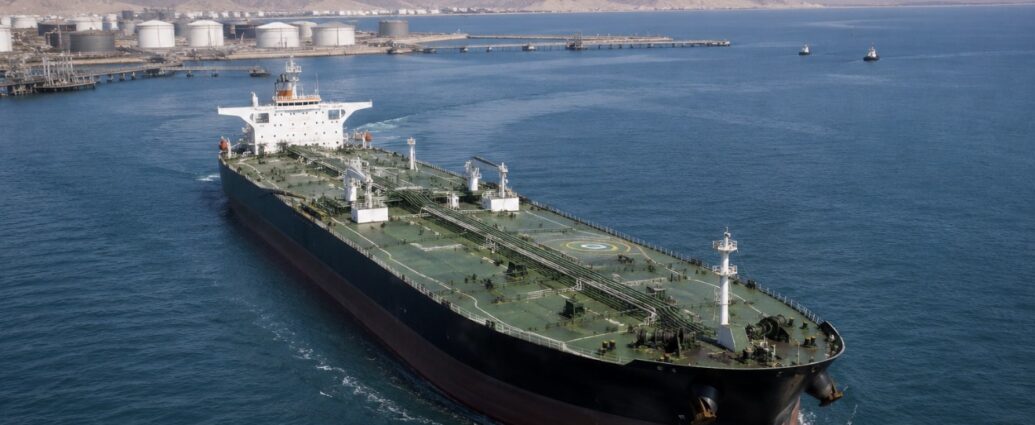
The nonprofit United Against Nuclear Iran reported that an Iranian supertanker left the port of Chabahar on Tuesday and sailed past the U.S. blockade line into the Gulf of Oman with its tracking transponder switched on — the first such move since Washington imposed the blockade.
Iran’s state Mehr News Agency published what it described as the 14 points of the draft agreement.
They include a permanent ceasefire, a full lifting of the naval blockade within 30 days, the reopening of Hormuz, a suspension of oil sanctions, and the release of $24 billion in frozen Iranian funds over a 60-day negotiating window.
Tehran will not get immediate access to that cash; it is tied to the talks ahead.
Markets had already begun pricing in the relief.
Brent crude, the international benchmark, fell more than 5% to below $80 a barrel on Tuesday, its lowest level since the first week of March, erasing most of the spike driven by the conflict.
West Texas Intermediate, the U.S. benchmark, dropped to around $75.50.
Both had climbed more than 45% at the height of the war.
For American businesses and households, the math is straightforward.
Cheaper crude eventually means cheaper gasoline, diesel, and jet fuel, which ripple through everything from trucking and airline costs to the price of groceries that have to be shipped.
A drop of this size, if it holds, takes pressure off shipping companies, manufacturers, and any business that has been swallowing higher fuel bills since the spring.
The timing also carries a political read.
The Trump administration has been openly worried about a gasoline price spike heading into the November midterm elections, and a deal that puts Iranian barrels back on the water is the fastest tool it has to bring pump prices down.
Plenty could still go wrong.
The text has not been publicly released, questions remain over how shipping security and Hormuz traffic will actually work, and the relief is conditional from day one.
But for the first time in months, oil is moving out of Iran, prices are falling, and the businesses caught in the middle finally have reason to expect some relief.
Washington — JBizNews Desk
JBizNews Desk / © JBizNews.com All Rights Reserved. Reproduction or distribution without written permission is prohibited.