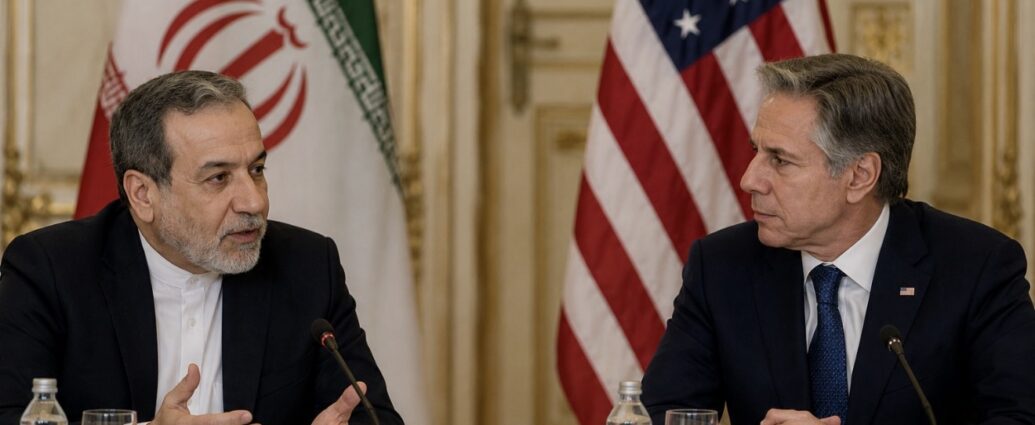
Iran’s foreign minister, Abbas Araghchi, said on Tuesday that Iran and the United States will begin a new round of talks in Switzerland on Friday, right after both sides sign an interim memorandum of understanding meant to end their war.
Iranian deputy foreign minister Kazem Gharibabadi said the text is finished and the signing is set for Friday in Geneva.
A copy of the 14-point draft, reported this week by Bloomberg and Al Arabiya, shows an agreement built largely around economics — oil, shipping, sanctions, and the release of frozen money — with the hardest nuclear questions pushed into a later round.
The stakes are already showing up in prices.
Crude oil fell more than 4% to below $78 a barrel on Tuesday, its lowest level in months, as traders bet that a reopened Strait of Hormuz will bring Middle Eastern barrels back to a market that has been starved of supply since the fighting began.
Here is what the draft actually says, point by point.
1. End the War
Both countries and their allies declare an immediate and permanent end to the fighting on all fronts, including Lebanon, and pledge to stop attacks and threats against each other.
2. Respect Borders
Each side agrees to respect the other’s sovereignty and territory and to stay out of the other’s internal affairs.
3. A 60-Day Clock
The two governments commit to reaching a final agreement within 60 days, extendable if both sides agree.
4. Lift the Blockade
The United States drops its naval blockade and restores shipping to full pre-war levels within 30 days, and pulls its forces back from areas around Iran within 30 days of the final deal.
5. Reopen the Shipping Lanes
Iran moves to restore merchant traffic between the Persian Gulf and the Sea of Oman to pre-war volumes within 30 days, including clearing mines and other obstacles.
6. $300 Billion to Rebuild
The United States and regional partners agree to draw up a plan to rebuild and develop Iran’s economy, backed by financing of at least $300 billion, with the mechanics set within 60 days.
7. End the Sanctions
Washington commits to lifting all sanctions on Iran on an agreed schedule — United Nations measures, IAEA board resolutions, and U.S. penalties, both primary and secondary.
8. No Nuclear Weapons
Iran restates that it will never build a nuclear weapon, and both sides leave the fate of enriched material and other nuclear questions to the final agreement.
9. Freeze in Place
Until a final deal, both sides hold steady: Iran keeps its nuclear program as is, and the United States adds no new sanctions and no new troops to the region.
10. Oil Starts Flowing
Right after signing, the U.S. Treasury issues waivers for exports of Iranian crude oil and petrochemicals, plus the banking, insurance, and shipping services that make those sales possible.
11. Unfreeze the Money
As talks progress, frozen Iranian funds are released and made fully available, directed by the Central Bank of Iran.
Iranian media has put the near-term figure at about $24 billion.
12. A Watchdog
The two sides set up a mechanism to oversee that the final agreement is carried out and honored.
13. First Steps First
Final talks begin only once Iran gets assurances that the early economic moves — lifting the blockade, reopening shipping, the oil waivers, and the release of funds — are underway.
14. A U.N. Stamp
The final agreement would be locked in by a binding United Nations Security Council resolution.
For Americans, the most direct effect runs through energy.
Iranian oil and petrochemicals returning to the market, on top of a reopened Strait of Hormuz, point toward lower crude prices — and falling crude tends to reach the gas pump within days and ease the cost of nearly everything that is grown, made, or shipped.
Cheaper energy would also give the Federal Reserve more room as it watches inflation.
The sheer size of the numbers in the draft, from the $300 billion rebuilding fund to the $24 billion in released cash, hints at how much business could follow a lasting settlement.
The caution is real.
Neither Washington nor Tehran has formally published the text, much of the detail traces to Iranian sources, and the toughest issues — the nuclear program and full sanctions relief — are left to a 60-day round that has not yet started.
President Donald Trump has billed the accord as a guarantee that Iran will never get a nuclear weapon, but the payoff for households depends on a deal that still has to hold.
Washington — JBizNews Desk
JBizNews Desk / © JBizNews.com All Rights Reserved. Reproduction or distribution without written permission is prohibited.