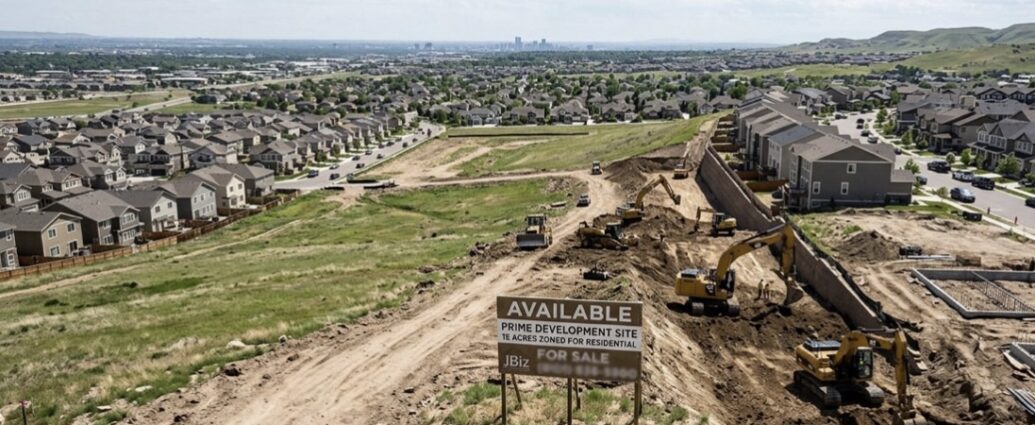
U.S. land prices have climbed sharply since before the pandemic, underscoring how a persistent shortage of buildable lots now extends beyond homes and into the raw material of residential development itself. In a report released April 21, Realtor.com said median listing prices for land reached $62,365 per acre in the first quarter, up 76.6% from the first quarter of 2019, while active land listings fell 23.6% over the same stretch; Joel Berner, senior economist at Realtor.com, said in the report that “the pandemic didn’t only drain home inventory, it drained land inventory, and that loss is permanent.”
The numbers matter because lot scarcity feeds directly into homebuilding costs at a time when the broader housing market already faces affordability strain. National Association of Home Builders Chairman Carl Harris said in a recent industry statement that builders continue to face “elevated financing and development costs,” and the group has repeatedly argued that lot shortages remain a central constraint on new supply, according to NAHB releases and survey data. That dynamic helps explain why rising land values now carry significance well beyond rural acreage investors: they shape where homes get built, what they cost and whether entry-level construction pencils out.
The pressure on developable land also fits with a longer-running imbalance in U.S. housing supply. Freddie Mac said in its housing research that the country continues to face a substantial housing shortfall, with the mortgage-finance company describing supply as “insufficient” relative to household formation and demographic demand. While Freddie Mac has updated its estimates over time, its economists have consistently said the deficit leaves the market vulnerable to price spikes whenever construction slows or financing tightens, a backdrop that gives added weight to Realtor.com’s finding that fewer parcels now come to market even as prices rise.
Land values have historically moved with home prices, but the current cycle reflects a more structural squeeze because once lots enter the development pipeline, they rarely return to inventory. Joel Berner said in Realtor.com’s analysis that “when a builder develops a parcel, that land never returns to the market,” framing the decline in listings as more than a temporary pandemic distortion. That view aligns with comments from Federal Reserve officials and regional bank researchers who have said housing supply remains unusually inelastic; in a speech published by the Federal Reserve Bank of Dallas, President Lorie Logan said housing services inflation can stay elevated when supply adjusts slowly, a point with implications for both builders and policymakers.
For developers, the lot market has become another layer of risk in an already difficult financing environment. NAHB Chief Economist Robert Dietz said in recent association commentary that higher interest rates and tighter credit conditions have made it harder to move projects forward, particularly for smaller builders that depend on acquisition and development loans. Public builders have echoed that concern in earnings materials and conference calls, with companies including D.R. Horton and Lennar repeatedly telling investors that lot pipelines and land discipline remain central to margins and community growth, according to their latest filings and transcripts.
The regional picture also helps explain why national averages can mask sharper local stress. U.S. Census Bureau and Department of Housing and Urban Development data show that single-family permitting and starts remain concentrated in fast-growing Sun Belt markets, where population growth and business relocation have intensified competition for developable land. Economists at Realtor.com said in the report that the inventory drawdown reflects years of absorption rather than a short-lived supply shock, and that framing dovetails with migration data from the Census Bureau, which continue to show strong growth in states where entitlement, infrastructure and labor constraints already limit how quickly new lots can come online.
The affordability implications extend to consumers even if they never buy land directly. Lawrence Yun, chief economist at the National Association of Realtors, has said in public remarks that “housing affordability remains a major challenge” because supply has not kept pace with demand, and rising input costs continue to filter into final home prices. Higher lot costs can push builders toward larger homes or higher-end communities where margins better absorb land and financing expenses, leaving first-time buyers with fewer options, a pattern that housing analysts at Moody’s Analytics and Zillow have also highlighted in market commentary.
Investors and policymakers now have a fresh signal that the housing bottleneck starts earlier in the chain than many headline home-price measures capture. Realtor.com’s first dedicated land listing analysis put active listings at 426,986 in the first quarter, and Joel Berner said the market reflects a lasting scarcity rather than a cyclical dip. What comes next will depend on whether lower borrowing costs, zoning changes and infrastructure investment can unlock more buildable supply; until then, the land market looks set to remain a quiet but powerful driver of home prices, construction strategy and housing affordability across the U.S.
JBizNews Desk