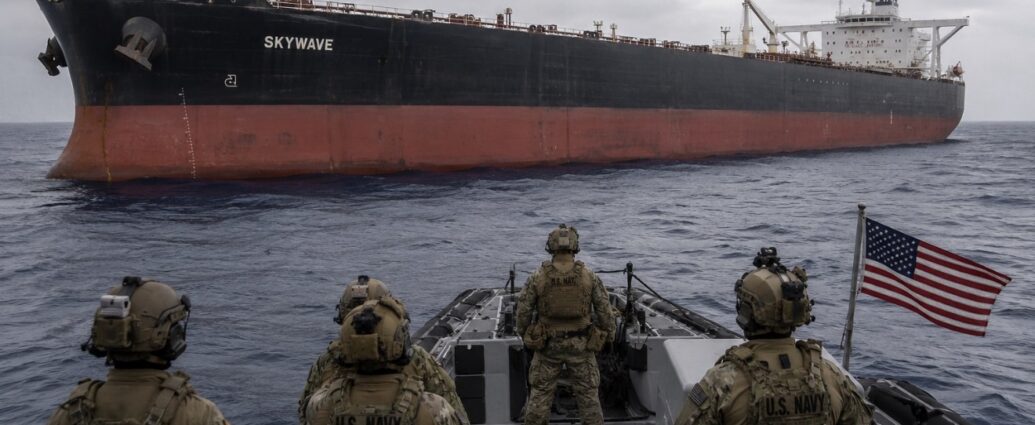
The U.S. Navy seized an Iran-linked oil supertanker overnight in the Indian Ocean, escalating pressure on Tehran’s oil exports and adding fresh strain to global energy markets already dealing with rising fuel prices and shipping disruptions tied to the ongoing Iran conflict.
U.S. officials confirmed that American forces intercepted the massive crude tanker Skywave after the vessel departed the Strait of Malacca carrying what analysts believe was more than one million barrels of Iranian oil.
For consumers and businesses, the move matters because it threatens to tighten global oil supply even further at a time when gasoline, diesel and shipping costs are already climbing worldwide.
Oil prices rose again Tuesday following the seizure.
Brent crude traded near $110 per barrel, while U.S. crude prices also pushed higher as traders worried that additional supply disruptions could worsen the global energy crunch.
Gasoline prices in the United States have already surged sharply since the Iran conflict began earlier this year.
According to AAA:
- National average gasoline prices are now near $4.05 per gallon
- Prices were below $3 before the conflict escalated
- Diesel prices have also climbed significantly
The Skywave seizure marks the third major tanker interception since the United States launched its naval blockade targeting Iranian oil shipments last month.
Unlike earlier seizures near the Persian Gulf, this latest operation occurred much farther from the Middle East, signaling that U.S. enforcement efforts are expanding well beyond the immediate conflict zone.
Shipping analysts say the move sends a strong warning to operators participating in what is often called Iran’s “shadow fleet” — aging tankers that move sanctioned oil through complex ownership structures, false registrations and ship-to-ship transfers designed to avoid detection.
The vessel itself had previously been sanctioned by the U.S. Treasury Department under another name before reportedly changing ownership and operating under a different flag.
The broader economic effects are already spreading globally.
The Strait of Hormuz — one of the world’s most important oil shipping routes — has seen a dramatic collapse in tanker traffic since the blockade intensified.
Industry estimates suggest normal vessel traffic through the strait has fallen sharply over the past several weeks as insurers, shipowners and traders attempt to avoid military escalation and soaring war-risk insurance costs.
Insurance premiums for ships traveling through the region have surged, while thousands of seafarers and hundreds of vessels remain stranded or rerouted across global shipping lanes.
The pressure is now reaching everyday supply chains.
Higher diesel costs are increasing:
- Trucking expenses
- Retail shipping costs
- Airline fuel costs
- Manufacturing transportation costs
That creates additional inflation pressure at a moment when central banks globally are already struggling to contain rising prices.
The International Energy Agency warned this week that global oil inventories are falling rapidly, raising concerns that even if diplomatic progress eventually occurs, energy markets may remain tight for months because of damaged infrastructure, delayed shipments and disrupted tanker traffic.
Iran has continued attempting to move oil exports despite the blockade.
Satellite tracking firms reported millions of barrels of crude still moving through unofficial channels using tactics such as:
- Disabling tracking systems
- False location signals
- Ship-to-ship transfers
- Reflagged vessels
The United States has simultaneously expanded sanctions against additional tankers and shipping companies as part of what officials are calling a broader economic pressure campaign against Tehran.
Diplomatic tensions remain high.
President Donald Trump has continued warning Iran against advancing its nuclear program, while Iranian officials have publicly rejected negotiations under military and economic pressure.
For financial markets, the latest tanker seizure reinforces fears that the global oil shock may last longer than investors originally expected.
Analysts at major banks including Goldman Sachs and ING now warn that every additional month of disruption in Middle Eastern oil flows could keep prices elevated well into next year.
For consumers, that means higher fuel costs may not disappear anytime soon.
And with global shipping now increasingly entangled in military escalation, the impact is extending far beyond the Middle East — directly into supply chains, inflation and household budgets around the world.
— JBizNews Desk
© JBizNews.com. All rights reserved. This article is original reporting by JBizNews Desk. Unauthorized reproduction or redistribution is strictly prohibited.