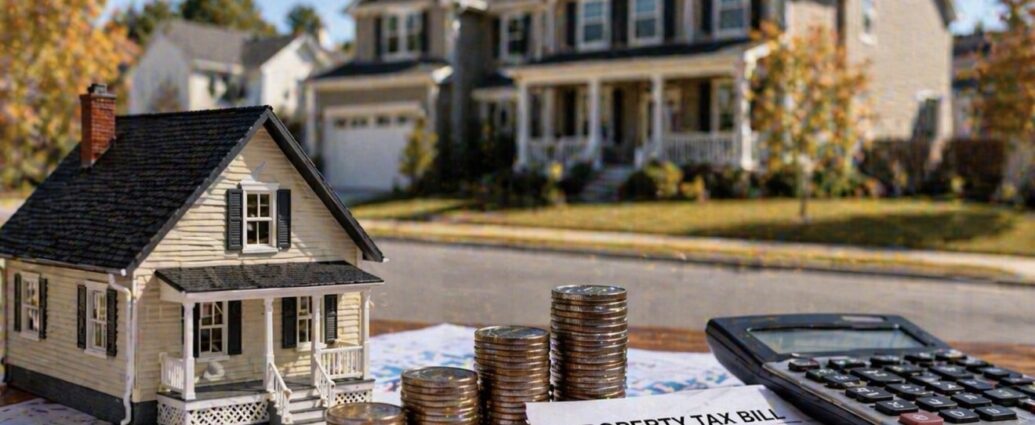
Property-tax bills on U.S. single-family homes kept rising in 2025 even as home values eased, underscoring a stubborn cost burden for homeowners and a growing revenue lever for local governments. In its April 9 report, ATTOM said owners of more than 89.6 million single-family homes paid a combined $396.8 billion in property taxes this year, and ATTOM Chief Executive Rob Barber said the latest figures show “property taxes continue to rise across the country,” a trend the company tied to higher effective tax rates and uneven housing-market conditions.
The average tax bill reached $4,427 per home, up 3% from 2024, while the total levy climbed 3.7%, according to ATTOM’s analysis of assessment-office data and estimated market values. ATTOM said the average estimated value of a single-family home slipped 1.7% year over year to $494,231, suggesting tax growth no longer simply tracks appreciation. That matters because, as the Tax Foundation has repeatedly noted in its research on state and local finance, property taxes remain “the largest source of tax revenue for local governments” in the U.S., making them central to school, police and municipal budgets even when housing markets cool.
The 2025 increase also ran ahead of recent consumer inflation trends, adding to a broader affordability squeeze for households already contending with elevated mortgage rates, insurance costs and maintenance expenses. In its latest consumer-price releases, the U.S. Bureau of Labor Statistics said inflation moderated from the peaks of the prior two years, yet shelter-related costs remained a major pressure point. Economists at Realtor.com have said in market commentary that ownership costs now extend well beyond mortgage payments, with taxes and insurance increasingly shaping buying decisions and mobility, especially for owners reluctant to give up low-rate mortgages.
The burden remains highly uneven across states and metro areas, a pattern long documented by housing researchers and tax-policy groups. In prior market analyses, ATTOM has said effective tax rates tend to run highest in parts of the Northeast and Midwest, where local governments rely more heavily on property levies, while lower-rate Sun Belt markets often offset that advantage with faster home-price growth and rising insurance premiums. The Tax Foundation similarly has said property-tax systems vary widely because assessment practices, exemptions and local budget needs differ sharply by jurisdiction, meaning homeowners can face very different outcomes even when home values look similar on paper.
For local governments, the steady rise in tax collections offers fiscal support at a time when many municipalities face labor and infrastructure costs that remain elevated. The Government Finance Officers Association has said in public guidance that property taxes are generally among the most stable local revenue sources, particularly compared with sales or income taxes that fluctuate more directly with the economy. That stability helps explain why tax bills can keep climbing even in softer housing markets: assessments often lag market prices, and local authorities frequently adjust rates to meet spending needs, a dynamic municipal-finance analysts at Moody’s Ratings and S&P Global Ratings have highlighted in commentary on local-government credit quality.
For homeowners, however, the practical effect is straightforward: a cooler market does not necessarily translate into lower carrying costs. CoreLogic has said in housing-affordability research that non-mortgage expenses, including taxes and insurance, increasingly determine whether households can sustain ownership, particularly first-time buyers and retirees on fixed incomes. Analysts at Zillow have made a similar point in market updates, saying buyers now scrutinize total monthly costs more closely than headline listing prices, especially in regions where taxes have risen faster than wages.
The latest figures also arrive as policymakers debate how to balance local funding needs with voter frustration over housing costs. The National Association of Realtors has argued in policy statements that rising transaction and ownership costs reduce market fluidity, while state lawmakers in several jurisdictions have pursued caps, circuit breakers or homestead exemptions to soften tax increases for primary residences. Those measures can help some households, but public-finance experts frequently caution that relief programs shift pressure elsewhere unless governments cut spending or broaden other revenue sources, a point emphasized in research from the Urban Institute and the Lincoln Institute of Land Policy.
What comes next will depend less on headline home prices than on local assessment cycles, budget decisions and the direction of the broader economy. ATTOM said its 2025 analysis combined tax data from assessment offices with estimated market values, meaning future reports will offer an early read on whether local tax burdens keep rising even if housing demand weakens further. For executives, lenders, builders and consumers, that trajectory matters because property taxes increasingly shape affordability, migration patterns and household spending power, turning a local levy into a national business issue.
JBizNews Desk