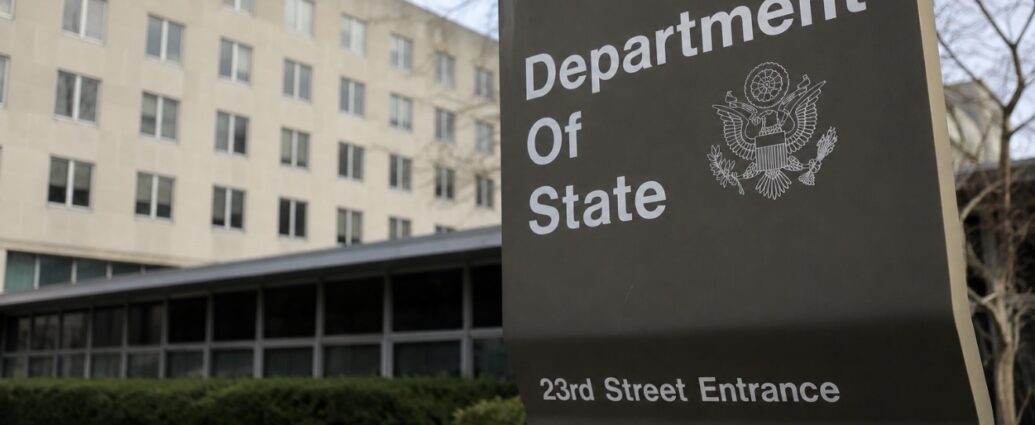
The State Department has canceled the U.S. visa held by Brazil’s ambassador in Washington, Maria Luiza Ribeiro Viotti, turning a months-long trade and diplomatic quarrel between the two largest economies in the Western Hemisphere into an open rupture at the ambassadorial level.
Officials framed the move as reciprocal rather than punitive. The department stopped short of declaring Viotti persona non grata, and a senior State Department official said canceling her visa is not the equivalent of expelling her from the country. She has not been ordered out and could resume her official duties if Brasília signs off on the administration’s nominee for ambassador to Brazil, former Florida House Speaker Danny Perez. The official said the visa would be restored immediately once that diplomatic approval, known as agrément, is granted.
Two grievances drove the decision. Officials described the step as a reciprocal response to Brazil’s actions and said it had been held back several times to give President Luiz Inácio Lula da Silva an opening to reverse course, which he declined to take. Beyond the stalled approval of Perez, Brazil denied visas last month to Riley Barnes, assistant secretary of state for democracy, human rights and labor, and a senior aide, after reports circulated that the two intended to criticize Lula or Brazil’s election process. The State Department disputed that characterization, saying the pair had planned a July 27–30 trip to Brasília for meetings on election integrity and religious freedom.
For American importers, the diplomatic breakdown matters mainly because of what has already happened on trade. The administration imposed tariff increases of up to 37.5% on thousands of Brazilian exports, which took effect Friday. That figure is the product of two separate actions. A 25% duty on most Brazilian imports took effect July 22 under Section 301 of the Trade Act, following an investigation opened last July that cited illegal deforestation and Brazil’s Pix instant payment system, which U.S. officials argue disadvantages credit card companies. A second Section 301 investigation covering forced labor in global supply chains added roughly 12.5% on top, lifting the combined burden to 37.5%. Brazil has rejected all of the allegations.
The exemption list is what has kept the impact off American grocery shelves so far. Beef, coffee, rare earths, energy products, aircraft and aircraft parts remain excluded, and the list was expanded to cover pig iron and steel scrap used by electric-arc furnace steelmakers, unflavored instant coffee and organic honey. The American Chamber of Commerce for Brazil calculated that the exemptions grew by 25%, shielding roughly $11 billion in annual trade — about $2 billion less than the group had anticipated — while still leaving Brazil among the countries facing the most restrictive access to the U.S. market.
What is covered hits manufacturers and retailers directly. The duties apply to a broad set of goods including sugar, apparel, paper and steel, along with agricultural machinery and electrical machinery. Small importers have been the loudest objectors. Dan Anthony, who directs We Pay The Tariffs, a coalition of more than 1,200 U.S. small businesses, called the duties a blunt instrument with a thin link between the practices under investigation and the American firms that will absorb the cost.
The food exemptions were not granted in a vacuum. Beef prices ran 11.8% above year-earlier levels and coffee 12% higher in the most recent Consumer Price Index reading — enough of a political problem that adding a double-digit duty to the two categories would have landed squarely on household budgets during an election year in both countries.
The trade relationship itself favors the United States. Washington ran a $14.4 billion goods trade surplus with Brazil last year, more than double the prior year’s figure, an unusual profile for a Section 301 target, which is typically a country running a large surplus against the U.S.
Timing points to a long freeze. Brazil’s presidential election is set for October, with Lula facing Flávio Bolsonaro, son of former President Jair Bolsonaro. The younger Bolsonaro met with administration officials, including President Trump, earlier this year. A U.S. official said the expectation is that Brazil will not act on the Perez nomination until after the vote. The elder Bolsonaro is serving a 27-year sentence at home for an attempted coup and has long alleged, without evidence, that Brazil’s electronic voting machines are vulnerable to fraud.
For companies with Brazilian supply lines — apparel brands, paper converters, sugar buyers and equipment distributors — the practical read is that the tariff schedule now in force is unlikely to loosen before November, and that the diplomatic channel for pressing exemption requests has just narrowed considerably.
JBizNews Desk | Washington
© JBizNews.com All Rights Reserved. Reproduction or distribution without written permission is prohibited.