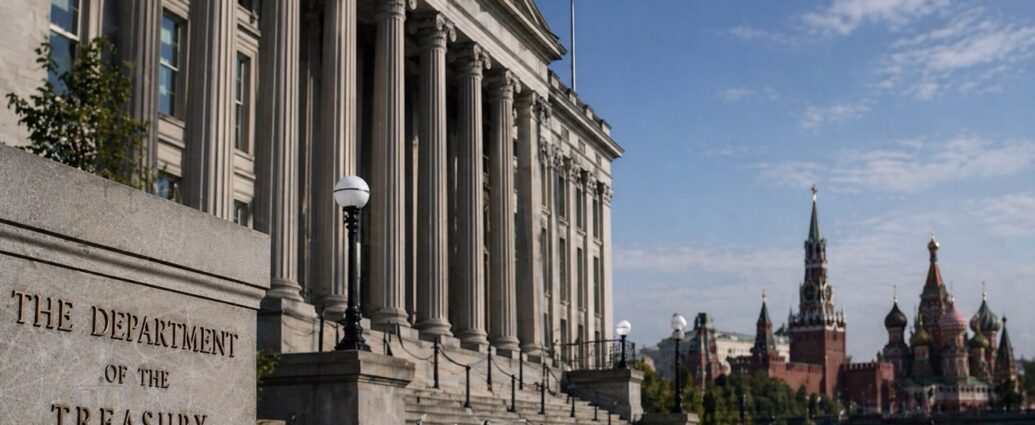
The U.S. Treasury Department moved Tuesday to widen pressure on Russia’s financial and commercial channels, adding a new set of entities to its sanctions lists in the latest effort to disrupt funding and procurement tied to the Kremlin. In a statement released by U.S. Treasury, Treasury Secretary Janet Yellen said, “We are imposing targeted measures to further isolate Russia’s financial system and deny it access to the global economy,” a step Reuters reported as one of the broadest recent expansions of U.S. restrictions on Russian-linked networks.
According to the official Treasury release, the action added 12 entities to the Specially Designated Nationals list, including banks and energy-related companies that U.S. officials said supported Russia’s war economy or helped sustain cross-border procurement channels. Treasury spokesperson Andrew Glover said “each designation reflects a direct link to Kremlin financing or illicit procurement networks,” according to reporting by Bloomberg, underscoring that Washington remains focused not only on headline institutions but also on the commercial infrastructure around them.
The sanctions package matters beyond the named companies because it raises compliance risks for global banks, commodity traders and shipping counterparties that still touch Russian-linked business indirectly. Reuters and Treasury materials both indicated the measures aim to cut off access to the international financial system, and Janet Yellen said in the department’s statement that the U.S. will continue using “all available tools” to constrain Russia’s ability to finance its activities, a message that compliance officers and multinational firms typically read as a warning that secondary exposure could intensify.
Markets initially registered the move as another reminder that geopolitical policy can quickly spill into trading sentiment. Early market data cited by MarketWatch showed the S&P 500 down 0.6% and energy shares off 1.3% in morning trade, while Bloomberg Markets reporter Kelly Smith said investors were “recalibrating exposure” to sectors vulnerable to sanctions-related volatility, particularly where financing, commodity transport and cross-border settlement intersect.
The latest designations also fit into a broader U.S. and allied strategy that has evolved since 2022 from broad symbolic penalties toward more targeted pressure on payment rails, intermediaries and procurement nodes. In repeated public statements, including Treasury sanctions notices and prior remarks cited by Reuters, U.S. officials have argued that enforcement now centers on making evasion more costly and more visible. That approach carries practical consequences for institutions outside Russia, because any company dealing with listed entities can face asset freezes, blocked transactions or abrupt contract disruption once names appear on Treasury’s sanctions database.
For banks and corporate treasurers, the immediate issue is operational rather than rhetorical. Treasury’s SDN designations generally require U.S. persons to block property and prohibit transactions with listed parties, and global institutions often respond by screening counterparties, reviewing trade finance lines and reassessing beneficial ownership links. Bloomberg reported that Treasury tied the latest targets to financing and procurement activity, and that framing suggests regulators remain focused on hidden networks rather than only large, obvious state-controlled groups.
The move lands at a time when sanctions enforcement has become a board-level issue for companies with exposure to energy, metals, shipping and emerging-market finance. Lawyers and compliance advisers have repeatedly told clients, in guidance cited across outlets including Reuters and Bloomberg, that the main risk often lies in indirect contact with sanctioned parties through subsidiaries, brokers or logistics providers. Treasury’s public language, including Andrew Glover’s statement on “illicit procurement networks,” points to exactly that kind of indirect exposure, which can create legal and reputational problems even when a company has no direct Russia strategy.
What comes next will depend on enforcement, not only designation counts. Companies and investors will watch whether the U.S. follows with additional actions against facilitators in third countries, while regulators and banks parse the new names for links to broader trade and payment networks. Janet Yellen said in the U.S. Treasury statement that Washington intends to keep tightening pressure on Russia’s access to the global economy, and that means the next phase for markets and multinationals likely centers on execution: how quickly counterparties get cut off, how aggressively compliance teams respond, and whether the sanctions begin to disrupt financing and energy flows beyond the entities named Tuesday.
JBizNews Desk Reporting