By JBizNews Desk
WASHINGTON — May 24, 2026
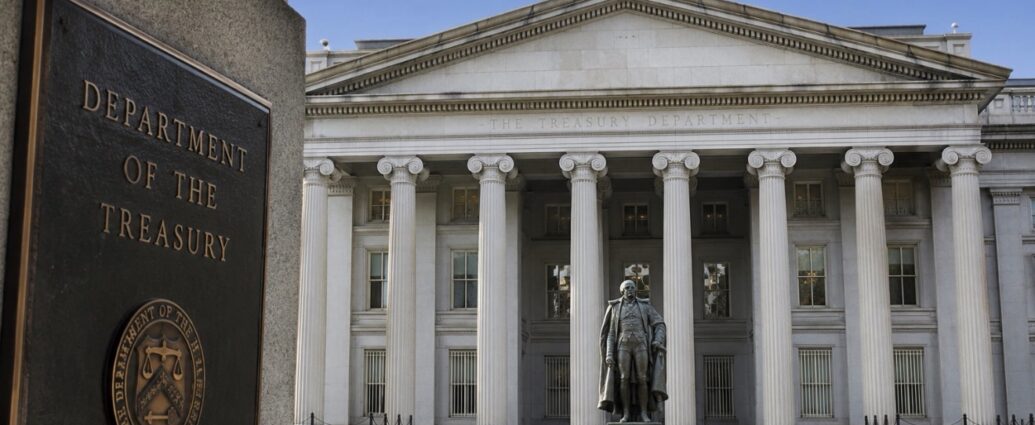
The U.S. Department of the Treasury on Thursday sanctioned nine individuals it accuses of helping Hizballah deepen its influence inside Lebanon’s political, military and security institutions, widening Washington’s financial pressure campaign even as fragile Lebanese-Israeli ceasefire talks continue under U.S. mediation.
The designations were issued by Treasury’s Office of Foreign Assets Control (OFAC) under Executive Order 13224, the post-9/11 counterterrorism authority long used against Hizballah and Iran-linked networks.
Treasury Secretary Scott Bessent said the administration would continue targeting officials and operatives who enable Hizballah’s activities inside the Lebanese state apparatus, calling for the group’s complete disarmament.
“Hizballah is a terrorist organization,” Bessent said in Treasury’s statement. “The United States will continue to expose and disrupt individuals who abuse Lebanon’s institutions to support Hizballah and Iran’s destabilizing agenda.”
The sanctions package reaches unusually deep into Lebanon’s governing structure.
Treasury targeted four sitting members of Lebanon’s parliament aligned with Hizballah, including Mohamed Abdel-Mottaleb Fanich, described by OFAC as head of Hizballah’s executive council, along with lawmakers Hassan Fadlallah, Ibrahim al-Moussawi, and Hussein al-Hajj Hassan.
According to Treasury, the group played central roles in preserving Hizballah’s control and influence across key Lebanese state institutions while coordinating politically with Iran-backed networks.
The action also penetrates Lebanon’s official security establishment.
OFAC designated Col. Samir Hamadi, identified as chief of the Lebanese Armed Forces Intelligence Directorate’s Dahiyah branch, and Brig. Gen. Khattar Nasser al-Din of Lebanon’s Internal Security Forces General Security Directorate.
Treasury accused both officials of providing intelligence support and operational coordination to Hizballah during the ongoing regional conflict.
The sanctions extended further into the Amal Movement, the Shiite political and militia organization allied closely with Hizballah.
Treasury designated Ahmad Asaad Baalbaki, Amal’s security director, alleging he deployed joint forces alongside Hizballah against domestic political opponents, and Ali Ahmad Safawi, described as commander of Amal militia operations in southern Lebanon, whom OFAC accused of taking operational orders from Hizballah for coordinated attacks against Israel.
The most diplomatically sensitive designation was that of Mohammad Reza Sheibani, Iran’s ambassador-designate to Lebanon.
Lebanese authorities had already reportedly declared Sheibani persona non grata over allegations of political interference. Thursday’s U.S. sanctions formally place Tehran’s diplomatic channel into Beirut under the same terrorism-financing framework Washington uses against Hizballah operatives and military facilitators.
For Lebanon’s financial system, the implications are immediate.
Under Executive Order 13224, all property and interests in property tied to the designated individuals that fall under U.S. jurisdiction are blocked, and U.S. persons are generally prohibited from engaging in transactions with them.
The measures also increase secondary-sanctions exposure for foreign financial institutions and businesses that continue processing transactions linked to the named individuals or their associated entities.
That poses renewed pressure on Lebanon’s banking sector, which has struggled for years to rebuild international correspondent relationships following the country’s catastrophic 2019 financial collapse.
Banks across the Gulf and Europe are expected to immediately reassess compliance exposure tied to Lebanese political and security-sector clients.
Treasury’s action follows a broader escalation in Washington’s sanctions campaign throughout 2026, including earlier moves targeting Hizballah-linked gold trading operations, Iranian oil transport networks and regional financing channels tied to Tehran’s proxies.
The timing of Thursday’s designations is particularly notable.
The sanctions arrive while U.S.-brokered discussions between Lebanese and Israeli officials remain underway in Washington. Lebanese Prime Minister Nawaf Salam recently said additional negotiation rounds were expected following the latest extension of the ceasefire framework.
Senior U.S. officials signaled that the sanctions are intended to strengthen Lebanon’s legitimate state institutions while isolating actors accused of operating on Hizballah’s behalf from within the government itself.
The State Department said in a parallel statement that Washington remains committed to supporting Lebanon’s sovereignty and official institutions while combating terrorist infiltration inside the state.
Hizballah dismissed the measures shortly after their release, saying the sanctions would have “absolutely no effect” on the group’s operational posture amid continued Israeli military activity near the Lebanese border.
Still, the financial consequences for the designated individuals are substantial.
The sanctions sharply restrict access to dollar-denominated assets, global banking systems, insurance markets, and international travel channels tied to U.S.-linked financial infrastructure.
For multinational firms and investors with remaining exposure to Lebanon, the broader signal from Washington is difficult to ignore.
By sanctioning sitting parliamentarians, security officials and an accredited Iranian diplomat in the same package, the Trump administration is demonstrating a willingness to use OFAC authorities not only against armed groups, but against political and institutional actors accused of enabling them.
That escalation is likely to trigger another wave of compliance reviews across banking, telecommunications, shipping, commodities and infrastructure sectors with exposure to Lebanon or Iranian-linked networks.
Treasury officials indicated Thursday’s action is not expected to be the final round.
The administration framed the measures as part of an ongoing campaign aimed at pressuring Hizballah financially, diplomatically and politically while pushing Beirut toward broader state consolidation and eventual disarmament talks.
Whether that pressure changes realities on the ground — or simply hardens the region’s divisions further — now becomes the next test for Washington’s strategy in Lebanon.
© 2026 JBizNews. All Rights Reserved. Reproduction or distribution without written permission is prohibited.