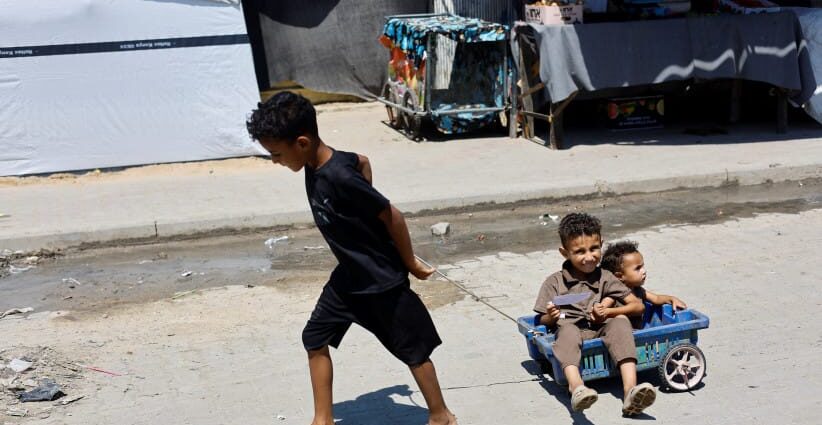
A widespread outbreak of chickenpox has been reported in the Gaza Strip in recent weeks, primarily among children living in densely populated displacement camps in the Khan Yunis area.
According to the UN Office for the Coordination of Humanitarian Affairs (OCHA), more than 9,000 cases were reported across more than 130 medical facilities throughout the Strip over a two-week period. Data provided to news agencies indicated that the number of reported infections had reached nearly 9,300, with more than half of the cases identified in Khan Yunis.
The UN said overcrowded living conditions, accumulated waste, shortages of clean water, and damage to sewage infrastructure have made it increasingly difficult to prevent the spread of infectious diseases. In camps where large families are living in tents or temporary structures, isolating sick children from other family members and reducing close contact is often impossible.
How does chickenpox spread?
Chickenpox is a highly contagious viral disease caused by the varicella-zoster virus, a member of the herpesvirus family. The virus spreads through airborne respiratory droplets released when an infected person coughs or sneezes, as well as through direct contact with the fluid inside the characteristic blisters.
The illness often begins with fever, fatigue, headaches, and a loss of appetite. An itchy rash typically appears shortly afterward, usually beginning on the face, scalp, chest, or back before spreading to other parts of the body. The red spots rapidly develop into fluid-filled blisters, which later dry out and form scabs.
People infected with chickenpox can transmit the virus even before the rash appears. They remain contagious until all blisters have dried and crusted over. Because of the virus’s high transmissibility, individuals who have not been vaccinated and have never had the disease are at significant risk of infection after spending time in an enclosed space with an infected person.
What kind of complications are associated with chickenpox?
For most otherwise healthy children, chickenpox resolves on its own within several days to about a week and usually does not require specialized treatment. Care generally consists of rest, maintaining adequate hydration, fever reduction, and relieving itching. Antibiotics are ineffective against the virus itself but may be required if a secondary bacterial skin infection develops.
Although often regarded as a mild childhood illness, chickenpox can lead to serious complications. The most common complication in children is a bacterial infection of the skin and soft tissues, often resulting from scratching the blisters. Other potential complications include pneumonia, inflammation of the brain, impaired balance, bloodstream infections, and, in rare cases, life-threatening illness.
The risk of severe disease is higher among infants younger than one year, adults, pregnant women, and people with weakened immune systems. Infection during pregnancy may increase the mother’s risk of developing pneumonia and, in some cases, may also harm the fetus or newborn.
Vaccination is considered the most effective way to prevent chickenpox. In Israel, the vaccine is administered as part of the combined measles, mumps, rubella, and varicella immunization program. It is given in two doses as part of the routine childhood vaccination schedule and significantly reduces the risk of infection, hospitalization, and death.
Vaccinated individuals can still become infected in some cases, but the illness is generally milder and shorter in duration, with fewer blisters and either a low-grade fever or no fever at all.
At this stage, no comprehensive data have been released regarding the ages of those infected, vaccination rates among children in Gaza, or the number of patients hospitalized because of the outbreak. Aid organizations continue to monitor the situation amid parallel reports of rising rates of skin diseases, infections, and waterborne illnesses.