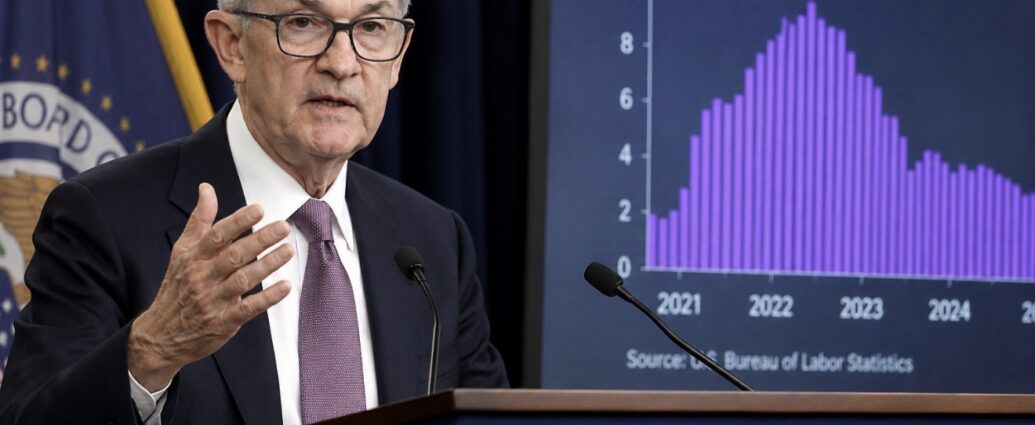
The U.S. inflation fight took a sharp and potentially dangerous turn Tuesday after the U.S. Bureau of Labor Statistics reported that consumer prices rose an unexpected 3.8% over the past year in April, above economist expectations and the highest annual reading since May 2023, triggering an immediate selloff in Treasury markets and a rapid repricing by bond traders and fed funds futures markets that, for the first time this year, began assigning meaningful odds to a possible Federal Reserve rate hike before year-end.
The report showed the Consumer Price Index rose 0.6% in April alone, above expectations and sharply higher than March’s 3.3% annual inflation reading, delivering another setback to investors who entered 2026 expecting multiple Federal Reserve rate cuts this year.
Core inflation — which strips out food and energy and is closely watched by Federal Reserve officials as a measure of underlying inflation pressure — also accelerated.
Core CPI rose 0.4% for the month and 2.8% annually, both above forecasts and marking the strongest monthly core reading since January 2025.
Within minutes of the release, traders across financial markets rapidly recalibrated expectations for Federal Reserve policy.
Fed funds futures traded on CME Group’s FedWatch platform sharply reduced the odds of rate cuts later this year while increasing the probability that the central bank may ultimately be forced to raise interest rates again if inflation continues broadening through the economy.
Treasury yields surged after the release while stock futures fell as investors confronted the possibility that inflation may be reaccelerating despite still-solid economic growth and consumer spending.
The primary driver behind the inflation surge remained energy.
According to the Bureau of Labor Statistics, energy prices climbed 3.8% in April and are now up 17.9% year over year, with gasoline prices soaring 28.4% annually as the economic fallout from the February U.S.-Iran conflict continued to ripple through global oil markets and supply chains.
Food inflation also intensified.
Grocery prices rose 0.7% during the month, the largest increase since August 2022, while beef prices surged 14.8% over the past year. Airline fares, heavily impacted by rising jet fuel costs, jumped 20.7% year over year.
Perhaps most concerning for Federal Reserve policymakers was the widening breadth of inflation pressures.
Shelter inflation — one of the few categories that had recently shown signs of cooling — unexpectedly rose 0.6% in April, its fastest monthly increase since September 2023.
At the same time, inflation is once again overtaking wage growth.
Real average hourly earnings fell 0.5% during the month and declined 0.3% over the past year, marking the first time in roughly three years that inflation has fully erased workers’ real wage gains.
“Inflation is the key drag on the U.S. economy now,” said Heather Long, Chief Economist at Navy Federal Credit Union. “There is a real financial squeeze underway. For the first time in three years, inflation is eating up all wage gains.”
The inflation shock is also beginning to ripple directly into the housing market and commercial financing sector, where borrowing costs are already near multi-decade highs.
Mortgage rates, which closely track Treasury yields, moved higher immediately after the CPI release, increasing pressure on homebuyers already struggling with elevated home prices and affordability constraints. Analysts warned that if inflation remains elevated and the Federal Reserve delays cuts or considers additional tightening, 30-year mortgage rates could remain near or above current levels deep into 2026, further slowing housing activity, refinancing, construction starts, and multifamily development financing.
The commercial real estate sector faces growing pressure as well.
Higher-for-longer interest rates increase refinancing risk for office buildings, retail centers, industrial projects, and apartment portfolios carrying floating-rate debt or approaching maturity walls. Regional banks and private lenders have already tightened underwriting standards across large portions of the commercial property market, and another inflation-driven rise in Treasury yields could place additional stress on valuations and transaction activity.
Business financing costs are also rising across the broader economy.
Corporate borrowing rates tied to Treasury benchmarks — including lines of credit, equipment financing, SBA lending, and private credit facilities — all become more expensive when markets begin pricing in higher-for-longer Fed policy. For small and midsize businesses, that can translate directly into delayed expansion plans, reduced hiring, postponed inventory purchases, and weaker capital investment.
For highly leveraged sectors including real estate development, manufacturing, transportation, hospitality, and private equity-backed companies, the persistence of elevated rates threatens to create a longer “financing squeeze” stretching into 2027.
“The issue is no longer just inflation itself,” one Wall Street rates strategist said Tuesday following the release. “It’s the realization that financing costs across the economy may stay restrictive far longer than markets expected only a few months ago.”
The report now places enormous pressure on the Federal Reserve ahead of its June policy meeting.
Markets still overwhelmingly expect the Fed to hold rates steady next month, with traders assigning roughly a 98% probability that policymakers leave the benchmark federal funds rate unchanged.
But the outlook beyond June has shifted dramatically.
According to pricing data tracked by Benzinga, markets are now assigning meaningful odds to a potential rate hike before the end of 2026, while the probability of higher rates by 2027 has climbed sharply compared with just several weeks ago.
Economists across Wall Street remain divided over whether the latest inflation shock represents a temporary energy-driven spike or the beginning of a more persistent second wave of inflation.
“The fact that higher input costs from oil are being readily passed through to consumers, as well as other signs of broadening inflation impact, should both add to the Fed’s worries about inflation,” said Preston Caldwell, Chief U.S. Economist at Morningstar. “The odds of a rate hike in 2026, while still less than 50%, are rising.”
Ellen Zentner, Chief Economic Strategist at Morgan Stanley Wealth Management, said the broadening inflation pressures reinforce the reality that even incoming Fed Chair Kevin Warsh may not be able to pursue the easier monetary policy investors had hoped for.
Others urged caution against interpreting the report as an imminent signal for higher rates.
Thomas Simons, economist at Jefferies, wrote that while the chances of a rate cut this year are fading quickly, “we still expect that the next move in policy rates is going to be a cut rather than a hike.”
Mark Zandi, Chief Economist at Moody’s Analytics, similarly told CNBC that the Federal Reserve will likely remain on hold for now, though much depends on whether inflation expectations themselves continue moving higher among consumers and businesses.
The uncertainty is already exposing growing divisions inside the Federal Reserve.
At the Fed’s late-April meeting, policymakers again voted to leave rates unchanged but recorded four dissents, the largest number since 1992 — an unusually public sign of disagreement inside the central bank.
Cleveland Fed President Beth Hammack recently described the current inflation environment as “probably the fourth shock that we’ve had in five years,” following the pandemic, the Russia-Ukraine war, and tariff disruptions.
Meanwhile, Chicago Fed President Austan Goolsbee has publicly stated that all policy options remain under consideration, including both future cuts and hikes.
Attention now shifts to the Fed’s preferred inflation gauge — the Personal Consumption Expenditures Price Index due later this month — along with the May jobs report and Wednesday’s Producer Price Index data, all of which will help determine whether April’s inflation surge was the beginning of a broader second wave or a temporary spike tied to energy and war-related supply shocks.
For Wall Street, the message from Tuesday’s report was clear: the era of confidently pricing in rate cuts is over, and the Federal Reserve’s next move is no longer certain.
JBizNews Desk
© JBizNews.com. All rights reserved. This article is original reporting by JBizNews Desk. Unauthorized reproduction or redistribution is strictly prohibited.