Harrisburg / Columbus — May 4, 2026 —
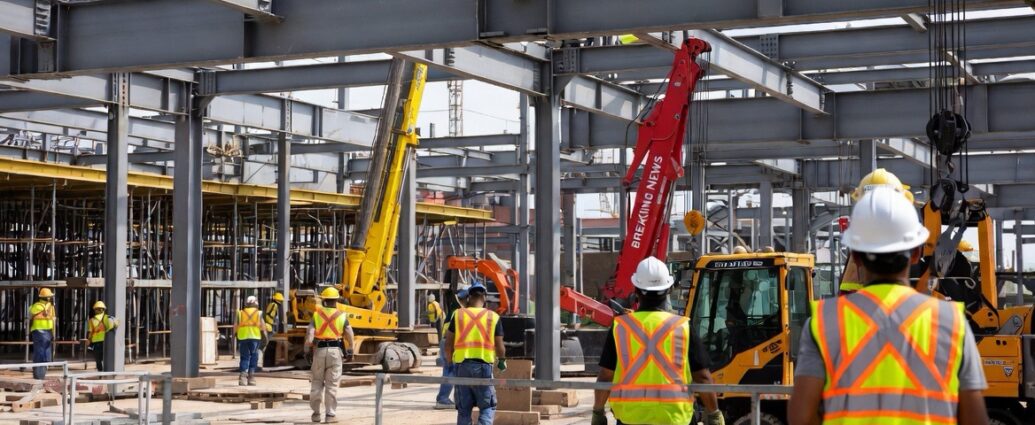
America’s rush to build the massive infrastructure behind artificial intelligence is rapidly turning organized labor into an increasingly important partner for some of the country’s biggest technology and power projects. Union construction crews are taking a larger role in data-center development as companies race to add capacity, creating thousands of skilled jobs tied to facilities that now sit at the center of the U.S. tech and industrial agenda.
The labor push is arriving alongside a wave of capital spending that stretches well beyond server buildings. In June, Amazon said it would invest at least $20 billion in Pennsylvania to expand cloud and AI infrastructure, with new campuses planned in Salem Township and Falls Township. Governor Josh Shapiro called the move “the largest private-sector investment in the history of Pennsylvania,” according to the governor’s office and reporting from Bloomberg. Shapiro said the projects would create construction jobs immediately and support longer-term economic development, underscoring how state officials increasingly frame data centers as both industrial policy and employment policy.
Union leaders say the demand is already changing the labor market. Rob Bair, president of the Pennsylvania Building and Construction Trades Council, said the shift is creating “thousands of skilled jobs.” Dorsey Hager of the Columbus-Central Ohio Building and Construction Trades Council told the Associated Press that apprenticeship demand has surged as central Ohio and other regions absorb a growing share of hyperscale development. Hager said apprentice classes have expanded sharply to keep up with permits and project schedules — a sign that AI-related construction is pulling workers into electrical, pipefitting and other skilled trades at a pace more commonly associated with energy booms or major public-works cycles.
The buildout is not limited to construction labor alone. Data centers are also driving demand for generation, transmission and substations. Shawn Steffee, a union official with Boilermakers Local 154, said apprenticeship ranks have climbed as utilities and developers prepare for heavier electricity loads tied to AI computing. Analysts at Goldman Sachs have warned that power demand from data centers could rise sharply through the end of the decade, requiring sustained investment in both digital and energy infrastructure.
Technology companies are beginning to put real money behind the workforce pipeline. In a joint announcement this year, OpenAI Chief Executive Sam Altman and North America’s Building Trades Unions President Sean McGarvey said “hundreds of thousands of skilled workers will be needed to build the AI economy,” adding that funding would support training and apprenticeship programs. Corporate commitments tied to trade-skill development have reached tens of millions of dollars, reflecting a broader recognition among AI companies that labor shortages could become a bottleneck just as demand for computing capacity accelerates.
Other companies are making more targeted bets. Google said it is providing $10 million to expand an electrician training initiative backed by union partners. A Google spokesperson said the goal is to “expand the electrician workforce pipeline” while helping projects meet safety and local hiring standards. The grant offers a practical example of how large tech groups are trying to secure labor supply in a market where specialized electrical work, cooling systems and backup power installations have become mission-critical to AI deployment.
For unions, the opportunity is significant because data centers tend to require dense, technically demanding work that aligns with organized trades’ strengths. Don Slaiman, a spokesperson for International Brotherhood of Electrical Workers Local 26, told Fortune that about half of the electricians on data-center projects in the Washington area belong to the union, adding that members increasingly handle the complex systems needed to support AI workloads. The broader commercial construction market still remains mixed, but the Associated General Contractors of America said union labor accounts for roughly one-third of commercial building overall, suggesting data centers are moving labor deeper into a mainstream growth segment.
That growth, however, is colliding with local resistance in some communities where residents worry about electricity use, water consumption and tax incentives. The Associated Press has reported on opposition in several towns where residents and activists argue that public subsidies and utility strain deserve closer scrutiny before approvals move ahead. Those tensions are shaping a more complicated political landscape, because labor groups often support projects for the jobs they bring even as environmental and neighborhood groups press for stricter oversight, disclosure and limits on resource use.
The political implications are becoming clearer in statehouses and city councils. Pennsylvania state Senator Katie Muth told Politico that efforts to tighten regulation around data-center development can face resistance when unions view those measures as threats to job creation. In Indiana, local reporting around an Amazon proposal in Hobart showed union leaders backing tax and zoning frameworks they said would keep projects viable.
Sean McGarvey of North America’s Building Trades Unions said in a union statement that membership and apprenticeship levels have reached records in 2025, driven in part by data centers, power plants and clean-energy work. If that trend continues, organized labor could emerge not simply as a beneficiary of the AI boom but as one of its essential enablers, with the next round of state policy fights over tax breaks, grid upgrades and permitting likely to determine how fast the industry — and the jobs tied to it — can grow.
The economic stakes are enormous. The surge in union-backed AI infrastructure is injecting billions into local economies while addressing chronic skilled-labor shortages that could otherwise slow the entire AI buildout. Yet the tension between rapid development and community concerns over power, water and incentives underscores the delicate balance now shaping America’s AI future.
JbizNews- Desk – Labor / Tech Infrastructure