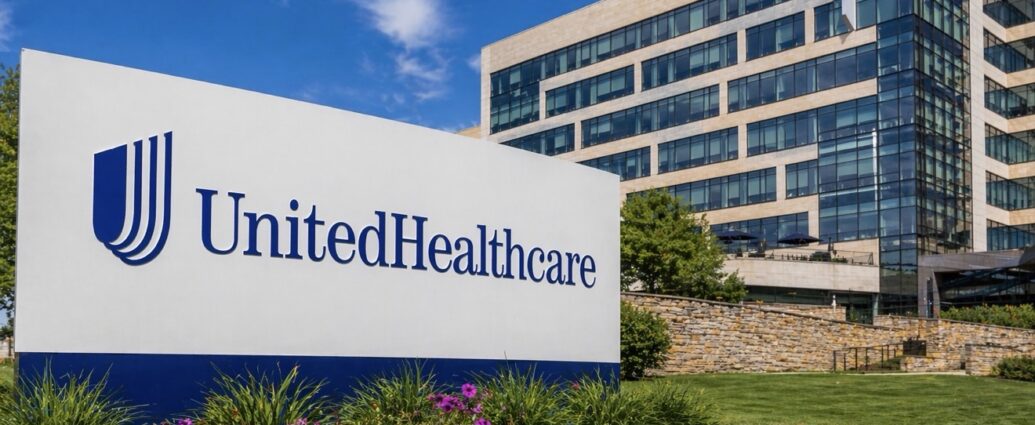
UnitedHealth Group delivered stronger-than-expected first-quarter results and lifted its full-year guidance, signaling momentum in its turnaround strategy and boosting investor confidence following last year’s earnings disappointment.
The healthcare giant reported adjusted earnings of $7.23 per share, surpassing analyst expectations of $6.58, according to FactSet data. Net income came in at $6.48 billion, or $6.90 per share, compared with $6.47 billion, or $6.85 per share, in the same period a year earlier. Revenue rose to $111.7 billion, up from $109.6 billion, reflecting steady growth across its insurance and healthcare services businesses.
“The results suggest meaningful progress in execution,” said Kevin Fischbeck, Managing Director and Senior Healthcare Analyst at Bank of America, noting that margin discipline and operational improvements are beginning to translate into earnings upside.
The company also raised its full-year adjusted earnings guidance by 50 cents to more than $18.25 per share, exceeding the FactSet consensus estimate of $17.86. The upgraded outlook points to improving visibility into cost management and underlying demand trends.
“Guidance increases of this magnitude typically indicate confidence in both cost control and revenue stability,” said Lisa Gill, Healthcare Services Analyst at JPMorgan, adding that the company appears to be regaining footing after a volatile prior year.
The performance marks a notable shift from last year, when an unexpected earnings shortfall triggered a sharp selloff in UnitedHealth shares. The company has since undergone significant leadership and operational changes under Chief Executive Stephen Hemsley, who returned to the role in May with a mandate to reset the business.
Hemsley has focused on restructuring operations, tightening cost controls, and improving margins. “Turnarounds of this scale require both leadership change and execution discipline,” said Ricky Goldwasser, Healthcare Analyst at Morgan Stanley, highlighting that management actions are now beginning to show measurable impact.
As part of its strategic overhaul, UnitedHealth said it has replaced nearly half of its top 100 executives and accelerated investments in artificial intelligence to improve efficiency and healthcare cost management. The company also announced an agreement to acquire Alegeus Technologies, a benefits administration firm, though financial terms were not disclosed.
“Technology investment, particularly in AI, is becoming central to managing medical costs,” said David Windley, Healthcare Analyst at Jefferies, noting that digital tools are increasingly driving competitive advantage in managed care.
A key metric for investors—the medical-loss ratio (MLR)—came in at 83.9%, significantly below analyst expectations of 85.5%. The ratio, which measures the percentage of premium revenue spent on healthcare costs, is closely watched as an indicator of profitability.
“The lower MLR is a strong positive signal,” said Sarah James, Healthcare Analyst at Cantor Fitzgerald, adding that improved cost management and reserve development played a critical role in the outperformance.
UnitedHealth said the lower ratio was driven by “strong medical cost management and favorable reserve development,” even as overall healthcare costs remain elevated across the industry.
The results come amid a more supportive backdrop for insurers, following a recent announcement that Medicare reimbursement rates for 2027 would come in higher than initially proposed. The development has lifted sentiment across the managed-care sector.
“Rate visibility is critical for the group,” said Josh Raskin, Senior Healthcare Analyst at Nephron Research, noting that improved reimbursement outlooks provide a clearer earnings runway.
UnitedHealth, the parent of the largest U.S. health insurer, continues to benefit from its diversified model, which includes insurance, healthcare services, and physician networks. That structure allows it to manage costs more effectively than peers during periods of volatility.
Looking ahead, investors will be watching whether the company can sustain its margin improvements and continue executing on its restructuring plan. With stronger guidance, improved cost metrics, and leadership stability, UnitedHealth appears to be regaining momentum—but the durability of the turnaround will remain the key question for markets.
JBizNews Desk