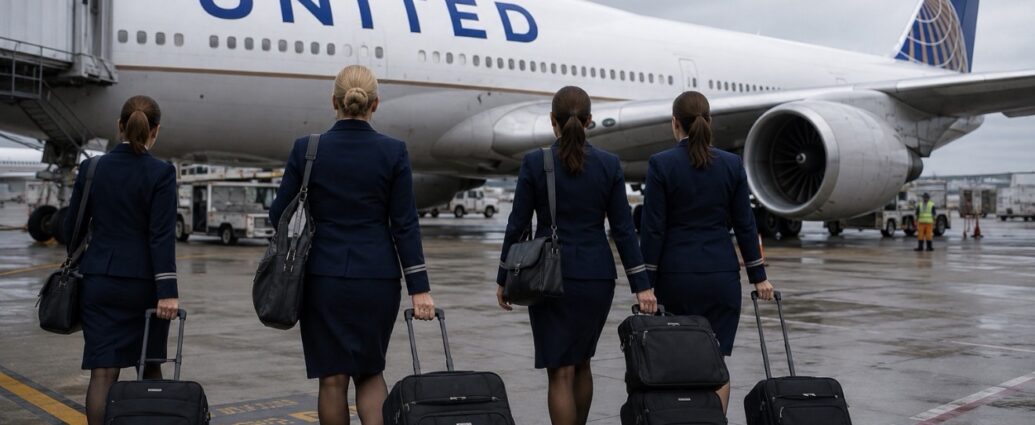
United Airlines flight attendants approved a sweeping new five-year labor contract Tuesday that delivers the largest pay package cabin crews have secured in modern U.S. airline history, closing one of the longest and most contentious labor battles of the post-pandemic era and resetting compensation expectations across the industry.
The agreement, ratified by members of the Association of Flight Attendants-CWA, covers roughly 30,000 United cabin crew employees and was approved by 82% of voting members, with turnout reaching nearly 89% of eligible workers.
For the airline industry, the vote marks the effective conclusion of a multiyear labor-cost reset that has already transformed wages for pilots, mechanics and front-line transportation workers across the American economy.
The economics of the deal are substantial.
The contract delivers an average 31% compounded increase in base pay through raises scheduled this summer, alongside a landmark provision granting flight attendants compensation for boarding time — long considered one of organized labor’s biggest unresolved issues in aviation.
The new boarding-pay structure alone is expected to add roughly 7% to 8% to total compensation.
The agreement also includes approximately $741 million in retroactive pay covering nearly six years worked without contractual wage increases, plus compensation for lengthy ground delays, expanded scheduling protections, increased retirement contributions and paid maternity, parental and adoption leave.
At the top end of the wage scale, senior United flight attendants will eventually earn more than $100 per hour.
The contract was finalized at the National Mediation Board with assistance from federal mediator Michael Kelliher, following the collapse last year of an earlier tentative agreement that offered smaller raises and failed to include adequate retroactive compensation.
Ken Diaz, president of the AFA’s United chapter, said the agreement “will immediately change the lives of United Flight Attendants, especially our thousands of new hires who have been hired since the pandemic.”
Sara Nelson, the influential international president of the AFA-CWA, called the deal an industry-leading benchmark that “now leads the industry in total value for Flight Attendants.”
United Chief Executive Scott Kirby praised the agreement in a public statement, calling United “lucky to have the best flight attendants in the world.”
The airline had resisted retroactive-pay demands for years, a major sticking point that contributed to last year’s failed vote. But pressure intensified after American Airlines and Southwest Airlines agreed to similar back-pay provisions in their own post-pandemic labor settlements.
For investors and airline executives, the broader implications are significant.
The United deal effectively establishes a new compensation floor for cabin crews across the U.S. airline sector, increasing pressure on carriers still negotiating labor contracts.
Delta Air Lines, whose flight attendants remain nonunionized, is expected to face renewed organizing pressure from the AFA after years of unsuccessful union campaigns. Spirit Airlines and JetBlue Airways flight attendants are also still engaged in active negotiations.
The timing comes as airlines are already confronting mounting macroeconomic cost pressures.
Airline executives throughout the spring earnings season warned investors that fuel, labor and operational expenses were all moving higher simultaneously. Ongoing instability tied to the Iran conflict has pushed oil prices and freight costs upward, while broader consumer spending has shown signs of slowing.
McDonald’s chief executive Chris Kempczinski warned earlier this month that U.S. consumer spending trends are “getting a little bit worse.” Maersk chief executive Vincent Clerc separately cautioned that shipping disruptions tied to the Strait of Hormuz are likely to worsen in the second half of the year.
The new United labor contract now adds another layer of upward pressure to airline operating costs at a time when carriers are already attempting to preserve margins against higher jet-fuel prices and softening discretionary travel demand.
Analysts expect airlines to gradually pass much of the additional labor expense through to consumers in the form of higher ticket prices over the next several quarters.
For flight attendants themselves, however, the contract represents a dramatic financial reset after years of inflation pressure and pandemic-era instability.
Many senior cabin crew members who remained with the airline through the 2008 financial crisis, the pandemic collapse and the industry’s uneven recovery will receive retroactive checks worth tens of thousands of dollars this year. Newer hires, many of whom entered the workforce during depressed pandemic wage scales, stand to see the largest percentage gains.
The political implications are equally notable.
After three years in which organized labor has delivered major victories for UPS drivers, Hollywood writers and actors, Detroit auto workers and logistics employees across the country, the United agreement becomes the latest example of front-line workers successfully reclaiming bargaining power after the inflation shock that followed the pandemic reopening.
For investors, the contract represents a settled liability that can finally be modeled into earnings forecasts. For airline workers, it represents one of the most consequential labor victories the profession has ever secured.
JBizNews Desk
© JBizNews.com. All rights reserved. This article is original reporting by JBizNews Desk. Unauthorized reproduction or redistribution is strictly prohibited.