JBizNews Desk
The U.S. government has delivered a blunt message to shipping companies navigating one of the world’s most important energy chokepoints: do not make deals with Iran to cross the Strait of Hormuz.
In updated guidance issued May 29, the U.S. Treasury Department warned that American companies are prohibited from accepting any arrangement with the Iranian government related to safe passage through the strategic waterway — even if no money changes hands.
“Regardless of whether a payment is made, U.S. persons are prohibited from receiving services from the Government of Iran, including services related to a guarantee of safe passage,” Treasury said in its updated statement.
The guidance arrives at a sensitive moment as markets closely watch efforts to restore normal shipping through the Strait of Hormuz following months of conflict that disrupted one of the world’s most critical trade routes.
What Treasury Is Prohibiting
The updated guidance expands previous warnings that focused primarily on payments, tolls, fees, or other financial transactions involving Iranian authorities.
Under the new interpretation, simply accepting an Iranian guarantee of safe passage could constitute a prohibited service under U.S. sanctions rules.
The warning centers on the Persian Gulf Strait Authority (PGSA), a recently established Iranian entity that Tehran says is responsible for managing vessel traffic through the strait.
According to Treasury, the PGSA works alongside elements of Iran’s Islamic Revolutionary Guard Corps (IRGC) and has sought to direct shipping traffic through routes designated by Iranian authorities.
The Office of Foreign Assets Control (OFAC) has sanctioned the PGSA under U.S. counterterrorism authorities, meaning American individuals and companies face significant sanctions exposure if they engage with the organization.
Iran maintains that the system is designed to manage navigation and maritime safety. U.S. officials argue that it functions as a mechanism for coercion and control over international shipping.
Why Hormuz Matters
The Strait of Hormuz is among the most strategically important waterways on earth.
Roughly one-fifth of global oil consumption typically passes through the narrow channel connecting the Persian Gulf to international markets. Major energy exporters including Saudi Arabia, the United Arab Emirates, Kuwait, Iraq, and Qatar rely heavily on the route.
Disruptions to shipping through Hormuz can quickly affect oil prices, shipping costs, insurance rates, and ultimately consumer prices worldwide.
Since conflict escalated earlier this year, vessel traffic through the region has slowed significantly, contributing to heightened volatility across global energy markets.
The Treasury guidance underscores the difficult position many shipping companies now face.
A vessel attempting to leave the Persian Gulf cannot negotiate directly with Iranian authorities without risking sanctions exposure. At the same time, uncertainty surrounding transit security continues to complicate shipping operations and increase costs.
The Business Impact
For shipping companies, energy traders, insurers, and commodity markets, the new guidance adds another layer of complexity.
War-risk insurance premiums have risen sharply for vessels operating in the region, while shipping firms continue to evaluate route risks and security considerations.
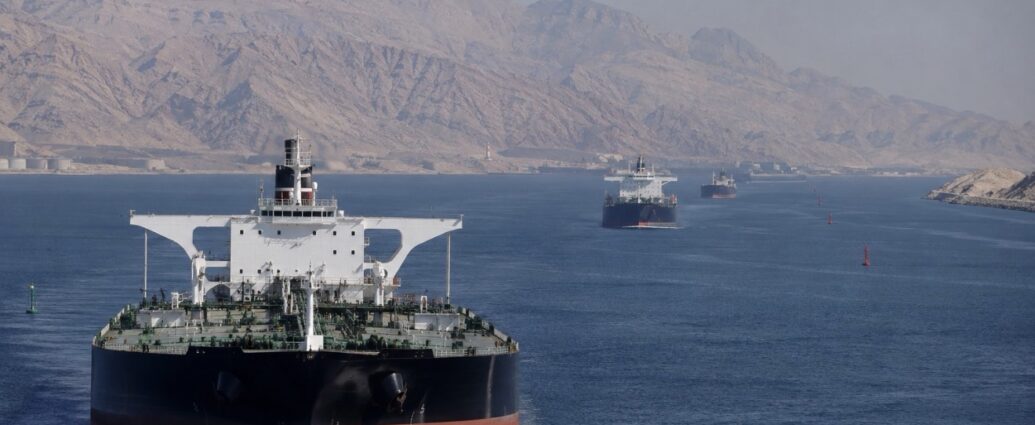
Some tankers have successfully transited the waterway under heightened security measures and military protection, but industry executives remain cautious.
The situation is particularly important for energy markets because every disruption in Hormuz affects global oil supply calculations.
Even modest reductions in tanker traffic can tighten markets and contribute to higher fuel prices around the world.
A Complication for Broader Diplomatic Efforts
The Treasury announcement also highlights a broader policy challenge.
While discussions continue regarding a potential diplomatic framework aimed at restoring stability and reopening maritime traffic, the U.S. government is simultaneously reinforcing sanctions restrictions that limit direct engagement with Iranian authorities.
That creates a difficult environment for businesses seeking clarity on future operations.
Shipping companies, insurers, commodity traders, and multinational corporations are left navigating a rapidly changing landscape in which security, sanctions compliance, and geopolitical developments are all closely intertwined.
Adding to the uncertainty, Iranian lawmakers have reportedly advanced legislation intended to formalize the authority of the PGSA, potentially giving the organization a more permanent role in Tehran’s maritime strategy.
Such a move would not change international maritime law or remove U.S. sanctions, but it could further complicate future negotiations over shipping access and transit rights.
Why Consumers Should Care
For most Americans, the impact of the Strait of Hormuz is felt far from the Persian Gulf.
The route plays a critical role in global energy flows, and disruptions can influence the cost of gasoline, diesel fuel, airline tickets, shipping expenses, and countless products that depend on transportation.
Higher insurance costs, longer transit times, and supply uncertainty all contribute to broader inflation pressures.
A fully secure reopening of Hormuz would likely help stabilize energy markets and ease some of those costs.
Treasury’s latest guidance, however, makes clear that Washington is not willing to allow private companies to negotiate their own arrangements with Tehran to achieve that outcome.
For now, the message from the U.S. government is straightforward: American companies must stay clear of any agreements with Iranian authorities related to passage through the Strait of Hormuz.
Until broader diplomatic and security issues are resolved, one of the world’s most important shipping lanes will remain a source of uncertainty for global commerce.
JBizNews Desk
© JBizNews.com All Rights Reserved. Reproduction or distribution without written permission is prohibited.