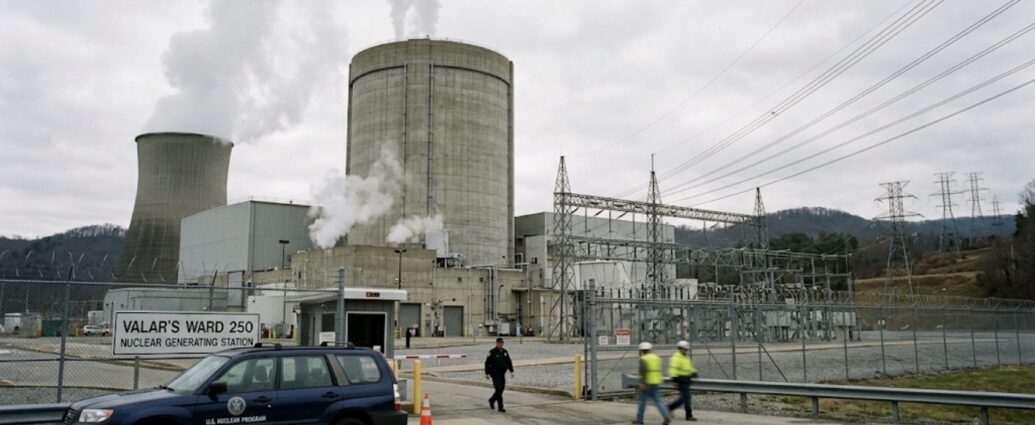
Valar Atomics, a Southern California nuclear startup, said Thursday that its Ward 250 reactor has reached criticality, becoming the second reactor to hit that milestone under the federal program designed to accelerate advanced nuclear development in the United States. The achievement marks the first self-sustaining nuclear chain reaction inside the reactor and represents a key step toward proving the technology can eventually generate commercial power.
The reactor reached criticality at the Utah San Rafael Energy Lab, a state-run research facility where Valar has been racing to meet a federal goal of bringing multiple advanced reactors online before July 4, 2026. Ward 250 is a high-temperature gas-cooled reactor that uses TRISO fuel, helium coolant, and a graphite-based core design. The project was built with engineering and construction support from Kiewit Nuclear Solutions.
Valar becomes the second company to reach the milestone under President Donald Trump’s Reactor Pilot Program. Earlier this month, Antares Nuclear’s Mark-0 microreactor became the first privately developed non-light-water reactor in the United States to achieve criticality in more than four decades at Idaho National Laboratory. With Valar now joining the list, the federal initiative is only one reactor away from reaching its target of three critical reactors before Independence Day.
Criticality is an important milestone, but it does not mean the reactor is producing meaningful power. During these early tests, reactors are brought to a self-sustaining nuclear reaction at extremely low power levels to verify the design and operating characteristics. Commercial electricity generation remains years away.
As American Nuclear Society President Mark Peters has noted, criticality is “a starting line, not a finish line.” Significant testing, safety validation, and regulatory reviews still lie ahead before reactors like Ward 250 can enter commercial service.
The milestone follows months of rapid development. In November 2025, Valar conducted a successful cold-criticality test using a scaled reactor assembly known as NOVA at Los Alamos National Laboratory. The test helped validate the physics underlying the Ward 250 design before construction of the full reactor.
The company drew national attention again in February when the completed reactor was transported from California to Utah aboard U.S. Air Force C-17 cargo aircraft in what officials described as a first-of-its-kind military-assisted reactor airlift. Energy Secretary Chris Wright accompanied the transport effort and has repeatedly highlighted advanced nuclear energy as a cornerstone of future U.S. energy policy.
The race to bring reactors online is being driven largely by the exploding energy needs of artificial intelligence and data centers. AI companies are rapidly building facilities that require enormous amounts of around-the-clock electricity, creating concerns that existing power infrastructure may struggle to keep pace.
Valar argues that advanced nuclear reactors offer one of the few scalable solutions capable of supplying reliable carbon-free electricity regardless of weather conditions. The company estimates that AI-related growth could require more than 200 terawatt-hours of additional power by 2030.
Beyond supplying electricity to the grid, Valar sees opportunities in industrial applications. High-temperature reactors can generate heat for manufacturing processes, support hydrogen production, and potentially create synthetic fuels using captured carbon dioxide. The company believes those industrial uses could help finance broader deployment of advanced nuclear technology.
Valar’s long-term vision includes what it calls “gigasites” — large industrial campuses powered by clusters of small reactors supplying energy directly to manufacturers, data centers, and other major customers without relying entirely on the public grid.
The program itself remains controversial. The Reactor Pilot Program was established through a presidential executive order in May 2025 and allows participating companies to use the Department of Energy’s authorization process rather than the traditional Nuclear Regulatory Commission licensing pathway during early testing stages.
Supporters argue the approach is necessary to speed innovation and maintain U.S. leadership in nuclear technology. Critics, including Edwin Lyman of the Union of Concerned Scientists, have warned that bypassing portions of the conventional NRC process could create safety risks if not carefully managed.
National security officials have also shown growing interest in microreactors. Small reactors could provide reliable power to military bases, remote installations, and critical infrastructure that might otherwise depend on vulnerable electric grids or fuel deliveries.
For consumers, the implications remain indirect for now. If advanced reactors can eventually be built quickly and at scale, they could help relieve electricity shortages, support the growth of AI infrastructure, stabilize industrial energy costs, and reduce pressure on power prices in fast-growing regions.
Valar says it plans to continue higher-power testing throughout the remainder of 2026 and hopes to begin limited commercial operations in 2027 before expanding further in 2028.
For now, the company has cleared one of the industry’s most important technical hurdles. Whether Ward 250 becomes part of a broader nuclear revival will depend on what happens next as testing advances from proving the reactor works to proving it can safely and economically deliver power.
JBizNews Desk
Washington Bureau
© JBizNews.com All Rights Reserved. Reproduction or distribution without written permission is prohibited.