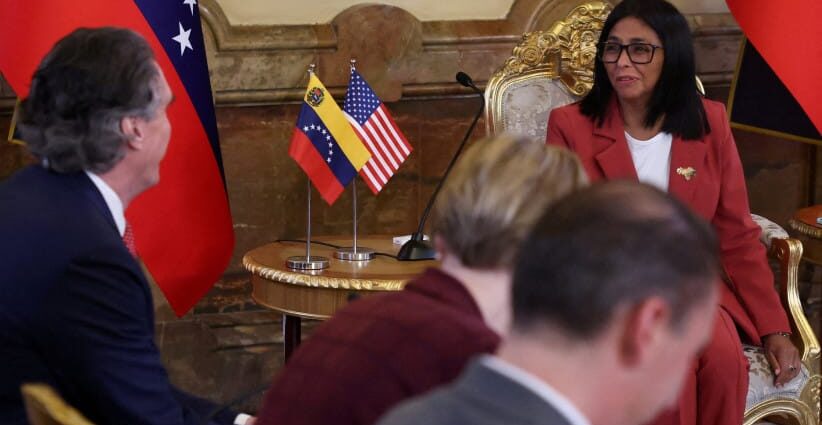
US Secretary of State Marco Rubio has essentially been running Venezuela from Washington, The New York Times reported on Saturday.
According to more than a dozen government officials and sources close to both Washington and Caracas, Rubio now controls Venezuela’s finances, government, and natural resources.
He has not visited the South American country since the US captured former Venezuelan president Nicolás Maduro in January.
However, Rubio is heavily involved in the day-to-day running of the country. He constantly speaks to interim President Delcy Rodríguez in Spanish on WhatsApp and has reportedly developed a warm working relationship with Maduro’s former right-hand woman.
Sources were careful to note to the NYT that despite the pair’s congenial relationship, Rubio holds immense power over Rodríguez.
Neither Rubio nor the Venezuelan government responded to the NYT’s request for an interview or comment.
Rubio has repeatedly downplayed his role in Venezuela, and usually does not comment on his responsibilities there.
He also has been denying the accusations that the US occupied the country.
“There is no war against Venezuela, and we did not occupy a country. There are no US troops on the ground,” he told the Senate Foreign Relations Committee in January.
How is the US managing Venezuela?
This comes as Trump has indicated that he is interested in returning to an expansionist foreign policy, and has floated taking over Canada, Greenland, the Panama Canal, and, importantly, Venezuela.
Notably, Rubio’s three-step plan to help reinvigorate Venezuela does involve pivoting the country to a democracy.
Rubio has said that his plan so far is to: recover Venezuela’s economy, stabilize the country, and transition to a democracy.
Before the earthquakes that killed over 4,000 people earlier this month, he claimed he was in the process of stabilizing the country, specifically through a myriad of economic and business measures.
The US Treasury reportedly takes revenue from most of Venezuela’s exports and disburses the funds through the country’s private banks. Rubio and the State Department have direct control over the revenue, and set the conditions on who can spend the money and what the Venezuelan government is allowed to spend it on.
Now, the scheme has allowed Rubio to stop Venezuela’s massive corruption schemes. It’s also allowed the Venezuelan government to receive revenue without being hounded by creditors seeking repayment under the protection of the Treasury.
Thus, Rodríguez depends on Rubio to pay government workers and prop up the country’s economy.
Rubio also oversees the applications of the US’s sanctions on Venezuela, and decides who gets to do business in the country. He has worked to reshape the oil sector and bolstered US businesses’ access to the country, sources told the NYT.
Sources told the NYT that Rubio has taken over efforts to open up Venezuela’s energy sector to foreign investment, over Chris Wright, Trump’s energy secretary.
In return, Rodríguez does mostly everything Rubio says. She runs most high-level government appointments by him, she extradites Venezuelans who have come into trouble with the US Justice Department, and she allows him to dictate foreign policy.
For example, at the onset of the war with Iran, Venezuelan Foreign Minister Yvan Gil released a soft statement condemning the war.
The administration told Rodríguez to have him take the post down, and warned her against publicly supporting an enemy of the US.
Gil deleted the post a few hours later.
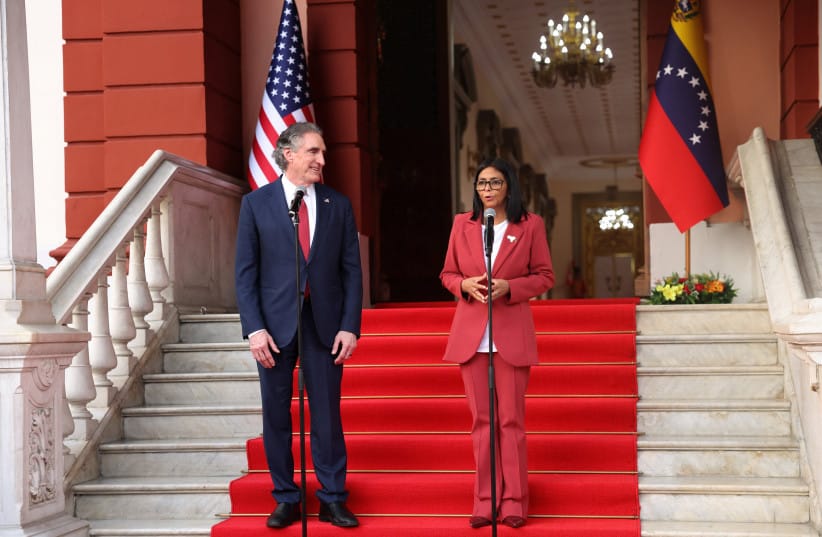
In another notable instance, Venezuela took over operations of oil projects it co-owns with Russia’s state-run Rosneft after Rubio warned Rodríguez not to do business with US adversaries.
In another example of Rodríguez’s deference to the administration, she refused to give some public appearances without Trump’s approval.
Fox News’s Bret Baier had asked Rodríguez for an interview earlier this year. She reportedly told him that Trump himself would have to approve. Sources told the NYT that Trump loved her immediate submission to his power and has repeatedly told the story to others when she comes up in conversation.
How did Rubio become viceroy of Venezuela?
Back in January, shortly after Maduro was captured, Rubio got Rodríguez on the phone. In Spanish, he told her that she had a choice between working with the US government or watching as the US launched a broader attack on Venezuela.
She chose the former.
US President Donald Trump said that Rodríguez told Rubio that she’s “essentially willing to do what we think is necessary to make Venezuela great again.”
He later told the NYT that the US could run Venezuela for years.
Since then, Rubio has been dubbed by other officials as “viceroy”, the title for governors in the Spanish colonial empire. Before the earthquakes earlier this month in Venezuela, Rodríguez had asked Rubio for greater financial autonomy and for sanctions on her country to be scrapped to reduce internal pressure.
Then, the earthquakes killed thousands of people and left Venezuela’s economy in shambles
Now, it’s unclear where Rubio is in his plan to assist Venezuela. The natural disaster paused investment deals. The oil sector, which the administration has focused the lion’s share of its deals on, is corrupt and deteriorating.
As for transitioning Venezuela to a democracy, Rodríguez has not given a clear answer on when elections could be held.
Additionally, Maria Corina Machado, the country’s exiled opposition leader and Nobel Prize winner, has repeatedly tried to return since the earthquakes and has been blocked by Rodríguez’s government.
Venezolanos, sobre mi regreso a Venezuela: pic.twitter.com/UhSCsM3ovi
— María Corina Machado (@MariaCorinaYA) June 29, 2026
In a video address last month, she told Venezuelans that she was “willing to do whatever it takes” to get back and assist relief efforts.
However, some Trump administration officials called her desire to return “grotesque,” and accused her of “political opportunism.”
“She wants a photo op of her passing out our aid,” one official told Axios. “It’s about her interests.”
“Marco [Rubio] is at wit’s end,” another US official said. “She has to be patient, and she won’t be, and it’s driving him crazy.”
Notably, Rubio used to be a supporter of Machado and co-signed a letter supporting her nomination for the Nobel Prize for her efforts to “bring a democratic peace to Venezuela to benefit her country, as well as the region and the world.”
Since then, the two have grown apart. Sources told the NYT that the administration is unwilling to help her return to Venezuela for fear of provoking political unrest at an already complicated time for the country. Machado also has known enemies in Venezuela’s current leadership, which is partially why the administration chose Rodriguez over her.
For now, as the country recovers from the quakes and gets investment deals back on track, it’s clear that Venezuela has a long way to go before it can begin transitioning to democratic elections.
And further, when elections happen and on what grounds likely will not be Venezuela’s choice; it will be Rubio’s.